Upper
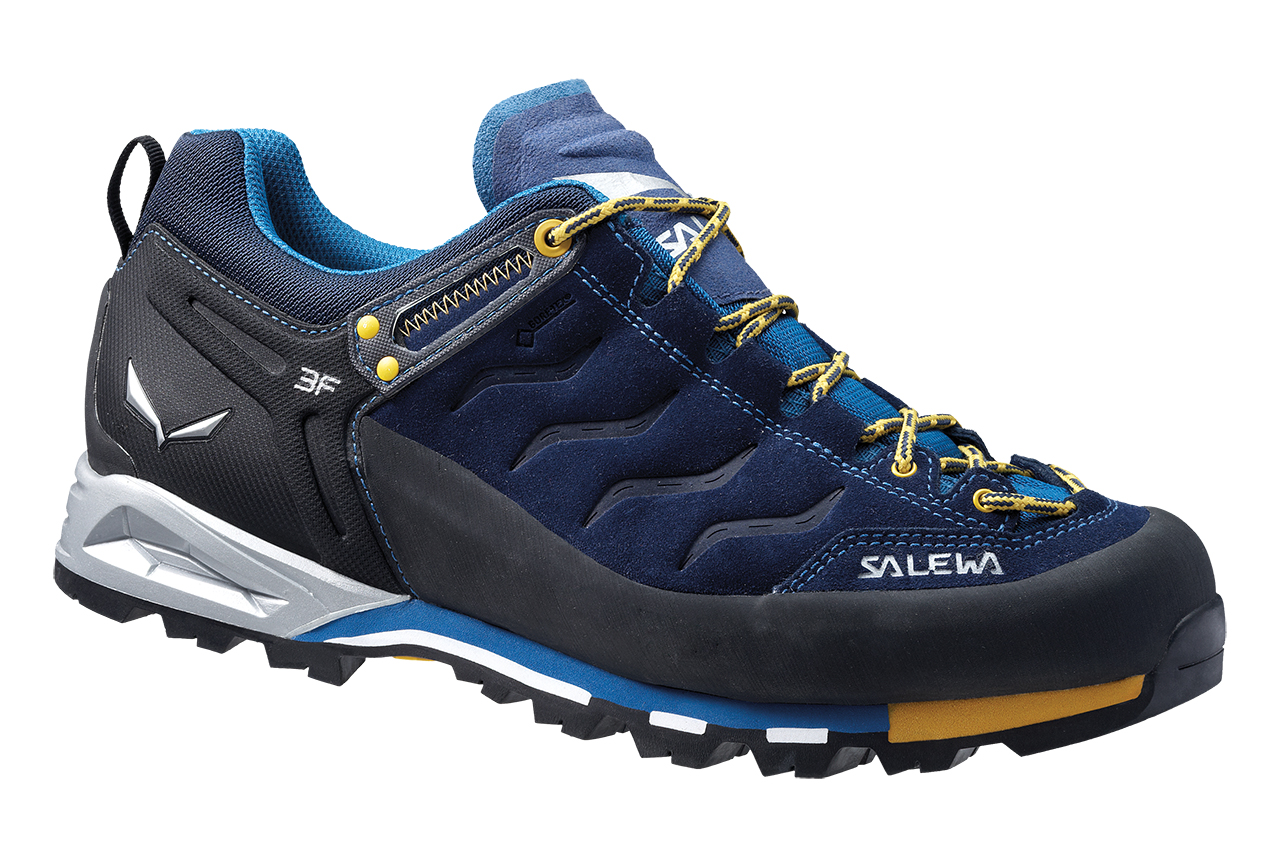
Most hiking shoes are made from a combination of leather and synthetic material, which makes them light and relatively cheap. Full leather shoes are likely to cost more, but, because they have minimal stitching, should last longer.
Midsole
Most midsoles – the material between the inner and outsole – are EVA, a polymer designed to handle the stress and impact of walking over uneven ground. Easy-flex models are more comfortable on level ground and when moving fast. Stiffer shoes are better for rockier terrain and allow more precise footholds when climbing and scrambling.
Heel
A heel counter supports and stabilises the foot, preventing it lifting – essential when moving over uneven terrain. A shock absorber will reduce heel strike.
Outsole
Wide-spaced and deep lugs are designed to shed mud and offer grip in all conditions. A pronounced instep will provide braking power on descent.
Eyelets and laces
Fabric eyelets are common, with some metal or hard plastic eyelets used on those shoes intended for demanding uses.
Toe box
A rubber bumper protects toes from knocks and the shoe upper from abrasion.
Fit and width
The toe box should have a thumb-width of space in front of the longest toe. The overall fit should be snug – not tight – across the arch and forefoot.
Now you what to look for, it’s time to choose a shoe.
|
Salewa Mountain Trainer GTX $399 |

The North Face Ultra Fastpack 2 GTX $300 |
Salewa Mountain Trainer $329 |

Merrell Moab FST $249 |

Merrell All Out Blaze Aero Sport $229 |

Asolo Quadrant $229 |