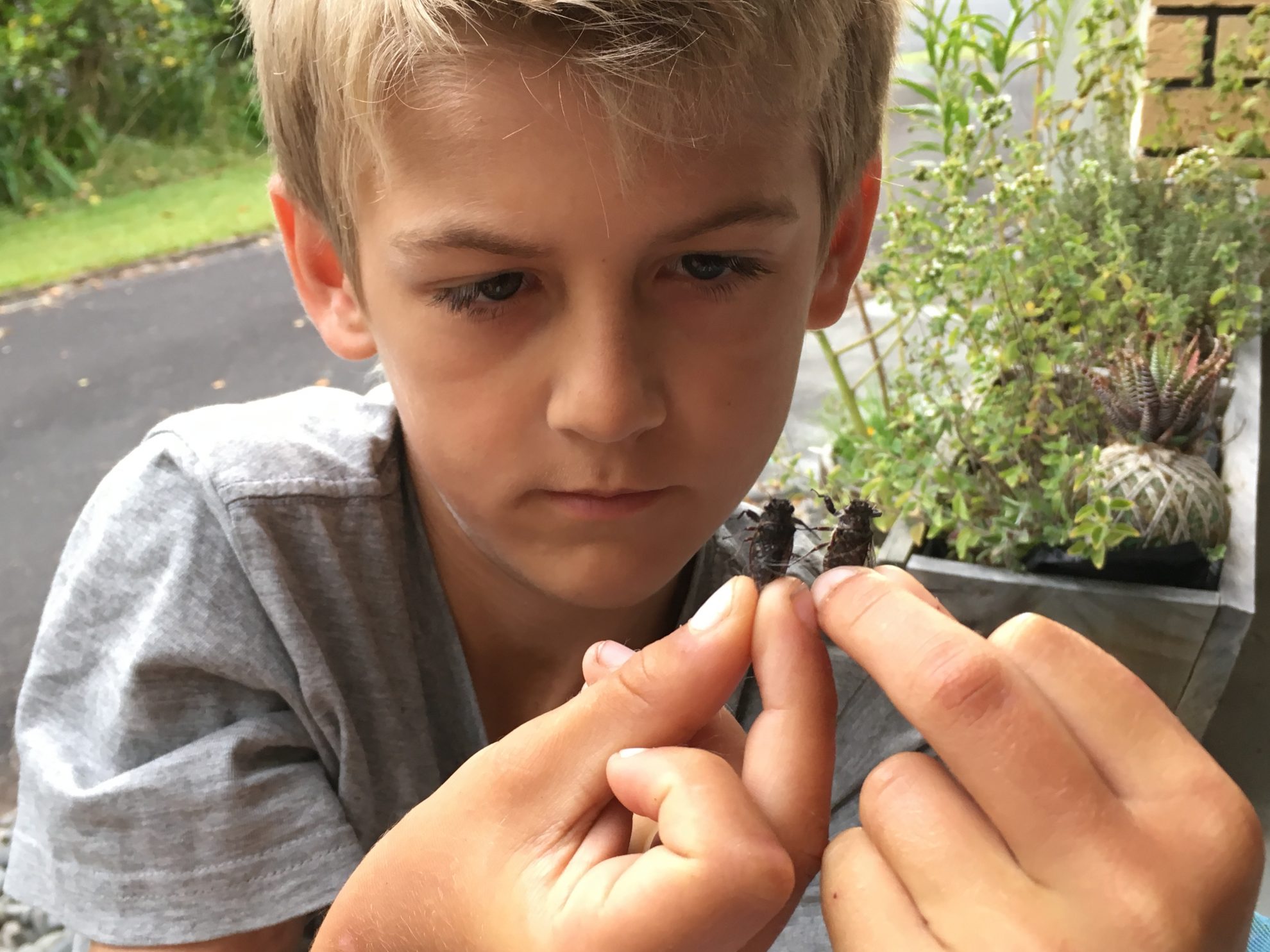
An insatiable curiosity about the chorus of the cicada has led one 10-year-old to write a book on the noisy critters.
During the height of summer, they dominate the outdoors – but how many of us have investigated just what we are hearing in the cacophony of clicking and screeching cicadas?
Ten-year-old Olly Hills looked into it and found that New Zealand has 42 cicadas, all unique to these isles, and each can be identified by its unique sound.
Olly recently published the book, Cicadas of New Zealand, the first of its kind to detail the features, sound and habitat of each of the species in an easy-to-use field guide.
Olly first became curious about cicadas when he was just three years old.
“I was at the table with mum and asked her ‘what’s all that noise?’,” he says.
He went outside and returned with two cicadas in his hand and has been hunting for cicadas ever since. But Olly’s mother, Tara, says his questions about the species soon went beyond her knowledge.
“The books we could find would only have a couple of pages on cicadas and only information about a couple of species,” Tara says.
So the pair set about researching the different species and soon began writing a book to help others unlock the mysteries of the cicada chorus.
“It’s so handy,” Tara says. “He uses it all the time.”
Olly has found all but three of the North Island cicadas and recently travelled to the South Island to track down the southern species. The different species can be identified by their sound alone – some so high pitched that only children can hear them.
Tara says the book is a great resource for children.
“Once kids realise just how many there are, they can be like Olly and try to find them all. It becomes a really cool hobby.
“Kids are very good at finding cicadas – they like hanging outside and noticing these things. Whereas it just sounds like noise to me, Olly can hear an april green cicada over the noise of all the common chorus cicadas. Just recently he found a hybrid cicada, and he could hear that it was different just based on its song and he tracked it down.”
Olly has been helped by a number of experts, including Chris Simon from Victoria University and cicada expert John Dugdale. The book has also been approved by Sir David Attenborough. Olly wrote to the legendary naturalist and sent him a copy of his book. He got a handwritten letter from Attenborough saying he is “delighted to have it”.
One of the best places for cicadas near his Hamilton home is Pirongia – Olly recommends the Mangakara Nature Walk loop track, where he found the greater bronze cicada. He says the place where he saw the most cicadas was at the mouth of the Orongorongo River near Wellington.
– Buy Olly’s book here – subscriber’s get 10% off (make sure you’re signed in to receive the discount).