The forecast looks good, so you don’t need much in the way of warm clothes, right? Here’s why you always need to be prepared.
New Zealand is a group of narrow mountainous islands surrounded by ocean. It’s warm in summer, cold in winter and picturesque, and it’s susceptible to sudden changes in weather, often, rain, wind and sun in one day. It means that no matter the duration of your adventure it’s vital to be prepared for – and expect – the unexpected.
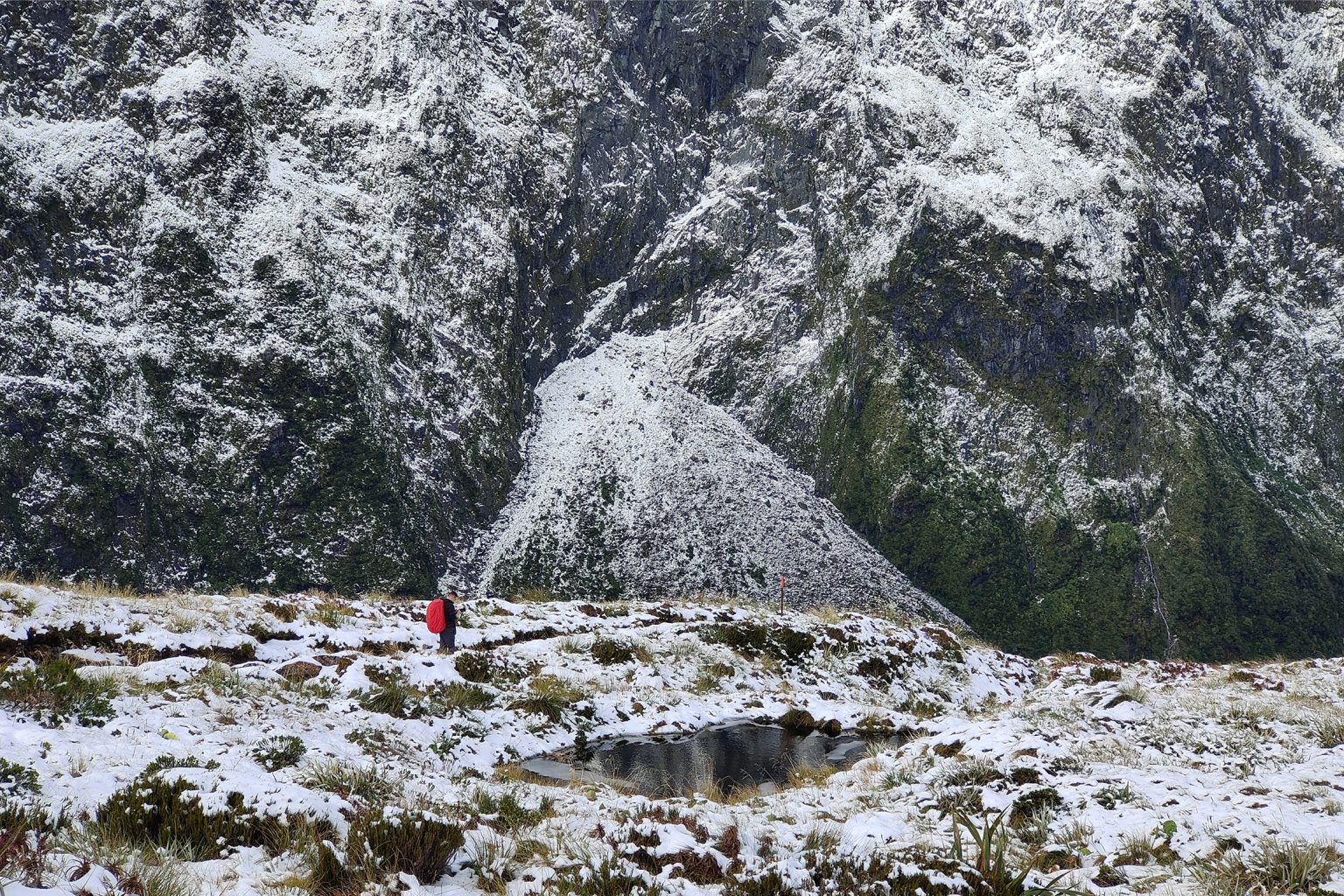
It’s often hard to believe just how quickly the weather can change. On one recent easy 20-minute walk the temperature dropped dramatically, followed quickly by an unforecasted hailstorm. Clad in shorts and a T-shirt, I was glad of my woolly hat and gloves.
The air temperature doesn’t need to drop to make you feel cold, however. Wind draws heat quickly from the body, and if skin or clothes are damp with sweat or rain, this effect – known as wind chill – is magnified.
Wind strength can increase suddenly when you pass from the lee of a hill or cross a saddle or other wind funnel, or perhaps you’ve been in bush, and suddenly pop out into the open. It’s when having an extra layer handy can be extra helpful.
Hypothermia
A sudden weather change is especially risky if you can’t protect yourself from the conditions. Hypothermia occurs when your body no longer has the energy to maintain its central core temperature. Hypothermia can occur very quickly, and the person affected is often unaware and may not don warm clothes or seek shelter. Cold temperatures, rain and wind increase the possibility of hypothermia. When two of these factors occur together, they multiply the risk. All three factors together pose a significant risk.
Weather forecasts
It is important always to check the mountain weather forecast for the area you are headed for, not just that for the nearest town. Check forecasts from a range of sources, such as NIWA and MetService. If the forecast is good, go prepared for it to be wrong! If bad weather is predicted, consider what you will do if it comes early or is worse than expected.
Clothing
Even for a short day walk in midsummer, always take a waterproof jacket, avoid cotton clothing and have at least one extra layer to put on if there is a sudden change. A woollen hat and gloves will help to warm you quickly and are easy to carry.
– Heather Grady is an instructor with Outdoor Training New Zealand