The kea is a much-loved bird but it wasn’t always viewed as a lovable rogue
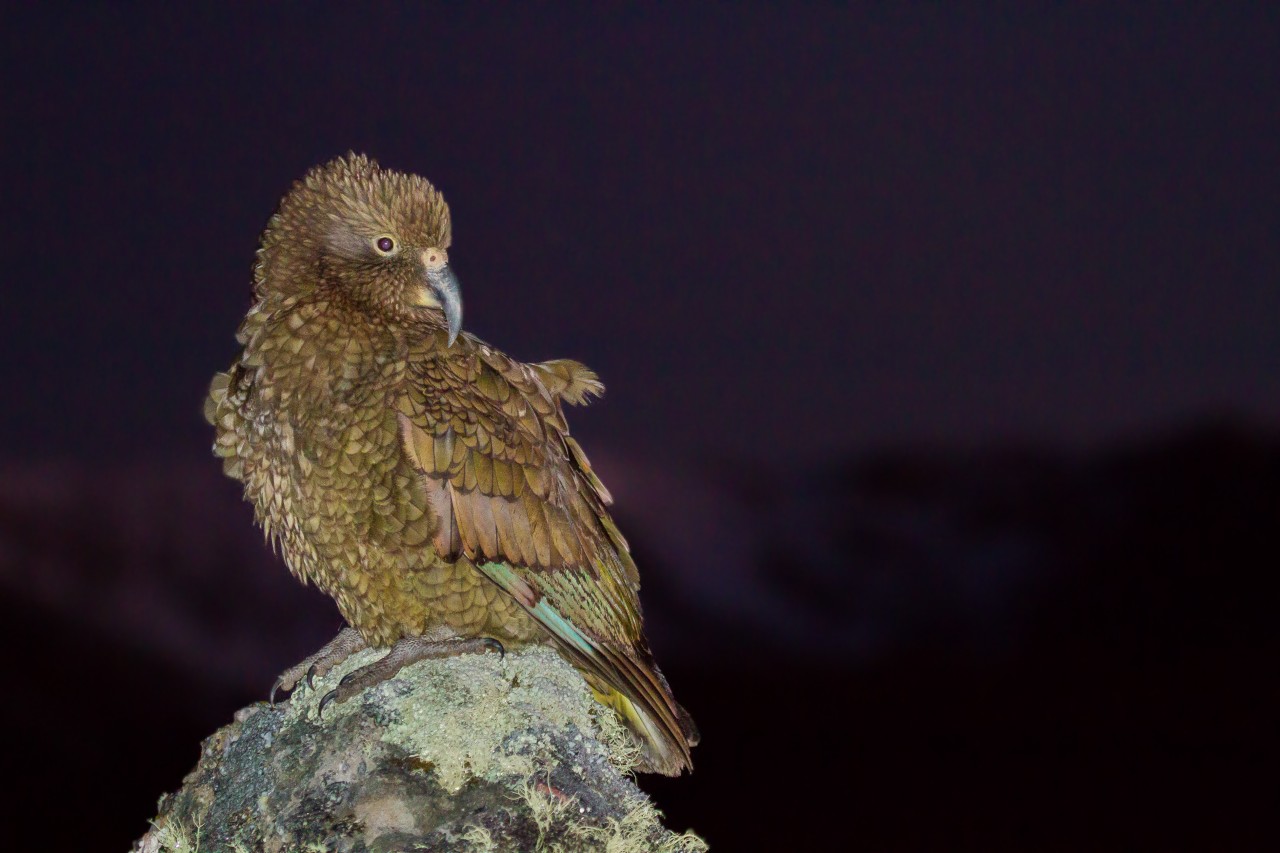
Anyone who has done any tramping in the South Island will, in all likelihood, have had the pleasure (or displeasure) of meeting a kea or two. I say ‘pleasure’ because they are probably New Zealand’s most curious, inquisitive and friendly bird. ‘Displeasure’ because they have a notorious reputation for wrecking gear – from pack straps to tent fabrics right through to car wiper blades and window seals.
Male kea can grow up to 50cm long and weigh up to 1kg (females are 20 per cent lighter) and have a wing span a metre wide. Juveniles can be recognised by their yellow ‘cere’ (fleshy part at the base of the upper bill and which houses the nostrils) and also by their calls which are less stable in tone than the adult’s trademark high-pitched, descending ‘keeeeeaaaa’. The juveniles’ sound is more of a loud, uncontrolled whooping or squealing.
Adaptability is a key part of kea ecology and as a species they have benefited from some human-induced modifications to their habitat, including scavenging for dead deer, chamois and tahr shot by hunters, digging for huhu grubs in pine forests and digging for grass grubs in pasture. Their omnivorous diet aids them in this adaptability. (They have been known to prey upon Hutton’s shearwater nestlings in the Seaward Kaikoura Range).
The kea’s habit of preying on sheep led the New Zealand government in 1860 to pay a bounty for kea bills. They were known to perch on the backs of sheep and dig through skin and muscle on the rump to reach the fat around the kidneys. In 1970, with just 5000 birds remaining, the bounty was lifted. Kea received full protection in 1986.
– Matt Winter is a Marlborough-based nature photographer
An ethical guide to visiting the Muriwai gannet colony
Trending Now
Every Tararua hut reviewed and ranked
Apply for the Shaun Barnett Memorial Scholarship
Five ways to Lake Angelus
The Tararua’s forgotten traverse
One Planet Sonder
Subscribe!
Each issue of Wilderness celebrates Aotearoa’s great outdoors — written and photographed with care, not algorithms.Subscribe and help keep our wild stories alive.