How far can children walk and how much can they carry? We find out.
When tramping, young kids are frequently heard to complain “it’s too far” or “my pack’s too heavy”. But how far is too far, and how much can children reasonably be expected to carry? I asked two experienced trampers for their recommendations.
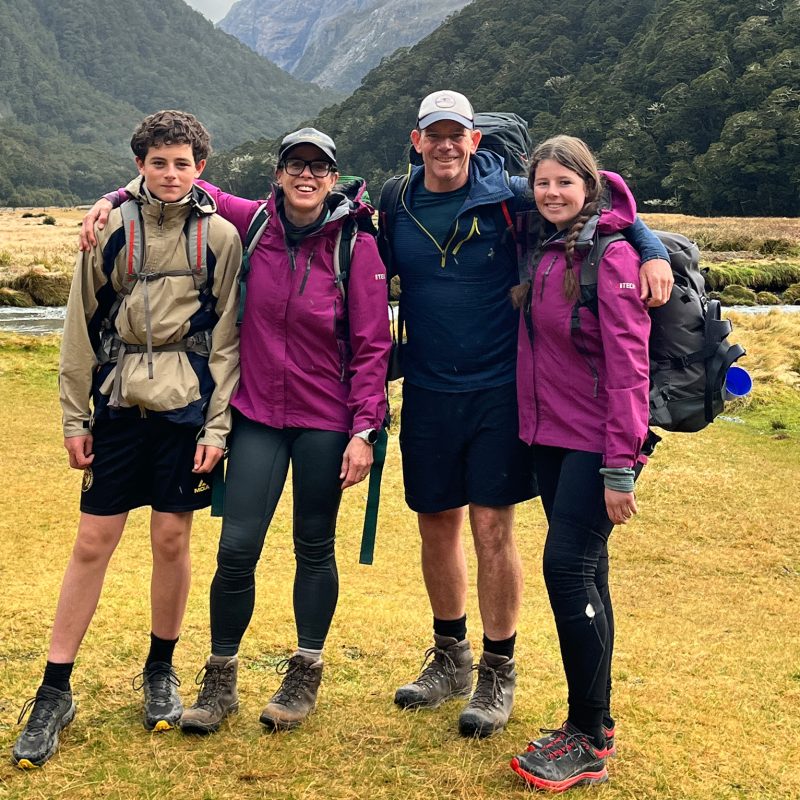
Jo Clark is founder of the popular website and Facebook page ‘Tramping with Little People’. She’s been taking her youngsters tramping since they were 11 weeks old.
Michelle McConnon is tour manager at Hiking New Zealand and first took her children tramping when they were four and five.
Michelle says it’s about laying good foundations with the children. Keep trips enjoyable so there will be many more family tramps ahead. Jo agrees and says it’s about adjusting expectations, slowing everything down and making it about the kids. “Otherwise, it’s likely to end in tears on both sides.”
0–three years
You can’t rely on children three and under to walk any distance. “You have to be prepared to carry them – and what they’re carrying,” says Jo.
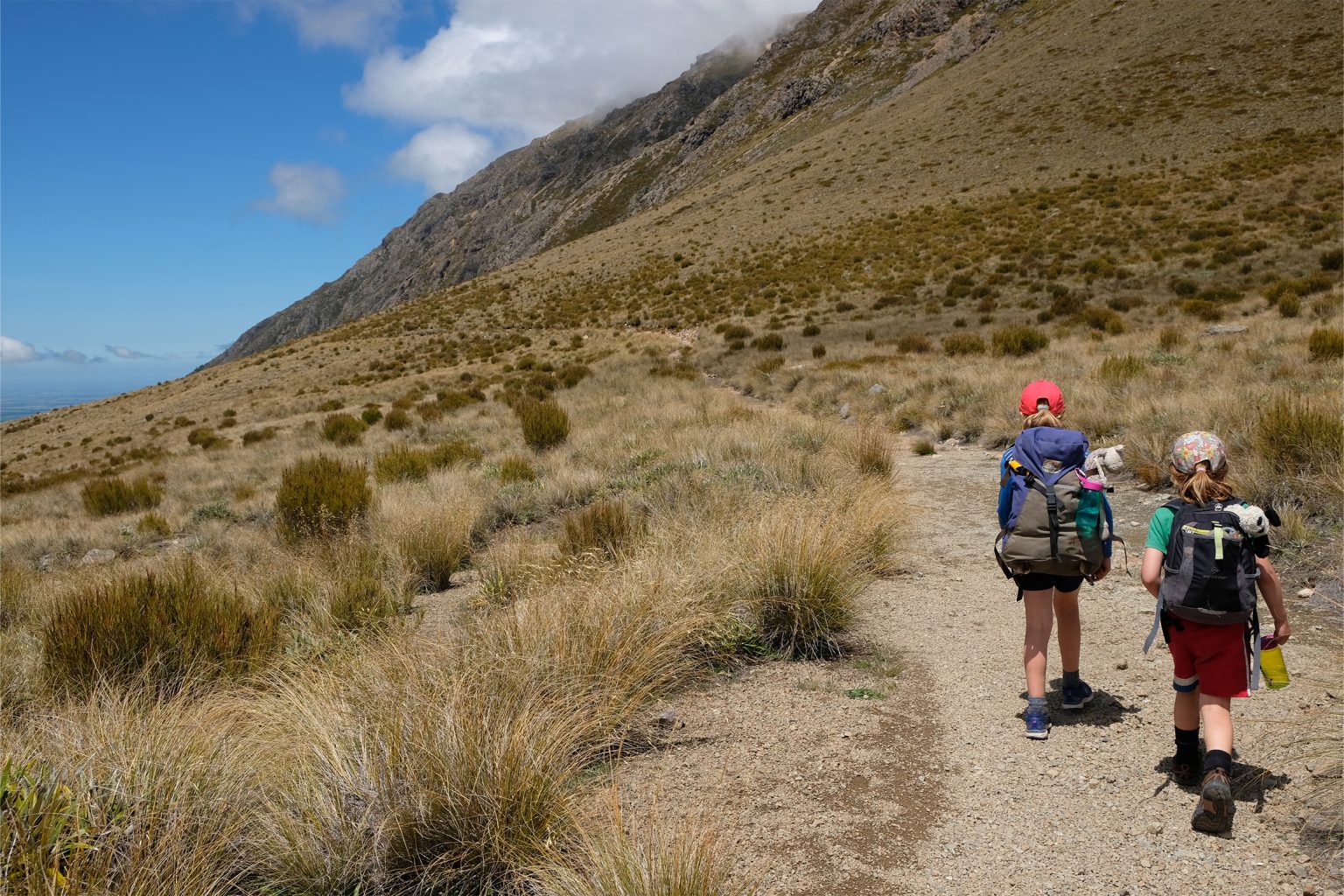
Michelle advises giving them nothing more to carry than their favourite soft toy or a tiny water bottle.
Both agree that at this age, it’s more about how long the parents can last.
Four to seven years
Three- to five-year-olds can be tricky. They become too heavy to carry comfortably, and while they’re capable of walking, they might not want to, says Jo. You have to be able to carry them and their gear if need be. That’s where front packs, like the Trail Magik Kid Carrier, come into their own – weighing just 277g and rated for kids up to 19kg, they offer a good back-up plan. A carabiner to clip your child’s pack to yours is useful, too.
Jo suggests keeping trips “under 10km, under three hours [for] under five years … if you have to bail and get out you can”.
For this age bracket it can be less about distance and more about speed. “These kids can walk for a lot longer than you think they can, but you have to be prepared to go at their pace,” she says. Weather and daylight hours need to be factored in.
An old adage is to add a kilometre for every year (3km for three-year-olds, 4km for four-year-olds). Although one of her children once walked 12km at the age of four, Jo says the kilometre-to-age theory sounds “about right”.
Michelle advocates 3–6km for this age group with plenty of snack breaks and games. “These kids are inquisitive and really love adventure, so short and exciting hikes are best.”
She errs on the side of caution with weight too, and recommends they carry a small daypack with no more than a lightweight jacket, water bottle and snack. “Keeping it light ensures they’ll stay enthusiastic. And [you] need to be able to carry all their gear if things take a downward turn.”
Jo agrees. “It’s about introducing the concept of carrying.”
Eight and above
Once youngsters hit eight they can go further, last longer and carry more.
“A 5–10km hike is achievable, especially if the trail is varied and engaging,” says Michelle.
She recommends investing in a pack rather than just using a school bag. “A well-fitted daypack with the essentials like water, snacks and maybe a spare layer works well. Still keep the load light – around 10–15 per cent of body weight is a good guide. Each child is different, so some will carry more and some less.”
Jo agrees that distance and load tolerance will depend on the individual. “My eldest was quite motivated to carry her sleeping bag and all of her clothes by eight, whereas my younger one (nine) still isn’t carrying a sleeping bag.”
The point of tramping has shifted for Jo’s kids, too. When they were younger it was about staying in a bunk bed and toasting marshmallows over a fire. Now it’s about the challenge and spending time together as a family. The good groundwork paid off.
School bag study
Evidence suggests that carrying less may result in children being more active. Dr Sandy Mandic, a former Otago University academic, studied how school bag weight acted as a barrier to walking or cycling to school among adolescents (average age 15). The research, published in 2018, showed that overall, 68.3 per cent of parents perceived adolescents’ bags were too heavy to carry to school. The majority of adolescents also thought their bags were too heavy to walk (57.8 per cent) or cycle (65.8 per cent) to school. School bags weighed on average 5.6kg, equating to 9.3 per cent of an adolescent’s body weight. Mandic said that while most guidelines suggested a maximum bag weight of 10–15 per cent of body weight, recommended weights could be as low as 5 per cent and as high as 20 per cent. Maximum bag weight recommendations were generally not supported by the literature, however.
Jo and Michelle’s top tips:
1. Involve kids at the planning stage. It gives them a sense of ownership and makes them more likely to push on when the going gets tough.
2. Invite another family along. Kids often walk further with fewer complaints when a friend shares the adventure.
3. Choose adventurous, interesting routes over flat terrain or 4WD tracks. When kids have to concentrate, they have less time to think about being tired.
4. Build up to it. Do a few day hikes before committing to an overnighter.
5. Keep energy levels up – take more snacks and treats than you think you’ll need. Let kids carry some, and give them some control over when they get to eat or nibble.