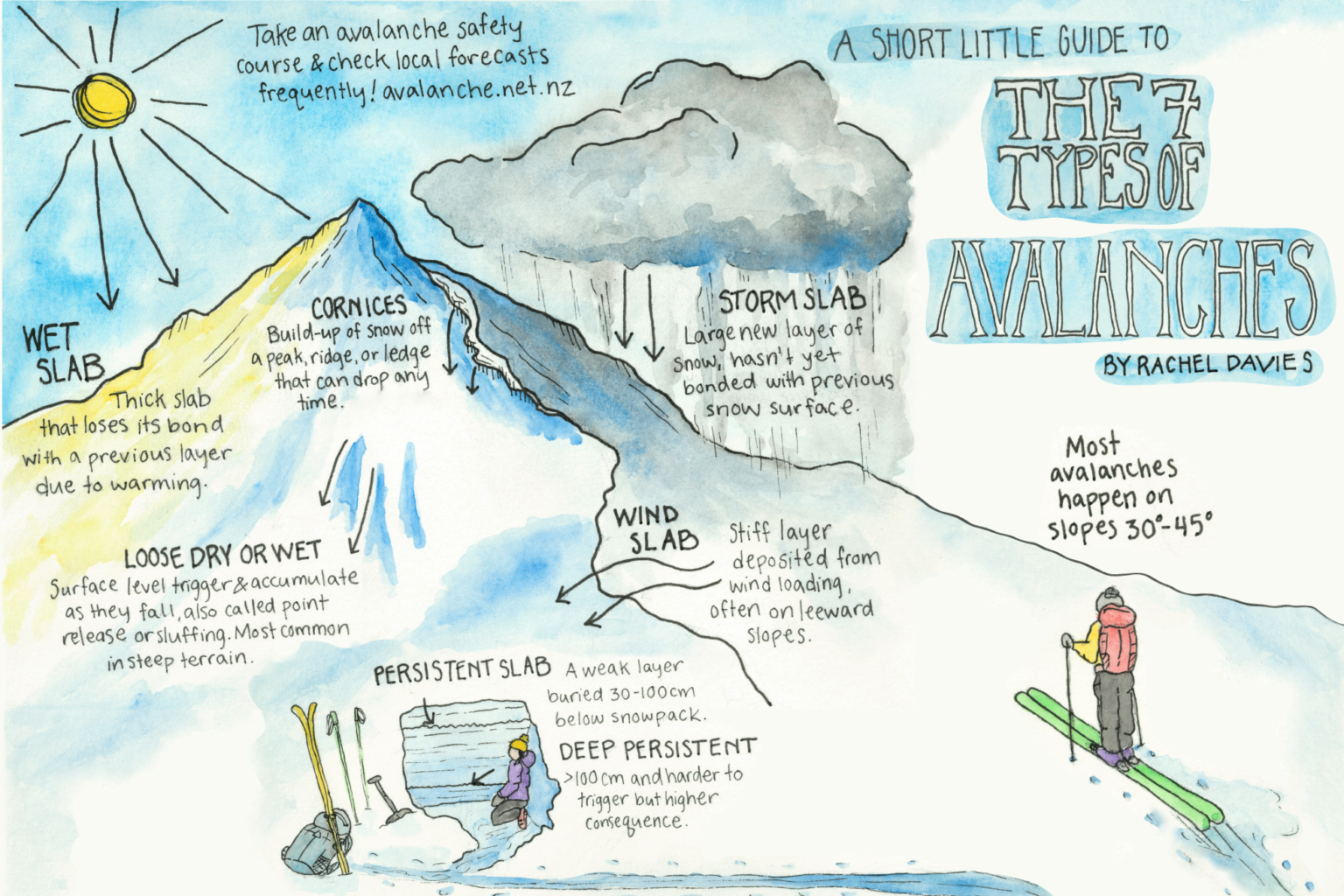
Get to know weather history and snowpack in local areas to identify these common types of avalanche hazards.
Storm slab: Large new layer of fresh snow, hasn’t yet bonded with previous snow surface.
Wind slab: Stiff layer deposited from wind loading, often on leeward slopes.
Wet slab: Thick slab that loses its bond with a previous layer due to warming.
Persistent slab: A weak layer buried 30-100cm below snowpacK.
Deep slab: A weak layer buried ,ore than 100cm. Harder to trigger but higher consequence.
Loose dry or wet: Surface level trigger and accumulate as they fall, also called point releases or sluffing. Most common in steep terrain.
Cornices: A build-up of snow off a peak, ridge, or ledge that can drop at any time.
Angle: Most avalanches happen on slopes 30° to 45°.
Skills: Take an avalanche safety course and check local forecasts frequently. Get to know the snowpack throughout the season, not just the day you’re venturing out. Check the avalanche advisory at www.avalanche.net.nz
Harris Saddle and Routeburn Falls Hut, Mount Aspiring National Park
Upgrading to ultralight without replacing everything
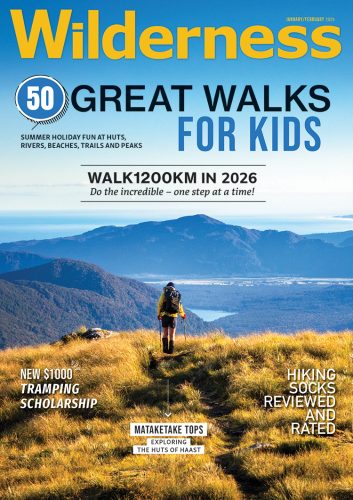
Walk1200km in 2026
Subscribe!
Each issue of Wilderness celebrates Aotearoa’s great outdoors — written and photographed with care, not algorithms.Subscribe and help keep our wild stories alive.