Cold temps, wetness, and wind, combined with inadequate fueling & hydration, poor trip planning and medical conditions can all lead to progressive phases of cold illness and injury, no matter the season.
Hyperthermia
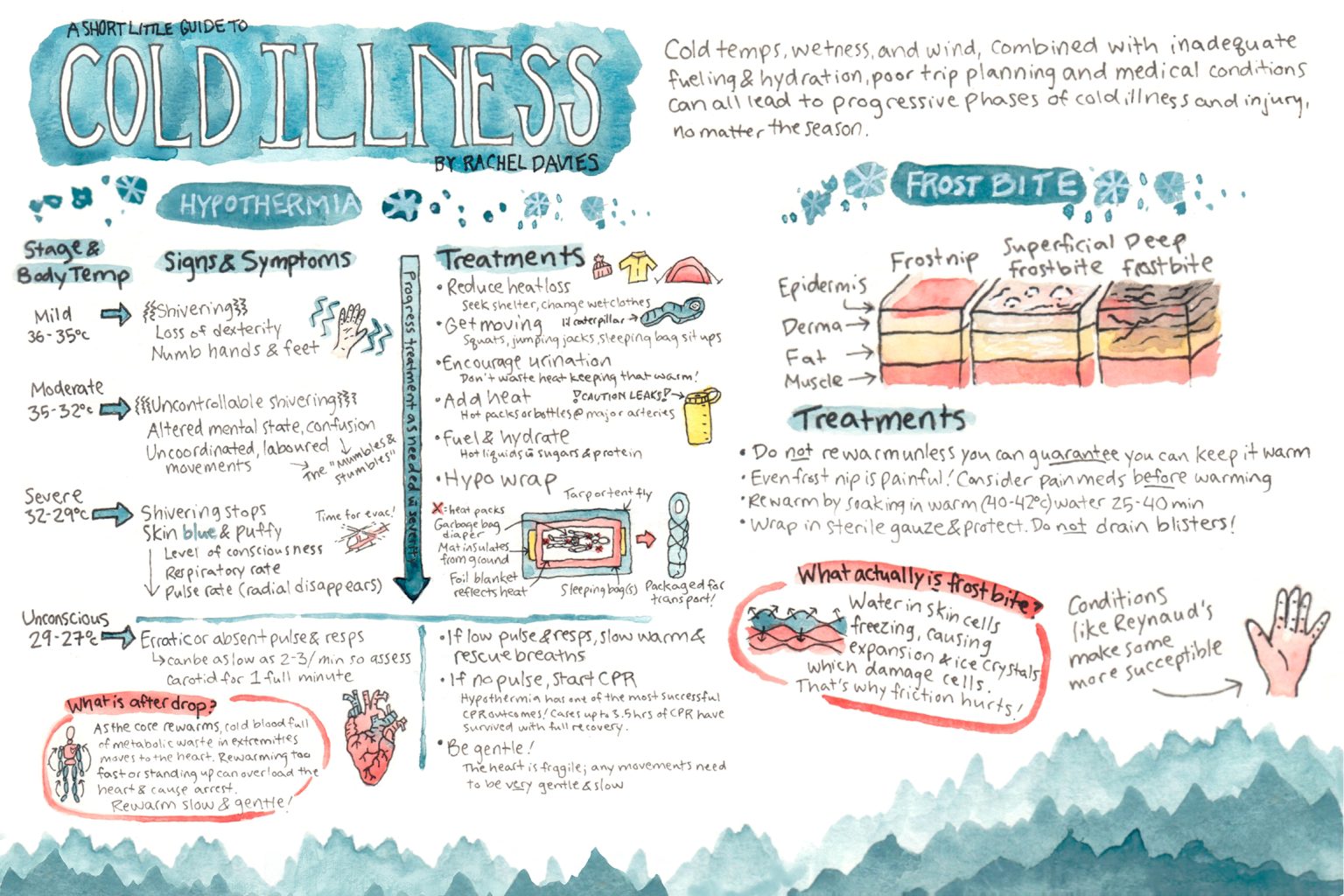
Mild (36–35°C): Shivering, loss of dexterity, numb hands & feet
Moderate (35–32°C): Uncontrollable shivering, altered mental state, confusion, uncoordinated, laboured movements (“umbles” = mumble, fumble, stumble, grumble)
Severe (32–29°C): Shivering stops, skin blue & puffy, level of consciousness ↓, respiratory rate ↓, pulse rate ↓ (radial pulse disappears). Time for evac!
Unconscious (29–27°C): Erratic or absent pulse & resps, can be as low as 2–3/min, so assess carotid for full minute. Time for evac!
→ If low pulse & resps, slow warm & rescue breaths
→ If no pulse, start CPR: Hypothermia heart one of the most successful CPR recoveries! Cases w/ up to 3.5 hrs of CPR have survived with full recovery.
→ Be gentle! The heart is fragile; any movements need to be very gentle & slow
What is after drop?
As the core rewarms, cold blood full of metabolic waste in extremities moves to the heart. Rewarming too fast or standing can overload the heart & cause arrest. Rewarm slow & gentle!
Treatments
Reduce heat loss: Seek shelter, change wet clothes
Get moving: If able – caterpillar, squats, jumping jacks, sleeping bag sit ups)
Encourage urination: Don’t waste heat keeping them warm!
Add heat: Hot packs or bottles @ major arteries. Caution: Leaks!
Fuel & hydrate: Hot liquids & sugars & protein
Hypo Wrap: Heat packs, garbage bag diapers, mat insulates from ground, foil blanket reflects heat, sleeping bags, tarp or tent fly, packaged flat for transport
Frostbite
What actually is frostbite?
Water in skin cells freezing, causing expansion & ice crystals which damage cells. That’s why friction hurts! Conditions like Raynaud’s make some more susceptible.
Treatments
→ Do not rewarm unless you can guarantee you can keep it warm
→ Even frost nip is painful! Consider pain meds before warming
→ Rewarm by soaking in warm (40–42°C) water 25–40 min
→ Wrap in sterile gauze & protect. Do not drain blisters!