Elements to Consider:
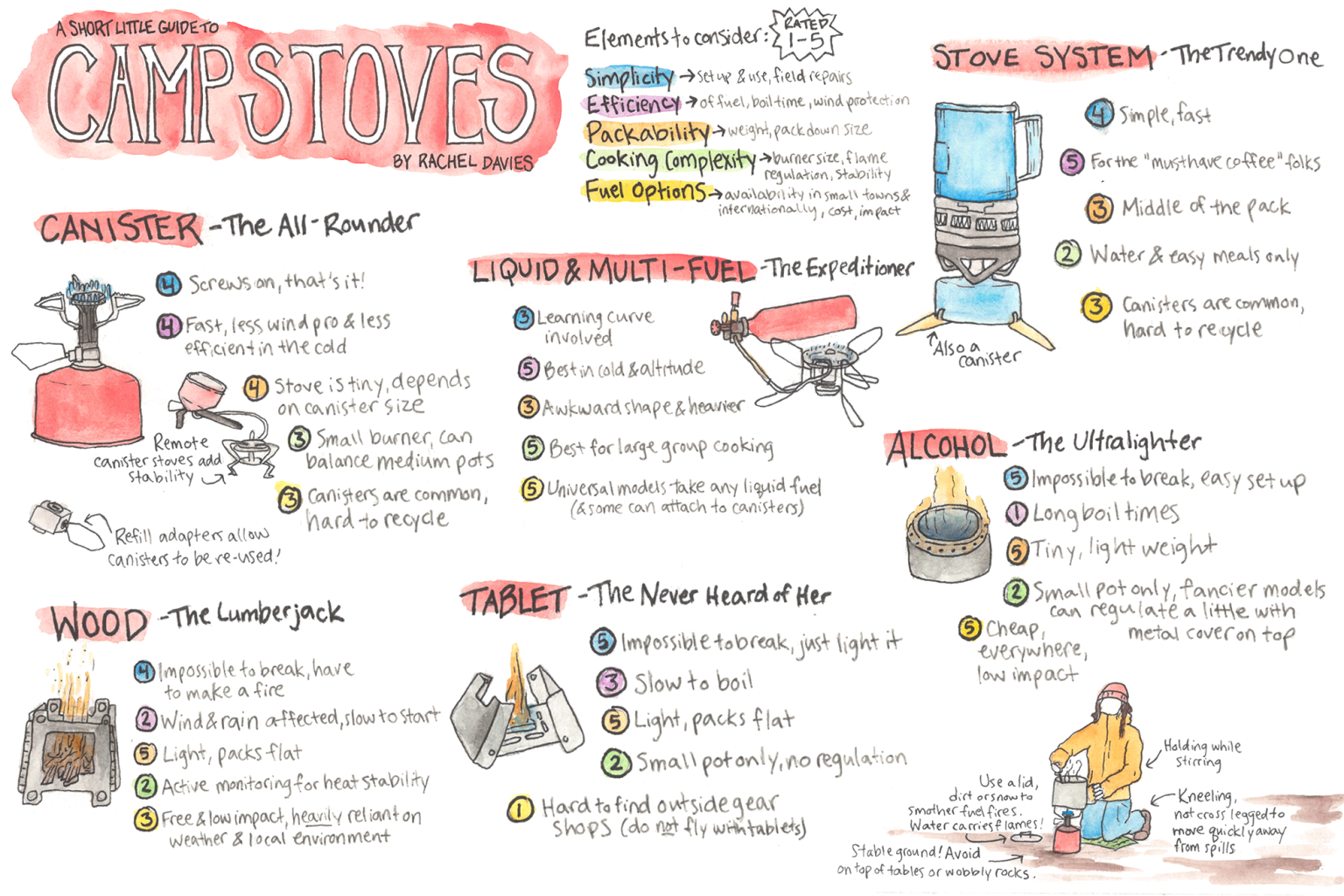
- Simplicity → set up & use, field repairs
- Efficiency → fuel, boil time, wind protection
- Packability → weight, pack-down size
- Cooking Complexity → burner size, flame regulation, stability
- Fuel Options → availability in small towns & internationally, cost, impact
Canister – The All-Rounder
- Screws on, that’s it!
- Fast, less windproof & less efficient in the cold
- Small burner, can balance medium pots
- Stove is tiny, depends on canister size
- Canisters are common, hard to recycle
Extra notes:
- Refill adapters allow canisters to be re-used!
- Remote canister stoves add stability.
Liquid & Multi-Fuel – The Expeditioner
- Learning curve involved
- Best in cold & solitude
- Awkward shape & heavier
- Best for large group cooking
- Universal models take any liquid fuel (some can attach to canisters).
Alcohol – The Ultralighter
- Impossible to break, easy set up
- Long boil times
- Tiny, lightweight
- Small pot only, fancier models can regulate a little with metal cover on top
- Cheap, everywhere, low impact
Stove System – The Trendy One
- Simple, fast
- For the “must-have coffee” folks
- Middle of the pack
- Water & easy meals only
- Canisters are common, hard to recycle
Also a canister.
Wood – The Lumberjack
- Impossible to break, have to make a fire
- Wind & rain affected, slow to start
- Free & low impact, heavily reliant on weather & local environment
- Light, packs flat
- Active monitoring for heat stability
Tablet – The Never Heard of Her
- Impossible to break, just light it
- Slow to boil
- Light, packs flat
- Small pot only, no regulation
- Hard to find outside gear shops (do not fly with tablets)