Winter provides close, unforgettable encounters for bird watchers.
New Zealand is a winter wonderland for bird watching. The classic winter experience has to be a close encounter with kea in the South Island high country. Their high-pitched kee-aa-aa call is the iconic sound of the Southern Alps, and their antics bring a smile to anyone’s face.
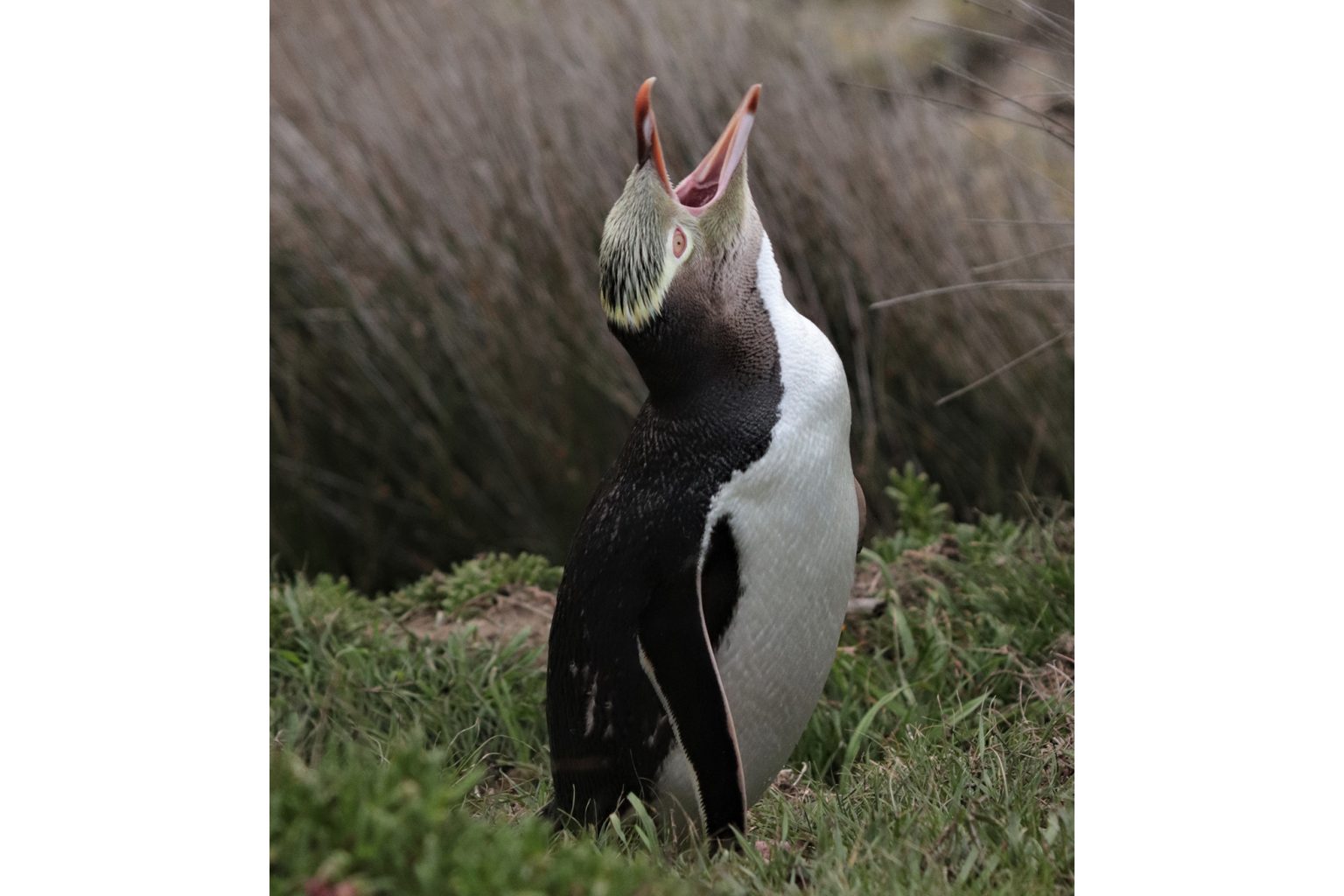
A close encounter with a hoiho yellow-eyed penguin on Otago’s wild coast is also unforgettable. The DOC reserve at Kātiki Point near Moeraki is a great place to see them waddling ashore on a winter’s afternoon.
And flocks of matapo Otago shags and kawau tikitiki spotted shags traverse the coast. There are also winter flocks of songbirds, so expect to be charmed by the colourful goldfinches, greenfinches, yellowhammers and redpolls.
Winter is the prime time to see fluffy toroa northern royal albatross chicks at the Taiaroa Head colony on Otago Peninsula, and kororā little penguins come ashore at nearby Pilot’s Beach shortly before sunset.
This is also the season when waterfowl flock to large low-altitude lakes. New Zealand’s ‘bird of the century’, the elegant pūteketeke Australasian crested grebe, migrates from its high country lake-breeding sites to gather at winter strongholds such as Lake Forsyth on Banks Peninsula, where up to 100 birds may congregate alongside good numbers of pāpango New Zealand scaup, kuruwhengi Australasian shoveler and black swans.
Further north, the Pūkorokoro Miranda coast near Auckland has spectacular winter flocks of oystercatchers, wrybills and bar-tailed godwits, along with smaller numbers of royal spoonbills and white-faced herons.
The wrybill flock contains up to 3500 birds, more than half the global population. The name wrybill refers to their unique beak, which curves to the right. Check out the bird-watching hides, from where you can view their spectacular murmurations. The large winter starling flocks here also perform breathtaking antics as the birds come in to roost in mangroves near the hides.
At high tide in winter, the main stilt pond may be populated by flocks of bar-tailed godwits, red knots, and pied stilts, as well as Australasian shovelers, grey teal, and black swans.
My top tip for winter bird watching is to take a hot drink in a flask – but be sure to hold your cup tightly in case a kea swoops down for a sneaky slurp!
– Michael Szabo is the author of Native Birds of Aotearoa (Te Papa Press) and editor of Birds New Zealand magazine.