Three places to see these characteristic New Zealand marine mammals
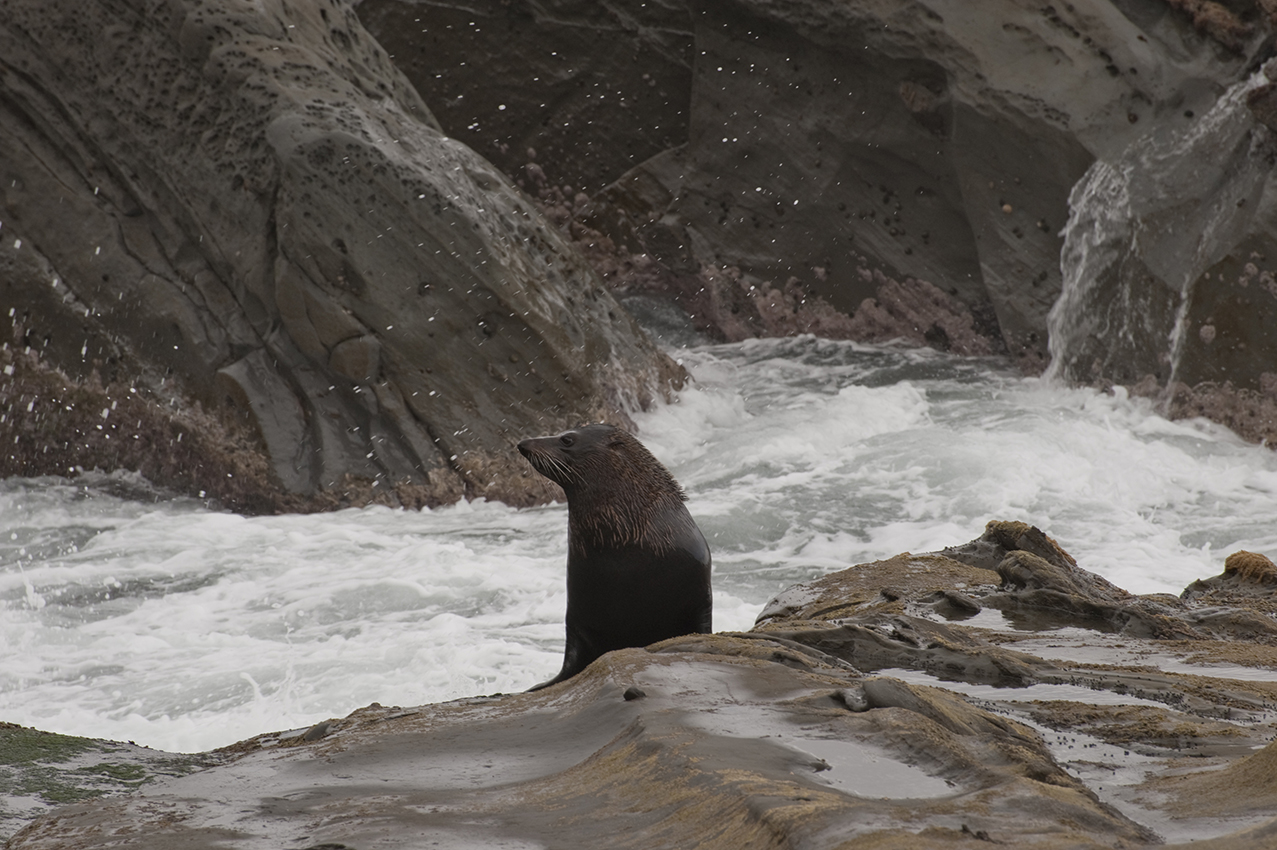
Once widespread around the coastline, the New Zealand fur seal (Arctocephalus forsteri) has suffered since humans arrived in Aotearoa.
Maori harvested seals for food and reduced their number significantly – particularly around the North Island and accessible parts of the South Island. But the real onslaught came after Captain Cook publicised their abundance in the late 1700s. Sealing gangs, usually from Australia or the USA, began arriving from the 1890s onwards and in places the slaughter was almost total. Fur seals were clubbed to death for their luxuriant furs, then in great demand as fashionable wear in Europe. Seal leather also served for making shoes.
Colossal wastage sometimes occurred, perhaps illustrated most graphically by the example of the Open Bay Islands, off the coast near Haast. A sealing gang landed here in 1810 and systematically killed almost all of the seals on these small islands. However, the furs rotted when their ship failed to pick them up and the men faced starvation. An aborted attempt to live on the mainland soon convinced them the islands offered a better chance at survival, and they were finally rescued after almost four years as castaways. A well-known folk song, David Lowston, recounts their hardship.
During this period of exploitation, fur seals were exterminated from many parts of the coastline, as well as the subantarctic islands. For example, sealers reduced the population of the Bounty Islands from 52,000 in 1800 to as low as five in just 30 years.
Since fur seals gained full protection in 1978, they have recovered somewhat and by the 1990s had started breeding again in the North Island. Conservation issues remain though, with some still accidentally injured or killed by commercial fishing nets.
Happily many places offer good opportunities to observe these animals. During winter, many young males occupy ‘haul-outs’ on rocky headlands, and there are well-established breeding colonies at accessible places like Cape Foulwind near Westport, and Cape Palliser in the Wairarapa.
Don’t get too close to these wild animals – they have a nasty bite and can move surprisingly quickly over rocks. Females are particularly aggressive when they have pups, and males during the breeding season.
Cape Palliser, Wairarapa
The rocky coastline of the Wairarapa’s southernmost point was one of the first places that New Zealand fur seals began breeding again in the North Island. This colony occupies a rocky reef near the Cape Palliser Lighthouse, easily approached by the gravel road that ends near there.
Kaikoura Peninsula Walkway, Kaikoura
This half-day walkway follows the coastline and ridges of the Kaikoura Peninsula, between track entrances at South Bay and Armers Bay. Allow about three hours for the through walk, and keep your eyes peeled for the seals that frequent the shoreline.
Hollyford Track, Fiordland National Park
It might be a long way along the Hollyford Track to Martins Bay just to see fur seals, but you’ll be also rewarded by views of the Darran Mountains, Lake McKerrow and the wild coastline of the bay itself. Fur seals occupy the coastline at Long Reef and there you might see also Fiordland crested penguins. Allow 4-5 days each way for the walk to Martins Bay, or alternatively fly-in and walk out.