


From there Bramley moved to DOC. After a three year stint as technical development manager, he headed up a research and development team established to address technical challenges including predator management. It was a natural transition to the ZIP role.
“I’m extremely passionate about restoring New Zealand’s native biodiversity,” Bramley says. “The thing I’m probably best at is forming teams and getting them tightly focused. I love knowing why but don’t care if I don’t as long as it works. That’s why we have scientists to help us unpick the why.”
Bramley says it was the need for tightly focused research and development that led to the establishment of ZIP in 2015.
“The thinking was ‘how do we do predator control 10 years from now?’ This required a really tight focus and it was a challenge doing this within a government department where people have multiple priorities and planning can take a long time. So this work was ring-fenced and pulled out of DOC.
“Our job now is to develop the tools and technology to achieve zero possums, rats and stoats on the mainland. ‘Remove and Protect’ is our mantra.
“DOC and the NEXT Foundation are our founding supporters,” he adds.
The ability to be extremely agile is critical, says Bramley. “In research and development it’s a try, sense and respond approach and it is complex. Every time you fiddle with the system the system adapts so we have to change our approach. Our planning is constantly evolving as we learn new things.”
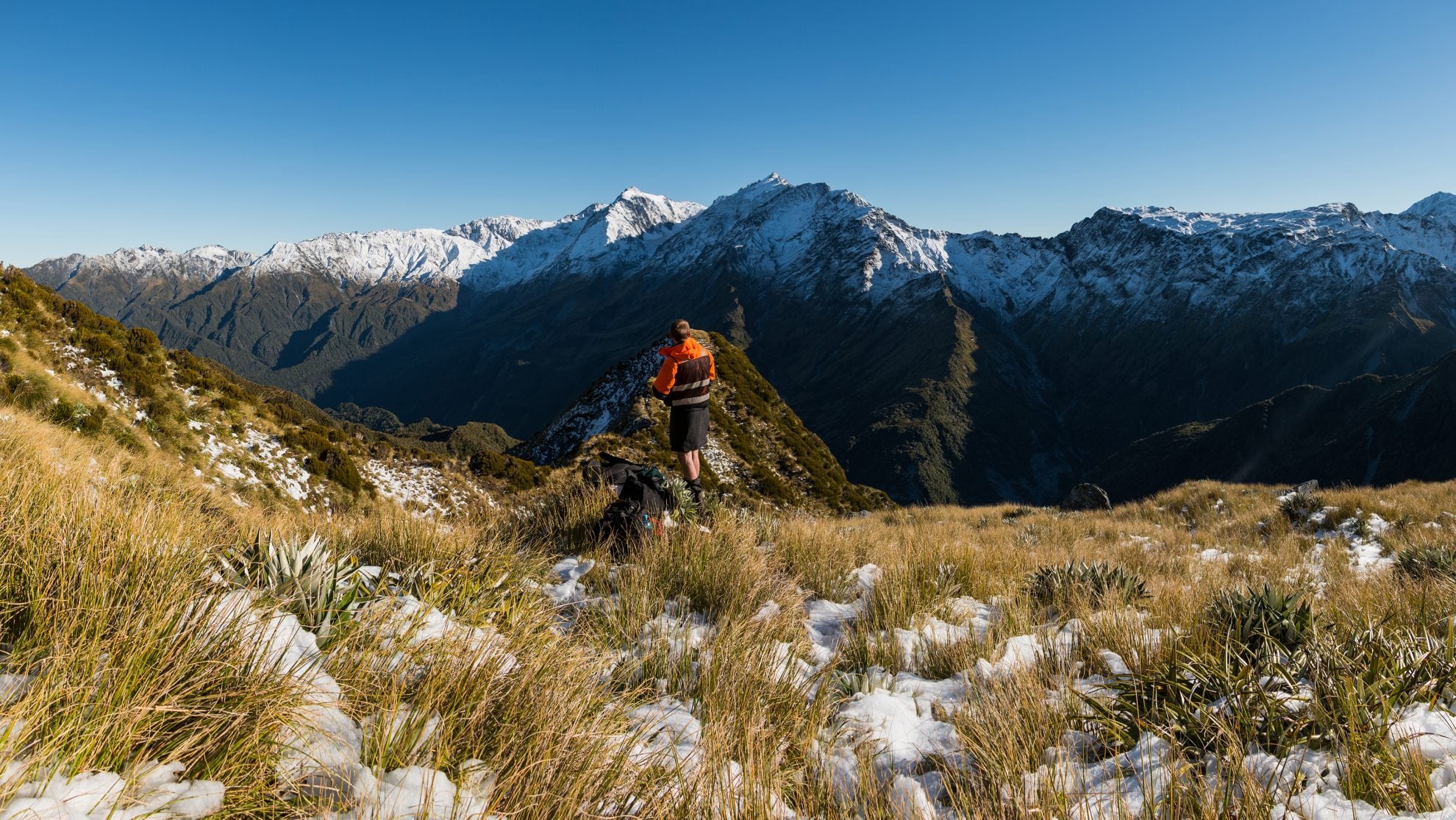
In the Perth, for example, a team of eight have been based in the valley since January (working eight days on, four days off) establishing a network of temporary tracks and carrying out pre-operational monitoring of possum, rat and stoat populations within the research area. “We’ve been measuring everything they do. Temporary bivvies have satellite connections and we can talk with them every night.
This changes the game, we get their daily thoughts about what’s happening and what’s working, so we’re constantly planning and adapting if we need to.”
And the technology changes. “As we try new stuff and something works, we move with that.”
Those signals bouncing from trap to satellite to a laptop in the bush, for example, save the ground team hours of slogging along trap lines. That technology has revolutionised the game, says Bramley. “In our Perth Valley detection lines we have approximately 1000 traps and we get told as soon as one catches something. So instead of visiting 1000 traps to check them all, our rangers only need to visit one. It’s a robust electronic system that’s done more than a million trap nights to date at our Bottle Rock site in Queen Charlotte Sound.”
Earlier ZIP trials were carried out on the 400ha Bottle Rock Peninsula ‘laboratory’. Larger aerial removal operations followed, on Taranaki Mounga (1200ha) and then near Haast (2300ha) along with the aforementioned possum and rat river crossing test in Remutaka Forest Park.
“The Perth Valley is another realm in terms of size and remoteness and it’s some of the wildest country in New Zealand. We believe we can completely remove possums in there. It’s a perfect testing ground for rats, and we are still learning about stoats,” says Bramley.
Back to that ZIP technology. Radio transmitters on rats have established their behaviour patterns, including where and when they travel, which helps guide where to set the traps. “In the Perth now we are establishing a network of traps set every 100m on lines 700m apart, all remotely monitored by satellite. Possums, on the other hand, will travel over larger areas – roughly 100ha over seven days – so we only need one or two traps in that sized area and they will find it.”
Collaborating with entrepreneur Grant Ryan, using remotely placed thermal cameras and software that’s ‘trained’ to detect and identify stoats, is also in the making. “It’s crazy, scientific stuff. Engineering is just being lazy, to be honest,” laughs Bramley.
Some tactics are not at all technical; just simple and smart. For example, tests establishing that using a ramp to a possum trap achieves a 20 per cent higher catch rate, while visual lures are at least as effective as any kind of scented bait (and require significantly less labour to keep ‘fresh’ in the field). After trials including flashing lights, white corflute (like real estate signs) has proved the most effective, says Bramley.
As for those rat baits. “We’ve done heaps of work on lures and the ‘ice cream’ for rats is Pics peanut butter, Nutella (in summer) and an egg mayonnaise, which is also good for stoats. Nothing else is better, just those three.” Stale baits don’t appeal though, hence the genius of ZIP’s auto lure dispensers. “These are like a medical syringe with a tiny motor. A little bit is released each night so the lure is always fresh.”
This is all impressive, but even if ZIP succeeds in eliminating possums, rats and hopefully stoats from an area, how do they prevent reinvasion?
“We pick areas that are already naturally defendable and reinforce them as required; areas bound by geographic barriers such as the sea, large rivers and mountain tops,” says Bramley. “Once they are cleared we will attempt to defend them. In the Perth Valley, the natural boundaries are two big rivers backed by the snow and ice of the Main Divide.”
We are no longer talking about control, he adds. “This is about eradication, then holding the line.”
Bramley also holds to the dream of a 1080-free future. “I think everyone, wisely, has a natural aversion to using toxins and that one day we do all want to be out of that world. In the meantime, 1080 is one of the best toxins we have. It’s water soluble and gets removed from the system quickly and, now that we have more knowledge, it’s laid in a precise way and there are very few non-target casualties.”
Since ZIP was established, the Predator Free New Zealand concept has shifted the whole social conversation, says Bramley. “Three years ago, we were the crazy guys and people shook their heads and said we could never clear such a large area as the Perth of possums, and maybe rats. Two years ago we wouldn’t have thought we’d be at this point. Technically, we’re getting closer. Now we can work at a large scale and hold it. That’s the difference with the Perth Valley.”
The Perth Valley Project is being undertaken by ZIP in collaboration with the Department of Conservation and Predator Free 2050 Limited. Much of the project area falls within the specially-protected Adams Wilderness Area, which is frequented by very occasional hunters and trans-alpine tramper/climbers.
“Studies show that possums, once isolated, travel over a vast area of up to 100ha in a week, presumably looking for other possums,” says Al Bramley. “They are also notably curious when they encounter a novel object – such as a trap with white corflute lure – and they have a slow breeding rate.
“For all these reasons, a lean trap network can be sufficient to detect a ‘lonely’ possum in an otherwise possum-free area. At the Bottle Rock Peninsula study area, for example, one trap every 50ha has so far (after 18 months) prevented possums re-establishing.
“Rats, however, are unpredictable. They can adopt very small home ranges even when isolated, making them extremely difficult to detect.
“We released transmitter-fitted rats into a rat-free area to study their movements. One ranged over seven hectares, one sat in a flax bush, and the females shot inland then camped in a tiny area. And they breed fast; they start slow, then go exponential.”
And that’s why there’s a difference in trap numbers.



