See more… braided rivers

January 2013

Read more from

January 2013

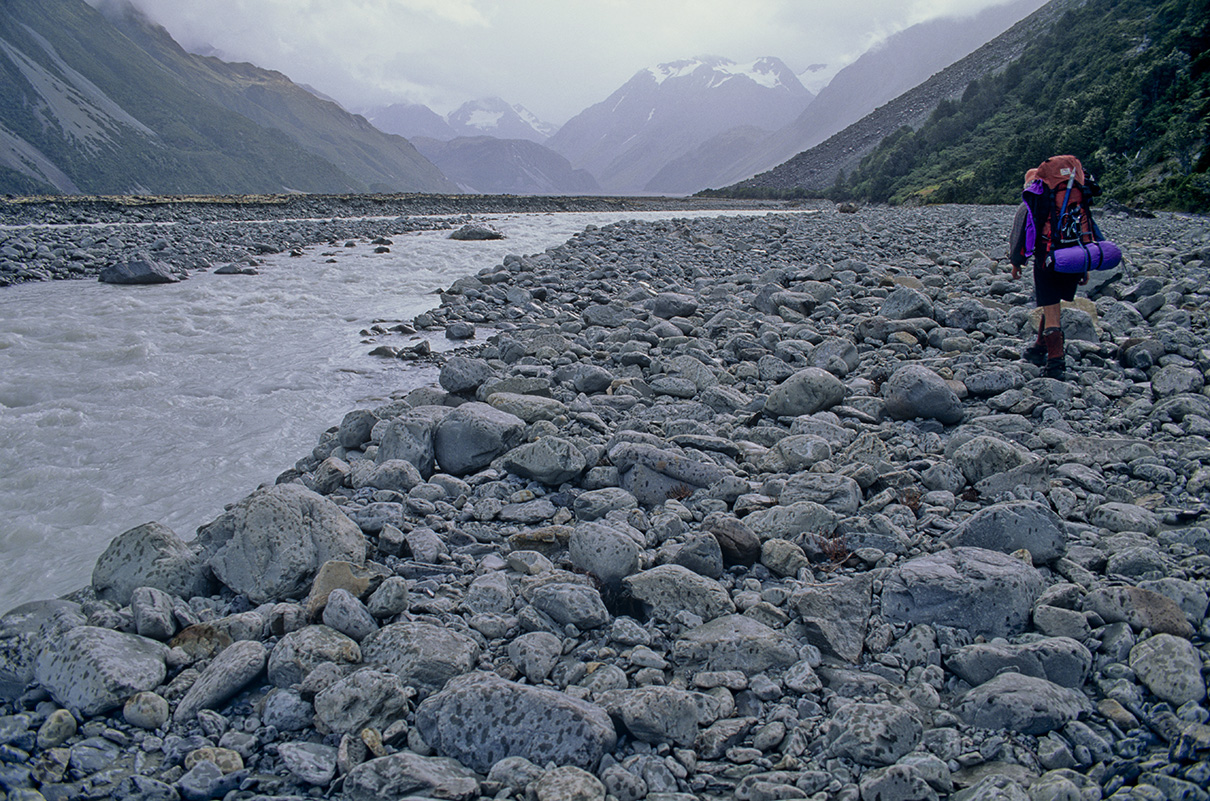
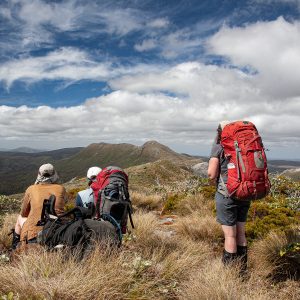
Tramping in the upper Rakaia River. Photo: Shaun Barnett/Black Robin Photography

Three places to these characteristic New Zealand rivers

Many New Zealand trampers have threaded their way up Canterbury’s braided rivers, crossing each milky strand thinking it was the last, before reaching one last ford, often unexpectedly deep. Fording many of the largest rivers, however, would be impossible if the river’s full force was concentrated into one channel and not dispersed over several braids. On one occasion I remember crossing a chest-deep braid of the Rakaia, very thankful we’d already crossed some of the river’s volume in other braids.

Braided rivers form only where the right combination of gradient and sediment load occurs. Young, easily eroded mountains like the Southern Alps create the right sediment load, while the Canterbury plains provide the perfect gradient. Consequently, Canterbury has 60 per cent of New Zealand’s braided rivers.

Although not unique to New Zealand, braided rivers occur only in a handful of other places, including Alaska, Canada, Argentina and Tibet – all of which also boast these specific topographical characteristics.

In New Zealand, braided rivers provide habitat for a range of plants and animals, including the endangered kaki, or black stilt. Banded dotterels, wrybills, skinks and a number of fascinating arthropods – like the giant dragonfly – also live in braided river valleys. Curious plants like the cushion forget-me-not (Myosotis uniflora), willowherb (Epilobium) and grey woollyhead (Craspedia lanata) grow on the riverbed, many of them highly specialized to cope with the dynamic landscape. Fierce, dry winds, bitterly cold winters and frequent floods are just some of the environmental conditions the plants and animals have to cope with. It’s often in these details, the miniature world beneath your boots, that braided rivers are at their most fascinating.

Pukaki River, Canterbury

The Mackenzie Basin, and the Pukaki River in particular, are home to one of New Zealand’s most endangered bird, the kaki or black stilt. It’s also the world’s rarest wading bird.

DOC has a captive breeding programme to help the bird’s numbers, which are threatened by predation by cats and stoats, and their habitat altered by introduced weeds. DOC has a viewing hide at their breeding centre, near Twizel. The Pukaki is also famed for draining the great glaciers beneath Aoraki/Mt Cook.

Waimakariri River, Arthur’s Pass National Park, Canterbury

Trampers often have a love-hate relationship with the Waimak. It’s the access route to so many tramps: the Three Passes, Avalanche Peak-Crow Hut circuit, Waimakariri Col and Barker Hut; but can be a mind-shattering gravel bash if you think too much about how far there is to go. Learn to indentify some of the plants and animals, and you might find fresh interest in the Waimak.

Rakaia River, Canterbury

The Rakaia drains some spectacular Canterbury mountains, and provides access to classic tramps like the Whitcombe Pass trip. But it’s not a river to be trifled with; many people have met a watery death in its powerful currents.

Shaun Barnett

About the author

Shaun Barnett

More From See more

Similar Articles

The Top 6 Trips in Arthur’s Pass

Four decades of shelter 

Fiordland Fun for the Whole Family

Trending Now

Kãnuka Loop Track, Bendigo Historic Reserve

What’s the big attraction of the Old Ghost Road?

‘The hut my dad built’

Cascade Hut, Kaimanawa Forest Park

High country gold

Subscribe!
Each issue of Wilderness celebrates Aotearoa’s great outdoors — written and photographed with care, not algorithms. This Christmas, subscribe or gift a subscription and help keep our wild stories alive. It’s the perfect way to connect with friends and whānau who love the outdoors as much as you do.

Join Wilderness. You'll see more, do more and live more.

Already a subscriber?  to keep reading. Or…

34 years of inspiring New Zealanders to explore the outdoors. Don’t miss out — subscribe today.

Your subscriber-only benefits:

All this for as little as $6.75/month.

1

free articles left this month.

Already a subscriber? Login Now