Watch your gear at these four places – there’s weka about
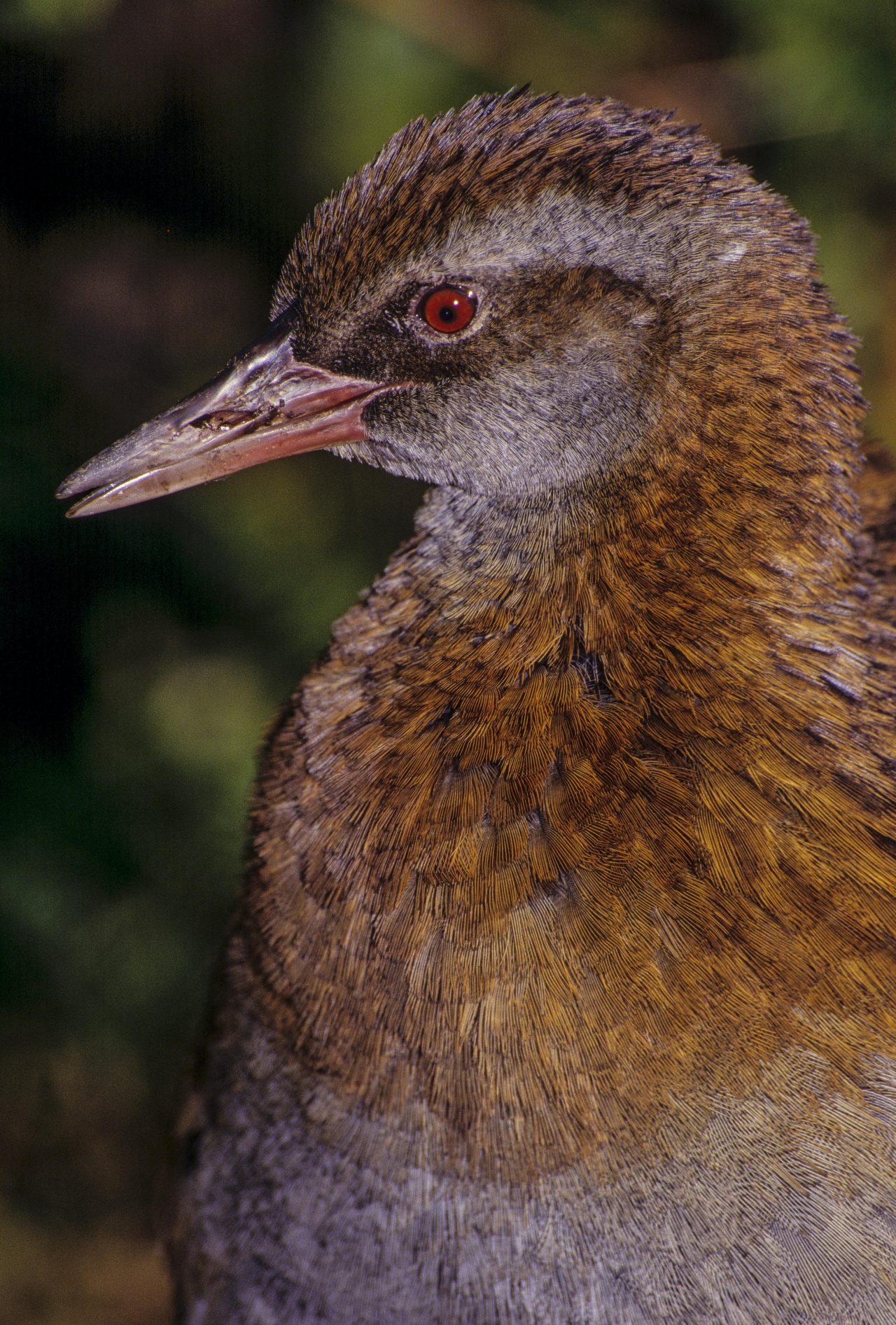
Explorer Charlie Douglas reckoned that weka, not kiwi, should have been our national bird. He considered the flightless rail highly intelligent: ‘Here is a bird full of good qualities and whose vices lean to virtue’s side…. an undying thirst for knowledge – unthinking people give it another name – which cause it to annex everything portable about a hut and carry it into the bush to study at leisure.’
For their goose-necking walk, guile and kleptomaniac tendencies, the weka certainly makes entertaining company. Once, at Welcome Flat, I came across a German hiker raking around in the ferns, looking for something. I asked him what he’d lost. “One of those brown birds stole my tent pole,” he replied, “but I found this,” he said, showing me a frisbee – presumably another of the weka’s acquisitions.
Maori and Pakeha explorers relied on the bird as an abundant and delicious food source (Europeans called them woodhen or Maori hen). Unfortunately, weka have disappeared from almost all of the North Island, though they have been released near Russell, on Kawau Island and in Whirinaki Forest Park.
Trampers who have visited the West Coast or the forests of Nelson will likely have seen the plump, brown birds, although it’s true their populations fluctuate wildly. They seemed to disappear from Abel Tasman National Park for some years, but have recently bounced back.
1. Kapiti Island, Wellington
Nature lovers must put a trip to Kapiti on their bucket-list. As well as weka, you’re likely to see all manner of rare birds, including tieke, kokako and hihi. Whether weka are native to Kapiti Island remains unknown; the bird’s population is likely to be hybrid descendents of both the North Island and western subspecies, which were introduced to the island late in the 1800s and early 1900s.
2. Bark Bay, Abel Tasman National Park
One of the central beaches on the Coast Track, Bark Bay is home to a family of weka often seen skulking around in the forest fringing the hut. It’s an idyllic spot, with a golden sand beach, inlet and estuary; the latter most interesting when low tide reveals striking sand patterns.
3. Flora Track, Kahurangi National Park
The Flora Track to Salisbury Lodge is justifiably popular, with its fascinating array of rock shelters and huts, rolling tussock tablelands, limestone features and abundant wildlife. Friends of Flora run an extensive trapping programme in the area, which helps kaka, whio and weka thrive. Trampers are likely to see weka at Mt Arthur Hut, Flora Hut, Salisbury Lodge or at Dry Rock Shelter.
4. Welcome Flat Hut, Westland/Tai Poutini National Park
Welcome Flat Hut is a rewarding destination not just for the arresting views of the Sierra Range, but for its steaming hot pools. It’s also a favourite haunt of weka, where unwary trampers often leave an appealing array of likely items to thieve. Tramping to the hut takes 5-7hr from SH6.