A wrap of the biggest stories and best writing about the outdoors from New Zealand and around the world.
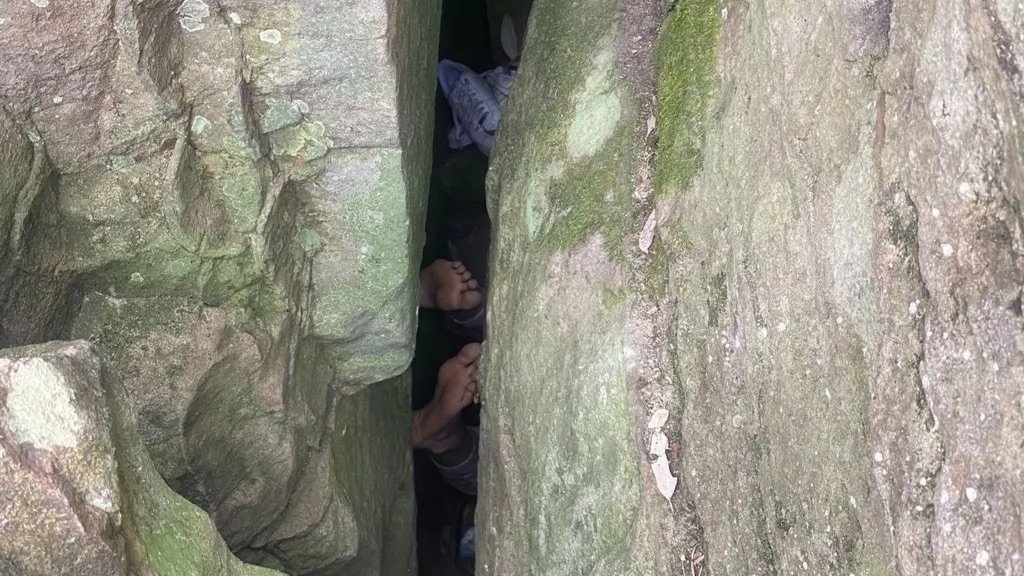
Australian emergency services faced removing boulders weighing up to half a tonne to rescue a woman trapped upside down in a rocky crevice.
The accident occurred while the woman was hiking in a wilderness area in New South Wales. She fell after trying to get to her dropped phone, becoming stuck between two boulders and hanging by her feet, ABC News reported.
After trying unsuccessfully to free her, her hiking companions moved to get cellphone reception and called emergency services. Rescuers rallied to remove the huge rocks, constructing a wooden frame above the woman to stabilise the rock face.
“Everyone had to bounce ideas off each other — we were all like, ‘How did she get down there and how are we going to get her out?'”, NSW Ambulance special operations and rescue paramedic Peter Watts said.
“In my 10 years as a rescue paramedic I had never encountered a job quite like this, it was challenging but incredibly rewarding,” Watts said.
The woman was freed with only minor scratches and bruises after seven hours trapped in the crevice, NSW Ambulance said. Read the full story from Stuff.
Eleventh Great Walk added
A new great walk has been added to New Zealand’s list — for just the second time in 30 years. The Department of Conservation (DOC) has bestowed the honour on Southland’s Hump Ridge track near Tuatapere.
The classification brings Aotearoa’s list of Great Walks to 11. The three-day looping track is the first to be run entirely by its community.
It’s taken several million dollars, and years of work, to upgrade it to the great walk status. According to DOC, Great Walks are “premier tracks that pass through diverse and spectacular scenery”. The tracks are also well-formed and easy to follow.
“Located in Te Wāhipounamu, in the south-west corner of the South Island, the trail weaves through diverse landscapes, including, beaches and seascapes, native forest, and an alpine section. It also provides opportunities to spot Hector dolphins and see the southern lights — the Aurora Australis,” said Conservation Minister Tama Potaka. Read the full story from One News.
Why walking weighted backpack is trending
Rucking – wearing a weighted backpack while you walk – could be a shortcut to boosting your fitness. The practice originates in the military, but it’s attracted the masses in recent years thanks to its accessibility and appealing effort-to-reward ratio.
Add weight to your walks to amplify the intensity and challenge your heart, lungs, legs, core and more. This can boost your fitness and build strength throughout your body – not a bad return from a pop to the shops, or any similar short jaunt.
Fitness writer for the Independent, Harry Bullmore, gives some good reasons why he’ll never stop rucking in a recent article.
First, rucking is accessible. There isn’t a learning curve, just put some weight in a backpack and start walking. Second, it’s versatile. You can wear it while doing your day-to-day errands, walking the dog or on longer walks. It can also build strength.
“Walking is largely a lower body activity, so the quadriceps, hamstrings and gastrocnemius [muscles in the thigh and calf] are going to have to accommodate that heavier load,” says Dr Elroy Aguiar, assistant professor of exercise science at The University of Alabama.
‘Inspiring’ mountaineer dies climbing near Aoraki/Mt Cook
Police recovered the body of Richard O’Neill-Dean, 70, after the family reported him missing when he did not return from his climb.
He had set off for the mountains from Lake Tekapo on Saturday and the family understood he would have summited Mt D’Archiac in the Two-Thumb Range on Sunday. Widow Frida O’Neill-Dean described Mr O’Neill-Dean as “strong as an ox”.
“He was six foot eight [2.03m] and so active. He had had a hip replacement but put so much of his effort into rehabilitating and getting ready for climbing. I think he was quite inspiring.”
“Our whole family is in shock,” O’Neill-Dean said. “We know he summited that mountain on Sunday morning because he rang a climbing friend from the summit. But it appears that he broke through the cornice and fell down the south face of the mountain.”
Richard O’Neill-Dean moved to New Zealand from Ireland in the late 1980s and built up a large community of friends through his psychotherapy practice and within the climbing community. Read the full story from the Otago Daily Times.
California bans disposable propane cylinders under new law
Regulations will phase out single-use canisters in a bid to reduce wildfires and protect the environment.
Small single-use propane cylinders are a popular choice among campers for powering barbecues and portable stoves, with approximately 40 to 60 million sold in the US each year. But they have been linked to the starting of wildfires, and create a huge amount of waste for the state.
John Laird, the California lawmaker responsible for the bill, said: “For years, these propane cylinders have placed a great burden on our park systems, beaches, material recovery facilities and local governments.”
He said the new bill would “promote sustainable outdoor recreation”. The law means that by January 2028 only reusable or refillable cylinders can be used and sold in the state.
Particularly dangerous in wildfire-prone California woodland, single-use propane cylinders can be a fire hazard if used without the correct precautions. So it’s no surprise that the bill has been supported by California Firefighters throughout its passage. Read the full story from Advnture.