

Going as light as possible means this family can do longer trips into tougher terrain. By Victoria Bruce
For father Liam Stewart, going ultralight means his family can tackle more adventurous off-track trips without heavy gear holding them back.
Setting up his kids with light, high-performing gear means Stewart can romp around the hills with son Hunter and daughter Marlee, from their home base in Canterbury, and do longer trips to more remote locations.
“Going lightweight has revolutionised our backcountry adventures,” Stewart says. “Our agility and endurance is increased, and we can move faster.”
In April the trio attempted Pikirakatahi Mt Earnslaw at the head of Lake Wakatipu, taking a classic approach via the Rees Track onto the Kea Basin Track and crossing Birley Glacier to access Esquilant Bivvy. Their food and gear for this five-day trip, including ice axes and crampons, weighed in at under 18kg for Liam (who carries all the communal gear), 9.5kg for 13-year-old Marlee and 7.5kg for 12-year-old Hunter.
“I try to keep the kids as light as I can because I know that although they’re strong, it does affect their endurance, especially the young fella,” Stewart says.
Already keen trampers, Stewart and his wife Mercedes moved to the South Island from Northland 10 years ago when Hunter was two and Marlee four, sparking a new wave of outdoor adventure for the family. At first they focused on day trips using basic equipment: the kids wore gumboots, and everyone had a big PVC parka and bulky clothing layers.
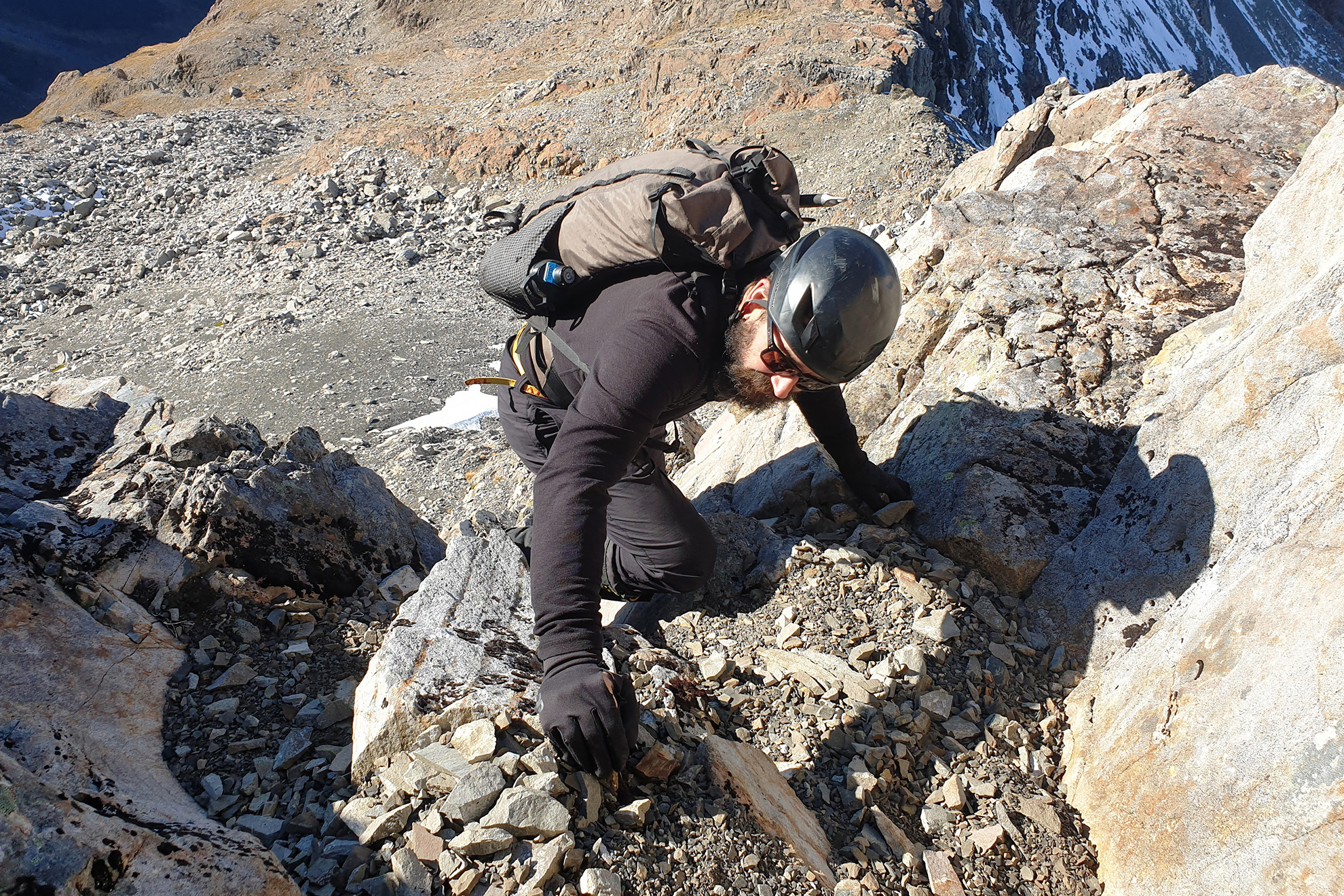
But as experience grew, they realised their gear wasn’t suitable and the additional weight was restricting them.
“The limiting factor with regular gear is it takes up space. As we began to work our way deeper and deeper into the mountains and off the tracks, we started to realise this,” Stewart says.
“The kids would carry as much as they could for their age; however, I ended up with the bulk of the gear. Most of our travel is off-track and the additional weight and bulk was having quite an impact on my agility and endurance.”
Five years ago Stewart began researching ultralight gear to see where weight and bulk could be reduced, and also replacing worn out items with quality, lighter options.
Heavy packs were swapped for custom backpacks, and a bulky 3kg tent was exchanged for Outdoor Research bivvy bags. “My old pack was over 3kg, so with an ultralight model from Southern Lite Packs I shaved about 2kg right there.
“Now everyone carries their own sleeping bag, inflatable sleeping mat and bivvy bag. This greatly reduces the weight I carry. From a safety perspective, if we get split up, the kids are self-supporting,” Stewart says.
He’s also replaced his huge stainless-steel billy and cooking utensils with smaller titanium products.
“As things wore out, we replaced them with higher-performing products. I try to buy locally; if it is an overseas item I am conscious of materials and origin.”
He cautions families seeking to reduce their load to make sure lightweight alternatives don’t compromise on quality, safety or durability.
“My advice for people would be to do an inventory of your gear, weigh everything, jump on the internet and start researching. There are many areas where weight can be dropped without compromising safety, and you don’t have to replace everything all at once. Do it over time as your budget allows. Your knees will love you for it!”
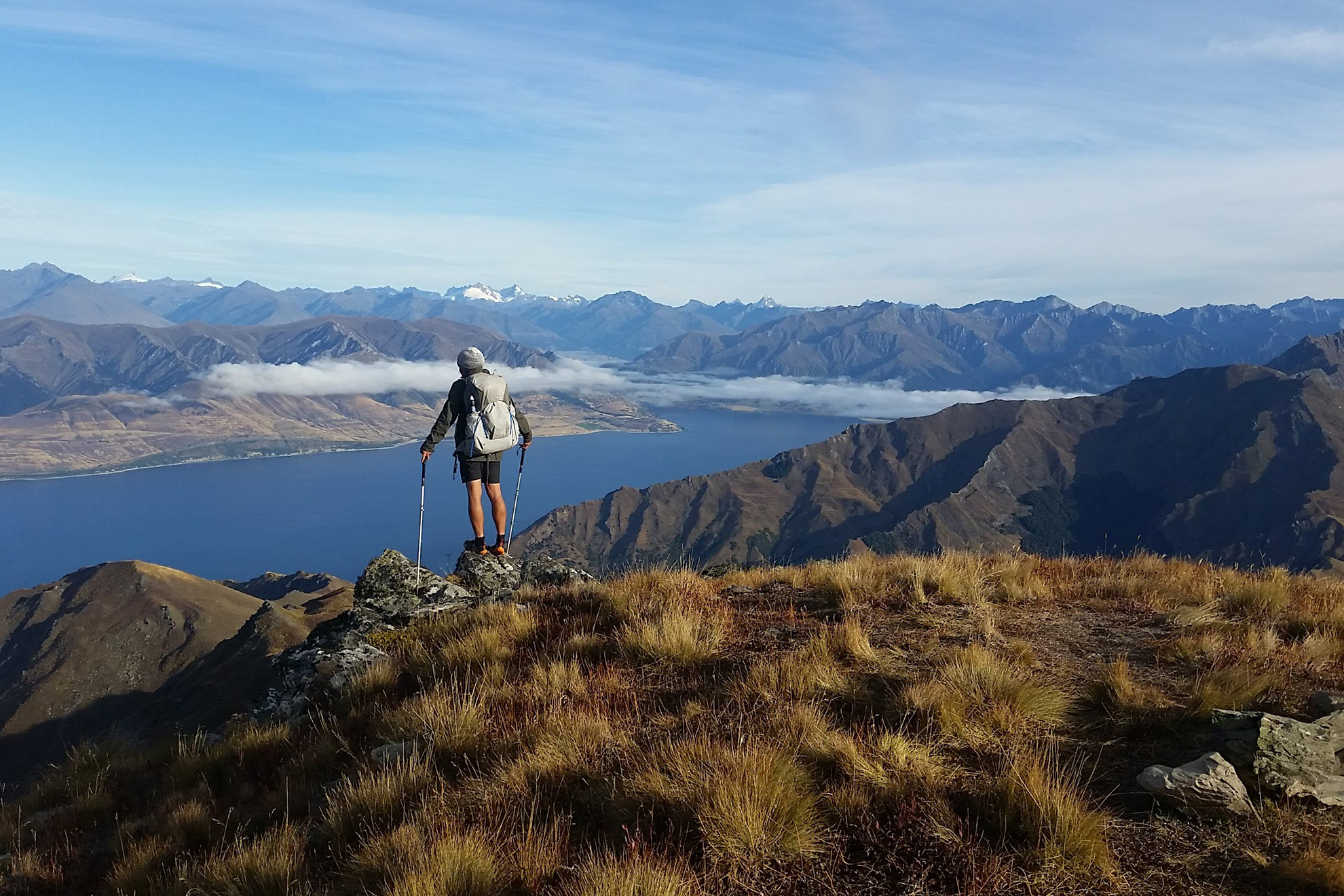
Mike Lim first walked Te Araroa with a base weight of 15kg. Second time around, it’s less than 5kg. By Naomi Arnold
Ultralight hikers are like that classic joke about vegans, Mike Lim says with a laugh. “If you don’t ask, they’ll tell you.”
The Whangārei tramper, thru-hiker and personal trainer first walked Te Araroa in 2018–19 with a standard New Zealand tramping pack and a base weight of around 15kg. He even had a solar panel. This year, when he embarks on the trail for the second time, his base weight will be less than 5kg.
We meet at a café in Whangārei. He’s brought his alarmingly tiny frameless pack, which turns out to be self-designed, homemade and weighs just 500g. He pulls out items, each carefully considered and justified, and explains their backstory. Lim has a natural bent towards thinking about efficiency; he studied industrial design. He’s now a personal trainer and offers a tramping-fit programme called Hiker Health.
Preventing overuse injuries is one of the big benefits of going ultralight, he says.
“I was rolling down Ninety Mile Beach with this 20kg-plus pack, and at the first stop a guy asked me how many changes of clothes I had,” Lim says. His fellow walker “did the classic pack rejig” and Lim posted his excess gear home, then stopped in Auckland to replace even more with lighter gear, reducing his burden by another 2.5kg.
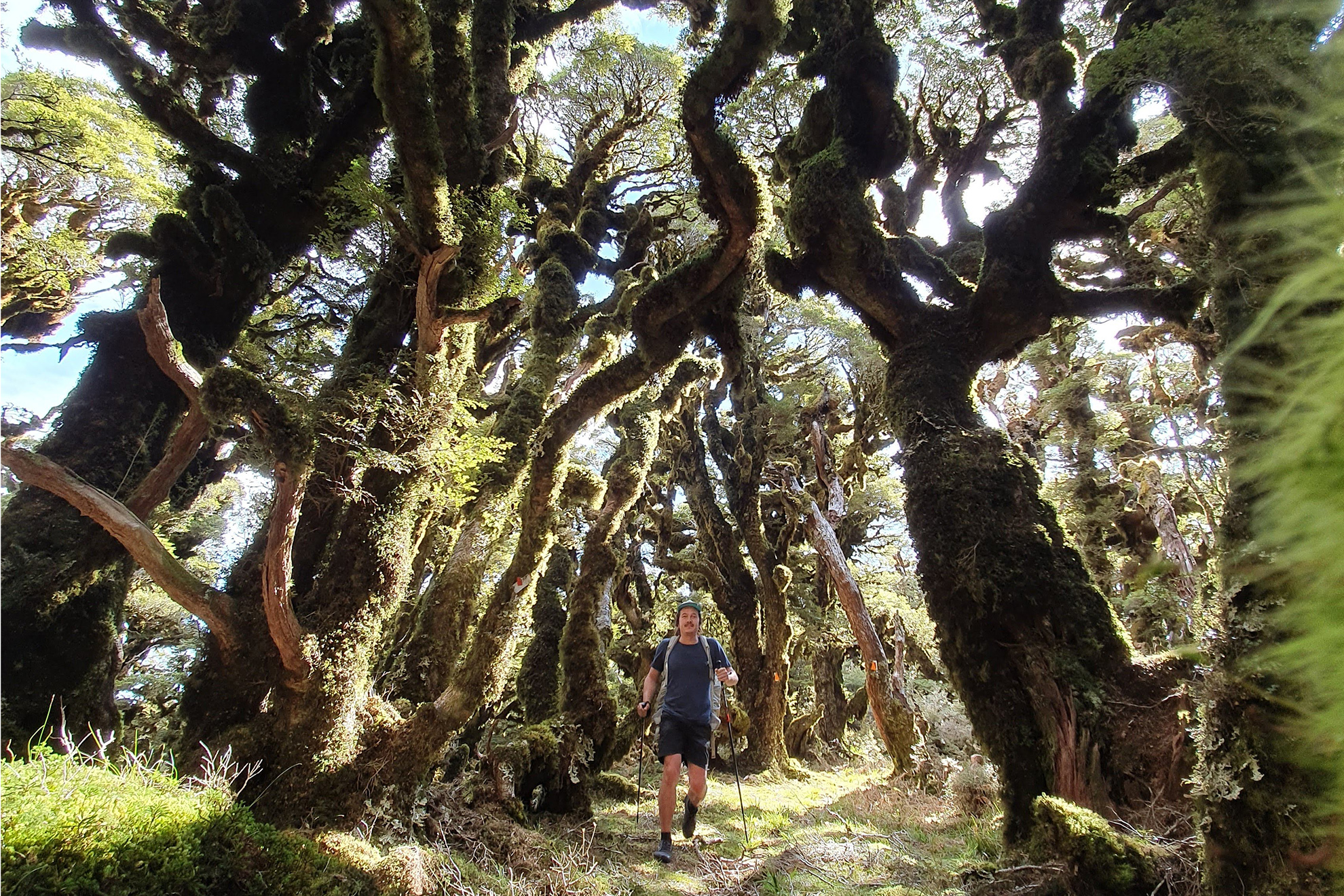
He is now on the fifth iteration of his roll-top pack design, using X-Pac fabric available from American company Ripstop by the Roll. His pack has sealed zippers, one large central pocket, a large stretchy front pocket and two side pockets. His design and manufacturing experience also helped with the rest of his gear; he sewed his waist bag, which doubles as a hip belt, and also made his own aluminium trowel.
Lim’s other big changes have been: swapping from a 2500g Kea tent to a one-person Drop + Dan Durston X-Mid tent at 810g, set up with hiking poles; a 613g Enlightened Equipment quilt instead of a full sleeping bag; and a 285g Therm-A-Rest Z Lite closed-cell foam pad as a sleeping mat, which doubles as a back support in his pack.
Even ultralight hikers have some items heavier than the theoretical lightest version. Lim carries a JetBoil stove, which, at 330g, is heavier than other setups but works best for how he likes to cook. He also has a sturdy and long rain jacket, which he finds more comfortable for New Zealand conditions than the short, lightweight ones carried by some overseas ultralight thru-hikers.
For those who don’t have the skills or inclination to make their own pack, Lim says going ultralight is a process of trial and error, including haunting Facebook second-hand gear pages. “You practise with what you’ve got, buy second hand and slowly cull stuff,” he says. “You can go too far with ultralight, and that’s when you bring it back and go, ‘Hmm, I don’t think I can be bothered spending $500 on that thing to save a few grams’.”
With a base load under 5kg, he certainly has a lot of room to manoeuvre.
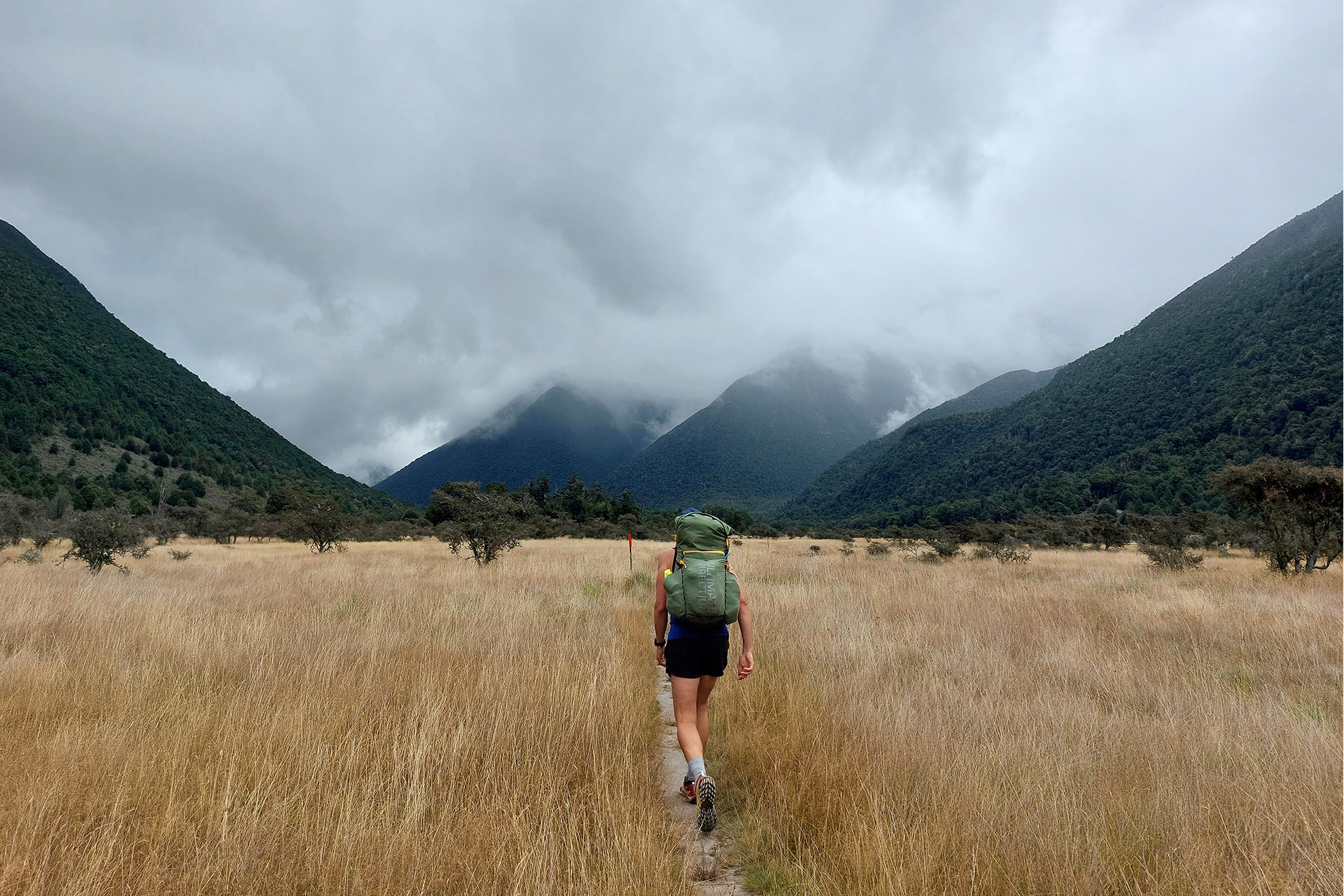
Kate Giles fits in more adventures by fastpacking. By Leigh Hopkinson
Kate Giles, environmental scientist and mother of three, says fastpacking lets her go further into nature, faster. “I’ve got a busy household. It’s quiet time for me,” she says.
Fitting in trips around work and family is “everything”. Giles tries for monthly missions, mostly solo. Her job is flexible, so she can leave on a Friday morning and return Saturday night, leaving Sunday for chores.
She read about fastpacking one day in 2020 – and ordered a fastpacking backpack that day. The offspring of tramping and trail-running, fastpacking is often described as hiking the uphills, jogging the flats and running the downhills.
Giles’s first foray was a short overnighter to Pouākai Hut, not far from her New Plymouth home. “It was my little test – one hour up, one hour down. And it was just 15 minutes’ drive away, in case it didn’t go well. It went really well.”
Giles, 45, comes from a trail running background. And unlike trampers, who shed pack weight by going ultralight, she finds herself carrying more by fastpacking.
She started with buying a few key items, such as an Ultimate Direction 25L fastpack, and using whatever else she had, including a 20-year-old sleeping bag. This year she bought a new Ultimate Direction 40L fastpack, a Sea to Summit 600g sleeping bag and a Big Agnes two-person, 1kg tent.
It’s an approach she recommends for anyone wanting to try fastpacking. “Ultralight gear can be expensive. Start with what you have and upgrade when you can.”
For most trips, Giles’ base weight averages 5–6kg. This includes safety equipment such as a PLB and an emergency blanket, and luxuries like hut socks and a book.
Food is an essential part of her enjoyment – as is coffee – so she always takes a cooker. Breakfast is usually oats and almond butter, lunch some crackers, a Pic’s peanut butter slug and snacks, and dinner a dehy. “Having a nice hot dinner and reading my book by the fire, that’s what I go there for.”
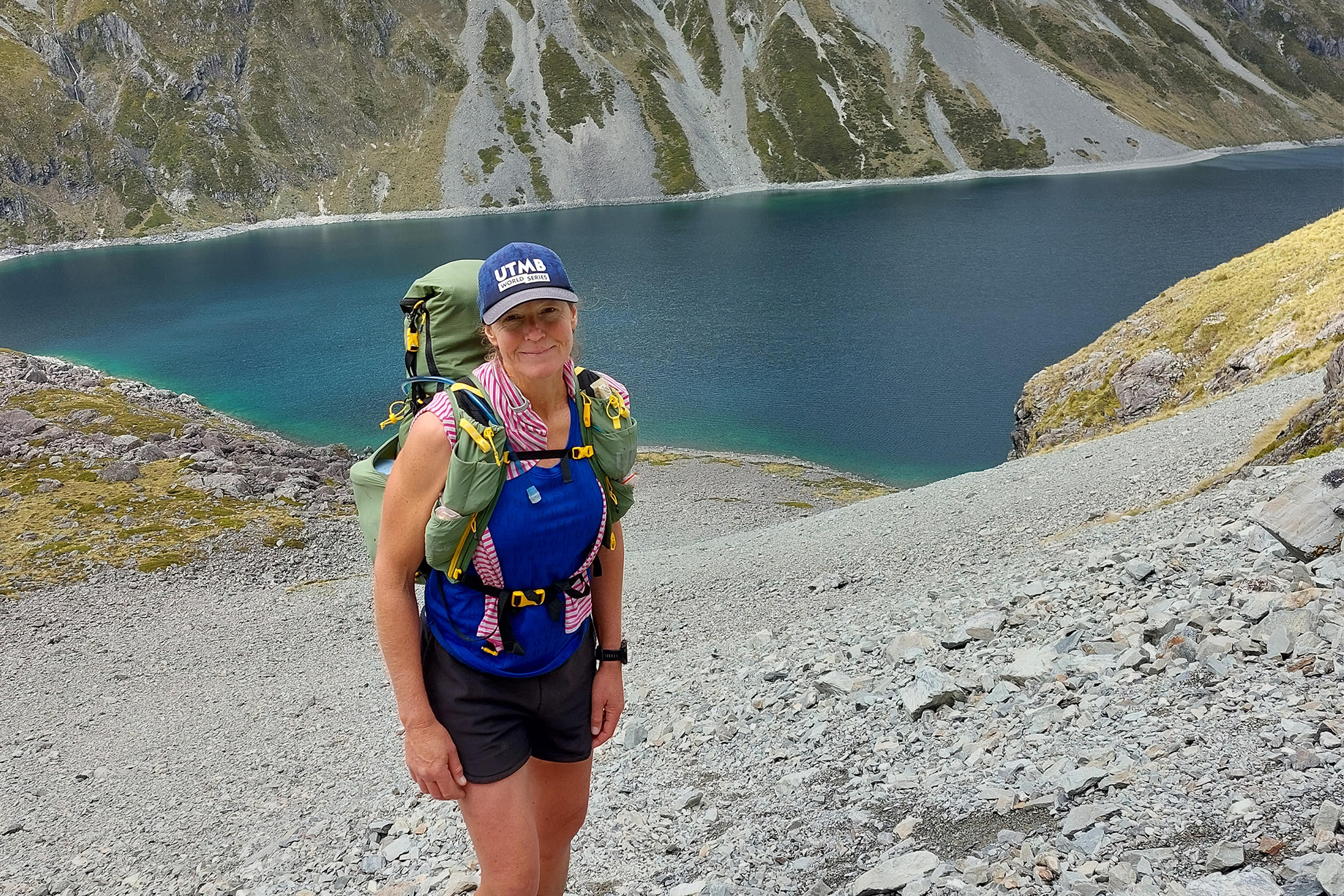
Having run half-marathons and an ultra, she’s able to average 20–30km a day comfortably.
“With fastpacking, you don’t have to rush. I relax, take my time even when I’m running, and take plenty of photos.” She often shares trip beta with the Fastpacking New Zealand Facebook group, started in 2020 by fellow fastpacker Alice Brice.
This year Giles started tackling longer trips, pushing her pack weight up to 11kg. She and Alice fastpacked Te Araroa from St Arnaud to Arthur’s Pass in March, clocking up 250km in eight days. They averaged 30km a day and resupplied at Boyle River.
“It was a mash of fastpacking and ultralight tramping – on the day over Waiau Pass we didn’t run at all.”
In the lead-up, she fastpacked the Round the Mountain Ruapehu track over two days and three nights with her 14-year-old daughter Leni, to see what extra gear she would need for a longer trip. The mission was a success, and Leni really enjoyed the parts where she could run, Giles said. “While fastpacking is usually an escape from mum life for me, it’s also pretty cool to hang out with your daughter doing something fun together.”
The Te Araroa section was a big confidence boost, and Giles aims to fastpack a longer thru-hike when life permits. “I’ve never been a tramper so I’d never done multi-day tramping trips. Now I feel quite confident. I’ve got my system and gear down pat – it’s just finding time.”
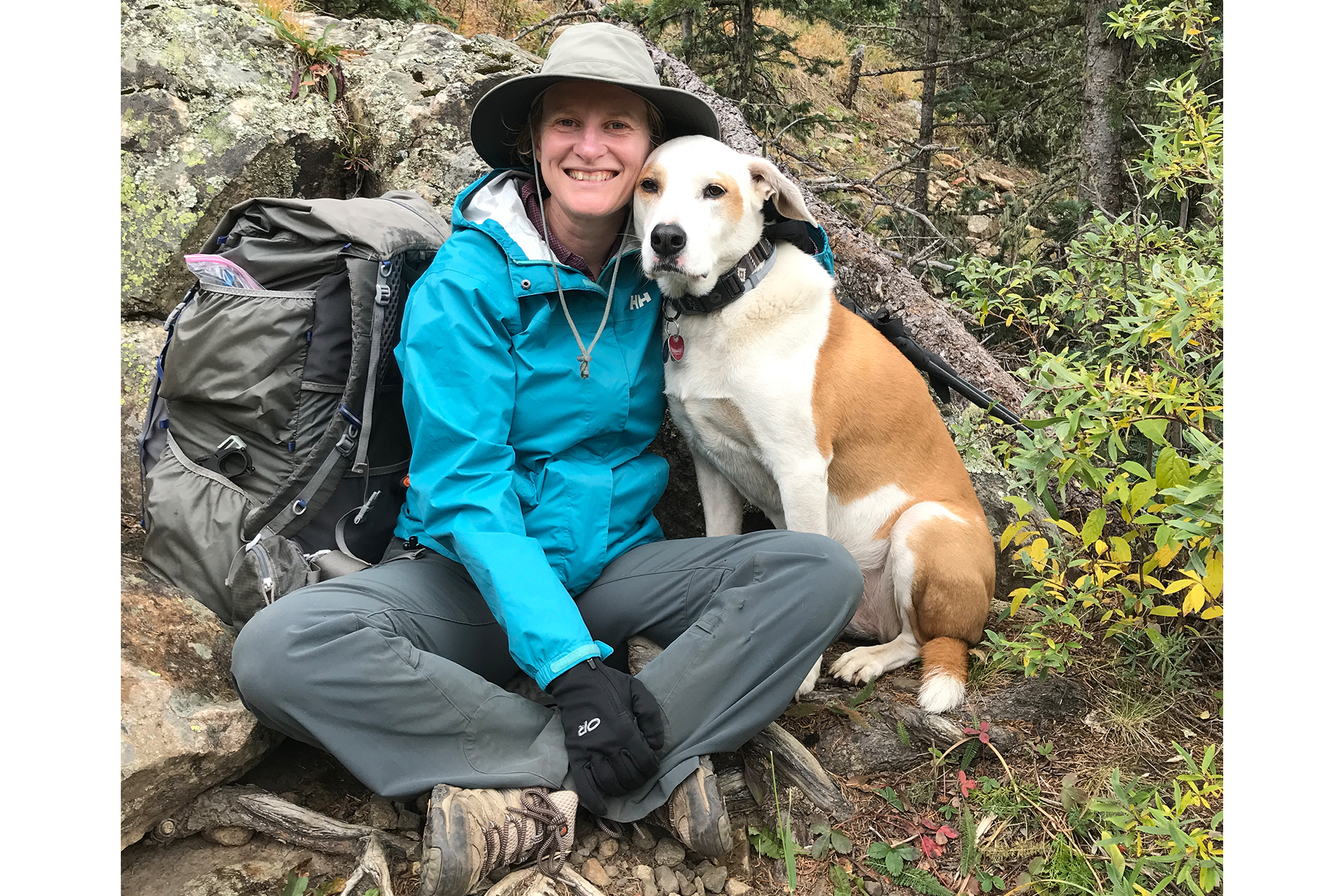
For Kate Sprecher, what to leave behind is as important as what to take. By Marios Gavalas
Having grown up in Australia and Africa, enjoying camping trips with her family, Kate Sprecher was no stranger to the outdoors. However, it was only when she moved to New Zealand in her early 20s that tramping became a bigger part of her life. Most trips were one or two nighters and her bulky gear was all she could afford as a cash-strapped student.
While living in the US, her decision to hike the Pacific Northwest Trail in 2019 was a key driver to go as light as possible, knowing there would be long days for multiple successive weeks. “I knew I wasn’t fit enough to do long days with a heavy pack, but would be fine with a lighter load,” she says.
Now back in Wellington, her ultralight gear means she can travel lighter and faster with the same fitness level. She enjoys 4–7 day trips involving ridgelines, river crossings and a bit of off-track travel. The Travers–Sabine with a side trip to Mount Misery Hut is typical of her ultralight trips.
Building her gear inventory has been a gradual process. Sprecher says starting with a pack of 45–50L is a good way to limit what you can fit in. “Then spend money on key items like a quilt, silk liner and tent. Everything else can be tweaked. Don’t get hung up on the latest and greatest,” she advises.
Finding the right gear can be a struggle – especially for a female fit. Stores often stock a limited range with little variety of sizes. Being able to try on a pack for size has posed challenges. She bought many items online, both locally and from overseas. Some items had to be returned, but the end result was the right gear for a good price.
Sprecher’s jacket (Patagonia Torrent) and tent are worth sacrificing her ultra-light principles for. “Straight-walled tents are a design feature that really matters. My Gossamer Gear 1-person tent called ‘The One’ is perfect in humid New Zealand.” Sprecher is happy to see New Zealand companies now designing more robust ultralight gear that is suited to conditions here.
Ultralight tramping is as much a mindset as it is about the gear. What to leave behind is as important as what to take, and multi-use is key. For example, Sprecher finds no need for a knife when scissors will work for food and first aid. Her favourite cup is a light aluminium reusable coffee mug, which she insulates with a sock as a heat wrap. “Everyone is jealous,” she jokes.
And she only needs two sets of clothes – one to wear and the other kept dry for camp. Other trampers are sometimes concerned by her lack of gear, but soon realise she has everything she needs. “Seeing me in trail running shoes is people’s biggest hurdle,” she says.
Sprecher finds that saving weight in some choices can leave extra weight for ‘luxury’ items like a warmer beanie or more food.
“It’s a pleasure to eat fresh on day one,” she says. And even omitting the stove and using cold water can work.
“Being more nimble, balanced and comfortable are the biggest gains of ultralight,” says Sprecher. “Everything can be lightened if you think it through.”
Experimenting with her personal limits has naturally led Rose Pearson to travel light. By Katrina Megget
It’s natural to experiment and push the limits, to see what your body is made of, right? Multi-week ski tours, multi-day mountaineering trips, multi-day runs – it’s what Rose Pearson lives and breathes.
“I love everything on two feet in the outdoors. I love the simplicity and beauty … focused on the here and now and not worrying about intangibles outside your control.”
So it’s not rocket science that Pearson, a New Zealand Alpine Team mentor who grew up in a tramping family, wanted to see where that would take her. “I’ve always been interested in how far one can go, which leads naturally to travelling light,” she says.
Pearson’s relationship with going ultralight started with her shoes, in 2010. “I’ve always been a runner and feel more comfortable in lighter footwear,” she says.
After that, the “early trips” – as Pearson refers to them – were with “regular” gear but with the “nice to haves” and “luxuries” left at home. “Things like dropping out a change of clothes or hut shoes and sometimes travelling without a stove.”
In early 2013 Pearson and two friends did the classic Three Passes Route in Arthur’s Pass National Park – normally a four to five-day 52km tramp. With a 15L Camelbak filled with a loaf of pre-made peanut butter sandwiches, they jogged from Waimakariri Bridge to Grassy Flat Hut in one day and wandered out to the West Coast road end the next morning. “I experimented with no sleeping bag or stove on that trip, which led me to purchase a light but warm 400g alpine-focused Macpac sleeping bag,” she remembers.
A few months later she tramped with a friend from Andrews Shelter in Arthur’s Pass National Park to Minchin Bivvy and out to Aickens Corner. On this trip, she says, she had her “trusty new sleeping bag”, and somehow that, along with her stove and everything else, was crammed into her 15L Camelbak. She has since upgraded to Macpac’s 200g Firefly sleeping bag.
Pearson has played around with packs, from the 15L Camelbak to Macpac running vests and a 40L pack when a tent and plenty of food are needed. “I have often bungeed a dry bag with light but bulky items to the outside when using the 8-litre Macpac running bag,” she says.
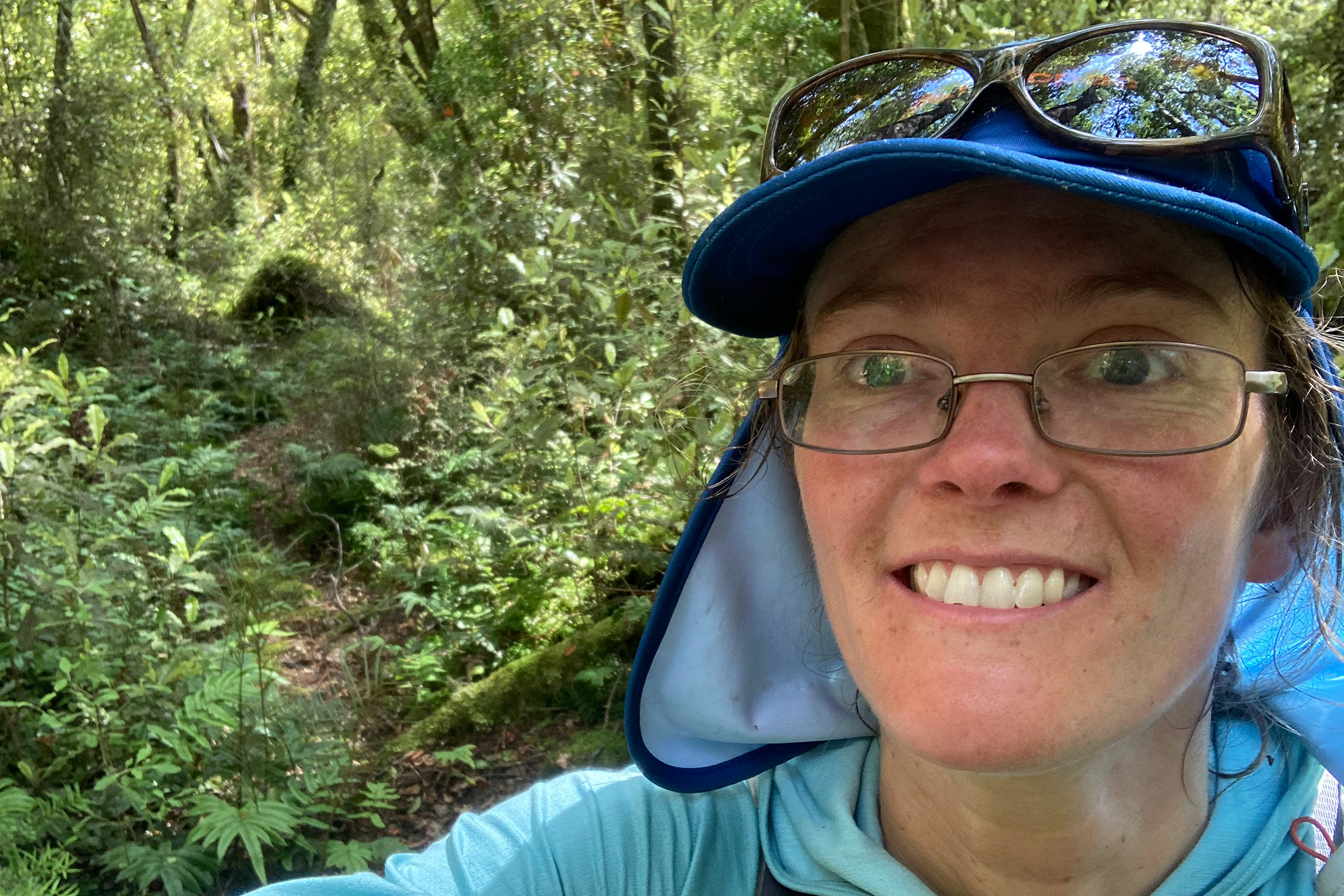
Going lightweight makes all the difference. For starters, there’s less chafing, Pearson says. And she gets much less of the tugging pain on her collarbone, hips and lower back. But the real benefits are in speed and distance. “Trips might be the same duration in time but I can go much faster. If you can cover more ground in the same period of time, you can fit these trips into more weather windows.”
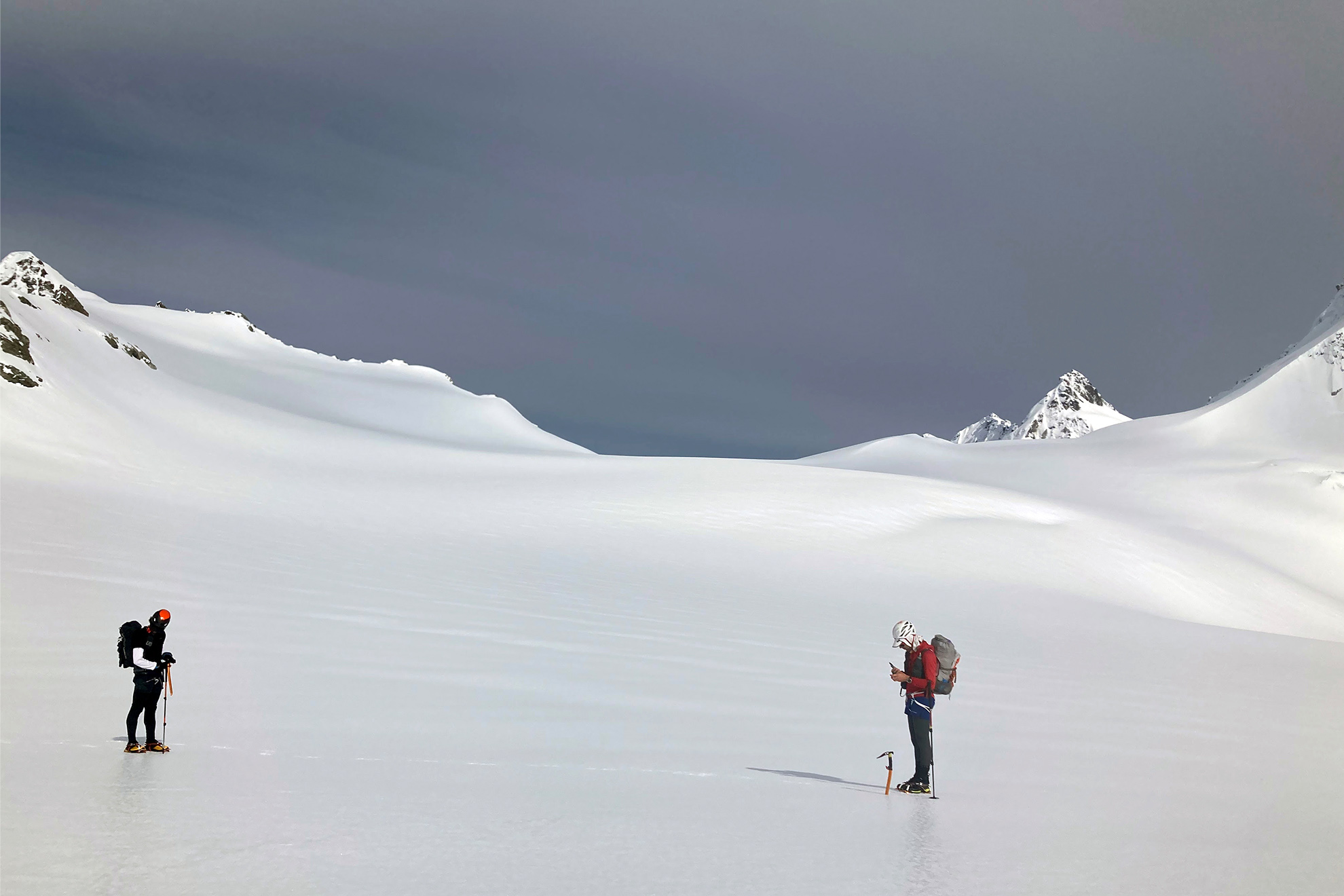
This was the thinking behind Pearson’s 2019 Aoraki Grand Traverse with fellow mountaineer Alastair McDowell. Because Pearson could only manage one day off work, their plan was to squeeze the traverse into a day or two in stable weather. They didn’t skimp on safety – 15m of rope, light harnesses, a handful of screws, boots, crampons, axes, PLB, emergency bivvy, 3 litres of water capacity and food. During the approach her pack weight was close to 12kg but when climbing Pearson estimates the weight would have been 6–7kg.
“This trip was surreal for the speed. From a bed in Wyn Irwin to the Hooker Track, to the Hooker Glacier, to the summit of Aoraki 12 or 13 hours after setting off, to the Boyes Glacier, the Tasman Glacier and finally the Ball Road Track. Conditions were great as was the company. The experience was really special.”
But with going lightweight come added responsibilities. Pearson says it’s important to inspect equipment more frequently than robust equivalents and to replace older items. “Make sure any piece of equipment should make it through to the end of your trip,” she advises.
That said, Pearson is all for fun and experimentation when looking to go lightweight. “Take it one bit of gear at a time,” she says. “There are no hard and fast rules, so see what works for you.”
34 years of inspiring New Zealanders to explore the outdoors. Don’t miss out — subscribe today.

Questions? Contact us



