A wrap of the biggest stories and best writing about the outdoors from New Zealand and around the world.
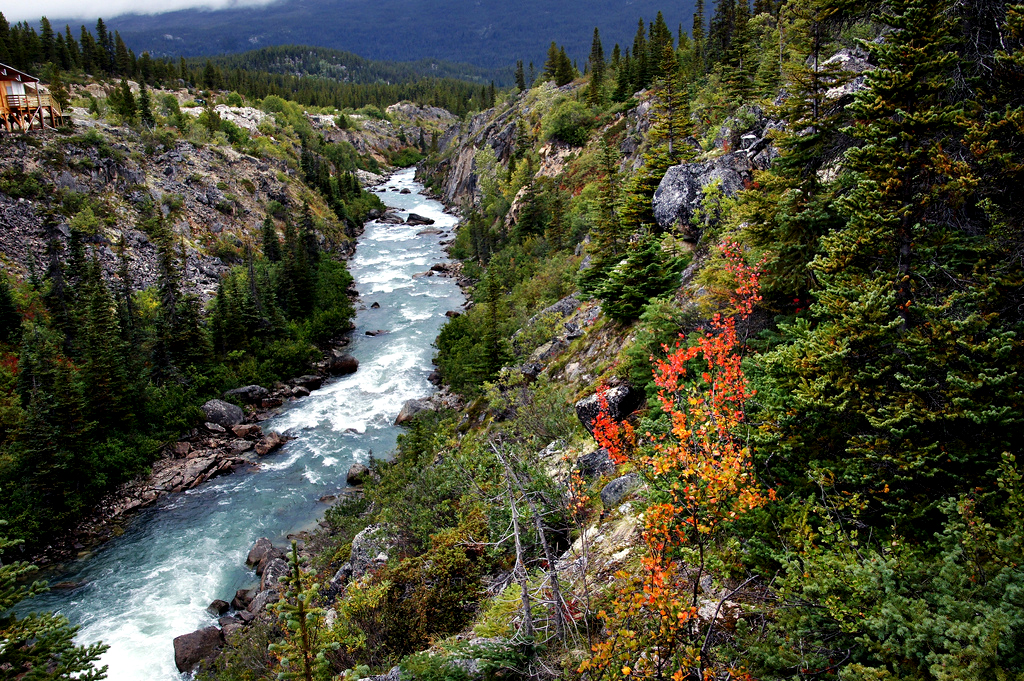
Kiwi duo Sophie Hart and Nathan Fa’avae have emerged victorious after the world’s most gruelling race the Yukon 1000 – paddling 1000 miles (1600 km) along the Yukon River.
The two, who have been racing Adventure Races together for the past 14 years completed the race in 6 days and 23 minutes, the second fastest Kayak time ever.
Taking place in some of the most remote scenery in the world, more people have been to the top of Everest then this spectacular remote location.
The race begins in Whitehorse, Canada and along 1600 km of tree-lined, bear infested wildlife and finishes along the Dalton Highway in Alaska.
Gruelling in every sense of the word, Yukon 1000 challengers must have the physical and mental fortitude to cope with paddling 18 hours a day —with a mandatory rest period of 6 hours each night.
The race accommodates double kayaks and canoes. In 2024, over 6000 teams applied to compete, but only 30 were accepted. Read the full story from Stuff.
Contestants eat protected weka on NZ-filmed show
The Department of Conservation has given a written warning Race to Survive: New Zealand after contestants ate a protected bird.
In the reality show, participants race each other over hundreds of kilometres of harsh terrain with only what they can carry. US white water river guides Spencer “Corry” Jones and team-mate Oliver Dev were disqualified after the incident.
In a clip from the show, Jones apologised on camera and said it did not sit lightly with him. He said he was desperate and hungry, but he knew he was breaking the rule when he did it.
In a statement, the Department of Conservation said it was clear with the production company that protected species could not be harvested or consumed. It said the company had alerted it about the incident shortly after it occurred.
DOC team lead of investigations Dylan Swain said the company was “on notice” about the need for programme participants to follow to conservation rules. Read the full story from RNZ.
Rescuers hail ‘miracle’ survival of hiker lost for weeks
Rescuers in USA are marvelling at the “miracle” survival of a hiker who was missing without food for two weeks in a remote complex of canyons in the scenic Red River Gorge in Kentucky.
Scott Hern, 46, was located alive by the Wolfe County Search & Rescue Team on what was going to be the last day of their search mission. Rescuer Eric Wolterman’s team spent hours bushwhacking calling the treacherous landscape “the roughest terrain you could imagine”.
In a Facebook post he said the team found footprints in the mud and stopped to regroup. They heard a “very faint noise” and after calling out, heard someone say “help”. Mr Wolterman described running after Mr Hern told the group his name, writing: “I have never moved faster up hill in my entire life.”
After telling Mr Hern that he was safe, the lost hiker asked for a hug. “I got teary eyed, and gave him a big hug. I think it was the best hug of both of our lives,” he wrote. Read the full story from the BBC.
Support for community conservation groups ‘drying up’
Support for New Zealand’s grassroots conservation groups is “drying up”, a major new report finds – threatening to undo gains made to save our threatened species from extinction.
Be it setting traps and baiting stations or planting trees and maintaining wetlands, these groups play an invaluable role in national conservation efforts, while pouring in millions of free hours of labour each year.
Yet the new report, commissioned by the Predator Free New Zealand Trust, found the more than 300 groups it surveyed were often having to dig into their own pockets to stay afloat.
While most reported getting a stable amount of funding, that was only a limited amount: one quarter received less than $5000 over the past year.
With the end of the $1.2 billion Jobs for Nature programme, and many other sources of cash tightening up, “many groups are finding funding very challenging, putting gains to date at risk”, Doole said. Read the full story from the NZ Herald.
Hydrothermal explosion closes of parts of Yellowstone National Park
The Biscuit Basin area of Yellowstone National Park – about 3.2 kms northwest of the Old Faithful geyser – is closed following a hydrothermal explosion park.
No injuries were reported after the incident, which occurred near the Sapphire Pool around 10 a.m. local time. Investigators have yet to determine how much damage has occurred.
“Hydrothermal explosions are violent and dramatic events resulting in the rapid ejection of boiling water, steam, mud, and rock fragments,” according to the US Geological Survey.
They “occur where shallow interconnected reservoirs of fluids with temperatures at or near the boiling point underlie thermal fields. These fluids can rapidly transition to steam if the pressure suddenly drops. Since vapor molecules take up much more space than liquid molecules, the transition to steam results in significant expansion and blows apart surrounding rocks and ejects debris,” the agency says.
The explosion does not indicate a volcanic eruption is imminent, the release added: “Monitoring data show no changes in the Yellowstone region.” Read the full story from CNN.