With a few tricks you can push the rating of any sleeping bag, allowing you to pack light but still sleep warm.
For many years I carried an unnecessarily warm sleeping bag on trips – be it summer tramping or winter mountaineering. And I know I’m not the only one who does so.
As a teenager finance was the limiting factor: I (and everyone I knew) bought one bag to do it all, and because a good down bag lasts a long time, I bought one that covered just about every base, short of sleeping on South Col. Stubbornness and tradition were factors too: I was fit and strong with limitless energy. My pack weight didn’t matter because I’d carry it anyway and not complain.
Now that pool of energy is shallower, so I look for ways to save weight. Also, equipment is now cheaper, more diverse and more widely available, so I think it’s reasonable to own at least a couple of variations of certain items such as tents and sleeping bags. I can pick the best tool for the job while keeping my base weight respectable.
These days I own five sleeping bags, a mountain of packs and enough tents to house my extended family, and I always take the lightest sleeping bag I think I can get away with.
My go-to for summer trips below the bushline is a down quilt. This incredibly light and compact item weighs 454g and, with a silk liner, I can use it into early autumn, or until the first frosts hit.
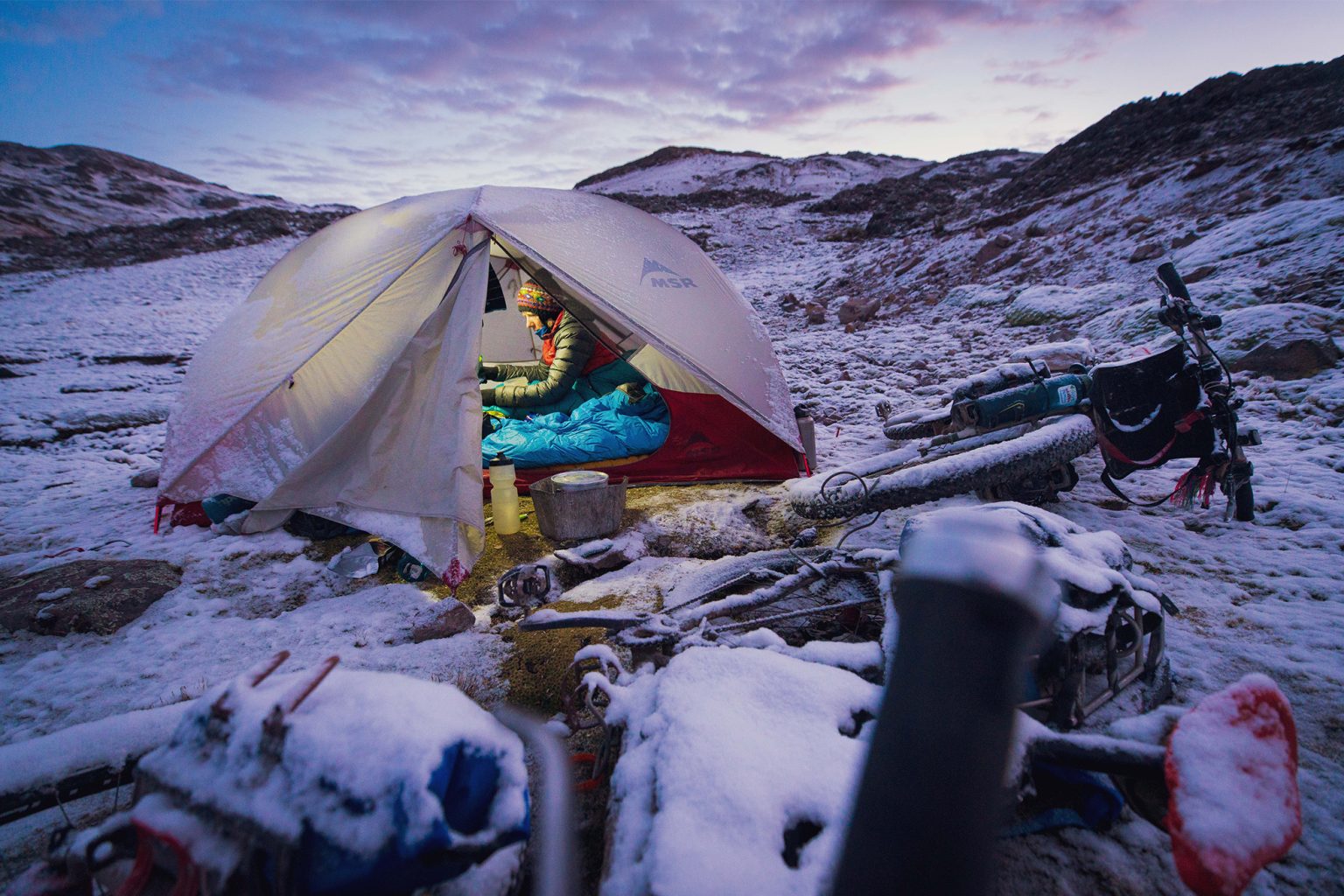
For bikepacking in the Andes and moderate winter elevations in New Zealand, I use a -7°C down bag. Over the past few years I’ve slept often in temperatures as low as -5°C in a +5°C bag and -15°C in a -7°C bag.
With a few tricks you can push the rating of any sleeping bag, allowing you to pack light but still sleep warm.
Ground insulation
Ensure the sleeping mat’s R-value is suitable for the conditions. If you’re expecting multiple sub-zero nights, consider a mat with a rating of 4 or higher. Combine a lower R-value mat with closed cell foam if the trip will be cold – it doesn’t need to cover the full length of the sleeping mat, and you can sit on it at lunchtime.
Sleeping bag liners
A silk (or synthetic equivalent) liner adds a few degrees of warmth. There are thicker thermal liners too, which are a cost-effective way of boosting a bag’s warmth, but compared to down insulation, they’re heavy for the level of warmth provided.
Sleep in dry base layers
Carry dry base layers to change into at night. If you want your sweat- or rain-soaked walking top to be dry and warm the next day, put it on as your second layer, unless it’s saturated.
Wear your clothes
I aim for my sleeping bag to be sufficient most of the time for the whole trip, but on the coldest nights it’s warm enough only if I wear almost all my clothes. We pack a lot of weight in clothing, so you might as well use it to insulate yourself in it at night as well as during the day. I have slept in my shell and overpants at times.
Don’t go to bed cold
Being in your bag before you get cold goes a long way towards sleeping well. A hot drink before bed will warm your core. Snack before bed if you’re still hungry.
Keep your legs warm
The biggest muscles in the body are in your legs, and they can lose a lot of heat. Wearing warm leggings goes a long way towards whole-body comfort.
Hat, neck gaiter and thick socks
These three items make a huge difference to sleeping bag warmth. A merino or fleece neck gaiter is much warmer than a polyester one. I pack minimal socks on trips (usually 1–2 walking/riding pairs) and one pair of thicker ‘sleep socks’, which I keep dry at all costs.
Tuck in tight
Make sure the warm air trapped between your body and the sleeping bag doesn’t escape, so do up the drawcord and neck muff (if it has one) nice and tight. Sometimes I draw mine so tight I just have a breathing hole.
Hot water bottle
Extra cold sleepers might benefit from filling their drink bottle with hot water and placing it in their bag before bedtime.
Wash your sleeping bag
Washing your sleeping bag can give the insulation a boost and the bag a new lease of life; just make sure to use the correct down-friendly products.






My gear through the decades