

The first real test, however, was a trip to The Remarkables to attend an alpine course. Due to bad weather, Glenie had to climb Single Cone with little time to prepare.
“I thought it would be a good way to get back into the snow to refresh my skills, it won’t be too strenuous. But the night before, the guide said the best weather day is tomorrow, so we’ll climb then.
“I didn’t think I could do it. But he said, ‘we’ll just take it bit by bit’. That day we summited and that feeling was incredible. It was this opening up of opportunity and what my world might be able to be like in future.”
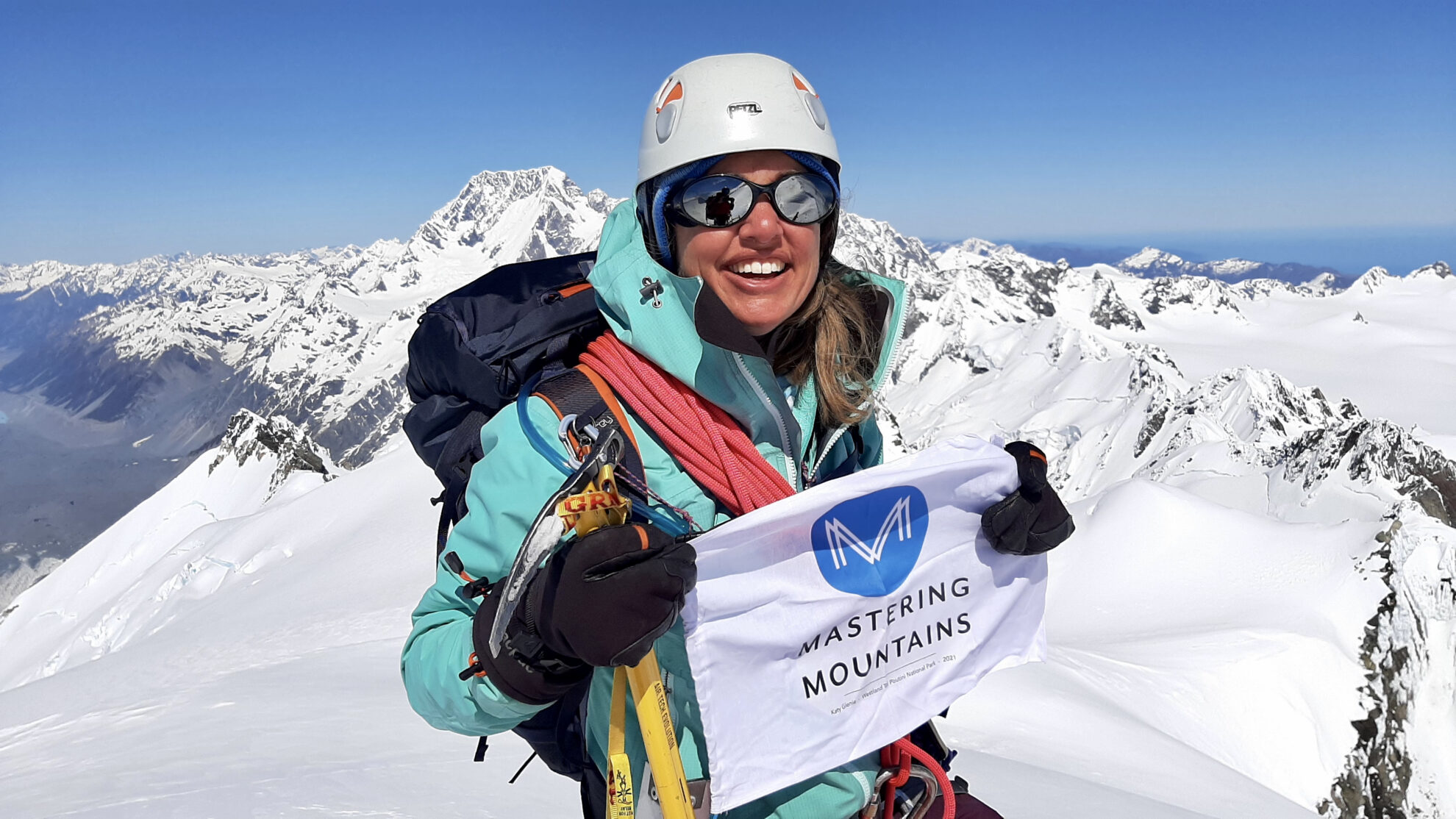
Three months later, Glenie was in a helicopter, flying to Centennial Hut, 2400m up the Southern Alps near the head of Franz Josef Glacier, to climb the Minarets with her mountaineer husband Mike. They waited three days for decent weather before attempting the climb. “As we walked towards the mountain face, I felt this bubbling of excitement and I started to let that come through me,” Glenie says.
What was expected to be the most challenging section turned out to be relatively easy, but ice on the summit face proved far more difficult than expected and instead of taking half an hour, involved two hours of white-knuckle climbing.
“My crampons weren’t giving me any purchase at all, so I was sliding and it was terrifying,” Glenie recalls. “I was absolutely determined we were going to get there, but I was not at my comfort level at all. Mike got some interesting language on that section of the climb.”
Once off the face, Glenie realised they had made it. “I couldn’t believe it. In this new body of mine, this was absolutely the most amazing thing I’ve ever experienced.”
She says the support of the Mastering Mountains trust has helped change her view of what’s possible in her life.
“I feel incredibly grateful for the opportunity and the support of all of the people that got me there,” says Glenie. “You don’t do these things alone. You do these things on the shoulders of so many people helping you. To know that you’re not alone is a very powerful thing in itself, and to know you can achieve great things drawing on the strength of others is incredible.
“This world that I love to be part of is still there for me and hopefully others hearing my story will find the strength they need. It’s changed my life.”
Nick Allen joined the Glenies on the helicopter ride to Centennial Hut and tracked her progress from Fox township. He says seeing her accomplish the climb was a huge inspiration for him.
“I feel like I’m the lucky one,” Allen says. “It’s just a privilege to see what she’s been able to achieve.”
In the past six years, Mastering Mountains has been able to help nine people with MS achieve an outdoor feat.
Nick is now experiencing an increase in the severity of his symptoms and last year he was re-diagnosed as having functional neurological disorder – a disease with similar symptoms to MS but with a different cause.
“During last year’s lockdown I ran a half marathon around the house and it was fine, but not long after that my health began to change quite suddenly and I started having vision problems. My balance has also gone so I started using crutches and walking poles, and I’ve had really high levels of pain which has been debilitating.”
The relapse of symptoms made him reassess how he approaches goal-setting and he’s learning to be easier on himself. Achievement doesn’t always need to be measured by reaching mountain summits.
“Sometimes I push myself too hard and that actually makes everything worse,” he says. “I had a lot of goals for 2021 – a whole bunch of climbing which I didn’t do. So learning not to be frustrated with that has required a lot of learning.
“There’s a tricky balance of setting goals that captivate you and propel you forward and excite you, but at the same time, if things do flare up, ensuring you don’t push yourself into the ground. I definitely haven’t mastered that balance yet.
“But today I went for a walk in the Port Hills and just focused on being present, rather than thinking ‘I wish I could walk all the way to the top of the hill’. I could just enjoy taking the time to admire all of the beauty around me and that’s been really helpful.
“I’ve gone back a few years, but at least now I’m making forward progress.”



