

Meet the warden
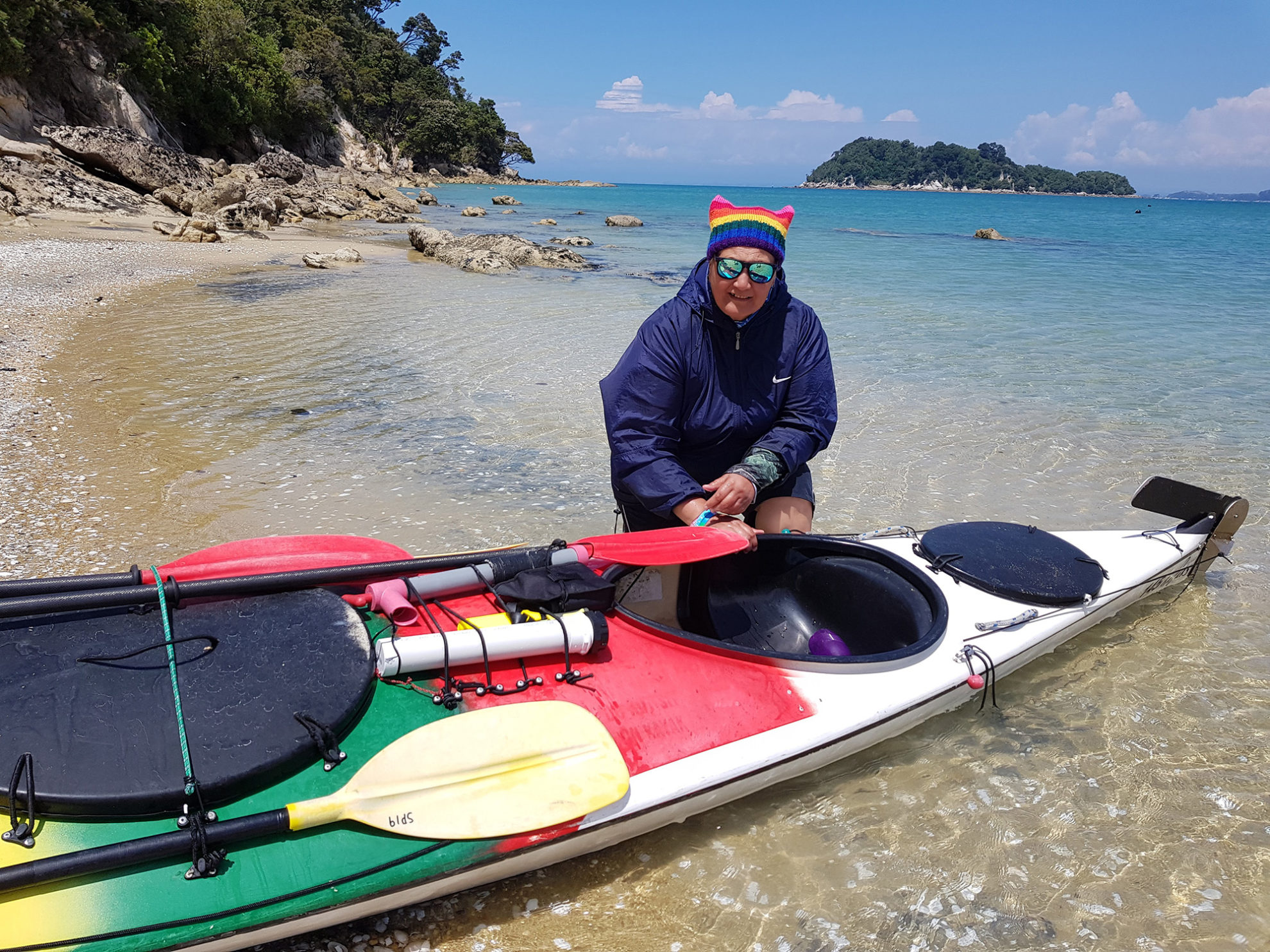
Kura Barrett loves Onetahuti Beach.
Kura Barrett has discovered a special spot to celebrate Christmas. Two years ago she volunteered to be a DOC camp host at Onetahuti Beach, one of 18 campsites along the Abel Tasman Coast Track. It was so good she’s going back this Christmas for her third year.
Once an Abel Tasman kayak guide, Kura says Onetahuti is a lovely sheltered spot with a view out to Tonga Island. “It has a great swimming beach plus a freshwater pool to rinse off the sea salt,” she says. “We see lots of kererū, fantails, oystercatchers, pied shags, and of course those persistent weka. They will steal anything!
“During my last two visits, the weather was outstanding. The campers have been friendly and very responsible during the Christmas and New Year celebrations. The DOC staff are a great bunch of people, they go out of their way to look after camp hosts and show their appreciation for our volunteer work.”
In the neighbourhood
Alternative track:Away from the beach, the Inland Track traverses mature forest; beech, rimu, cedar, dracophyllum, and a huge clearing crammed with subalpine diversity. And there are no crowds.
Since you’re already here: Walk the 45min track to explore Harwoods Hole from Canaan, off the Takaka Hill Road. Only experienced cavers can explore its secrets, but the limestone formations and views make it a worthwhile short walk.
Just got a weekend? From Totaranui, walk the quieter northern section for a night in Whariwharangi Hut. For a loop, return via Gibbs Hill.
Where to stay: There are several accommodation options available at the track start in Marahau.
Where to stock up: There are small stores in Marahau, but nearby Motueka has a much greater selection of groceries and local produce.
Walking the Abel Tasman Coast Track
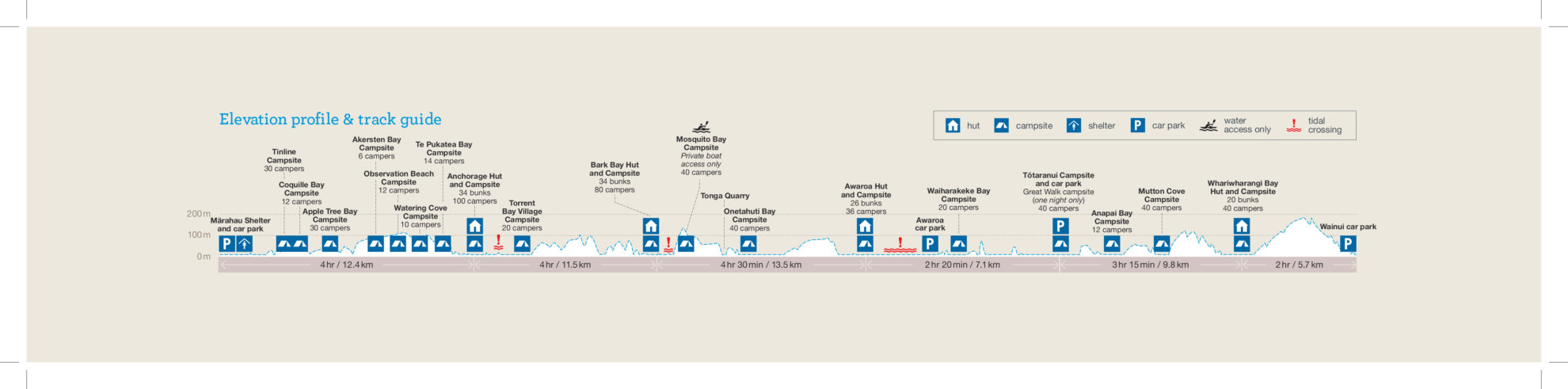
When it comes to stunning coastal scenery and a bounty of huts and campsites, the Abel Tasman Coast Track trumps all.
Marahau to Anchorage Hut
12.4km, 4hr
A boardwalk leads across the estuary and weaves in and out of gullies above numerous bays and coves. It’s an easy-going track with the chance to drop down to the many golden sand beaches passed on the way. The track turns inland at Akersten Bay and climbs over the headland to reach 34-bunk Anchorage Hut. There are also eight campsites on this section.
Anchorage Hut to Bark Bay Hut
11.4km, 4hr
The track continues around the coast to Torrent Bay Village and campsite and then onto Bark Bay Hut. On the way, a high and airy swingbridge crosses Falls River. Unusual cascades and swimming holes can be found up Tregida Creek on the Falls River Track (starts at Torrent Bay). Bark Bay is an intimate microcosm of the seascape of Abel Tasman National Park – a perfect beach, sandspit, luxuriant forest, great hut, boat access and stunning views. There are two campsites en route. The hut sleeps 34.
Bark Bay Hut to Awaroa Hut
13.5km, 4.5hr
Continue on to Tonga Quarry, where huge storms in 2018 permanently closed the campsite. But it’s still a memorable spot, with its umbrella of mānuka-kānuka forest, soft sands and ocean views. The track continues along Onetahuti Beach to the sheltered nook of Richardson Inlet where a footbridge and a small climb lead to Awaroa Inlet and 26-bunk Awaroa Hut. There are three campsites on this section.
Awaroa Hut to Whariwharangi Hut
16.9km, 5-6hr
Awaroa Inlet can only be crossed 90-minutes before and 2hr after low tide. It takes 30-40 minutes to cross the sands and mudflats, so judge it well. It’s then on to Totaranui (reached in 2hr) – the finish and/or start for many walkers. The track continues on to Separation Point, passing several idyllic beaches. This northern section is every bit as beautiful as the southern stretches, but more isolated and with fewer people. Whariwharangi Hut (20 bunks) is 1.5km from Separation Point. There are four campsites on this section. From here, walk to Wainui Inlet (5.7km, 2hr) or back to Totaranui (9km, 3hr) where you can get a water taxi back to Marahau.



