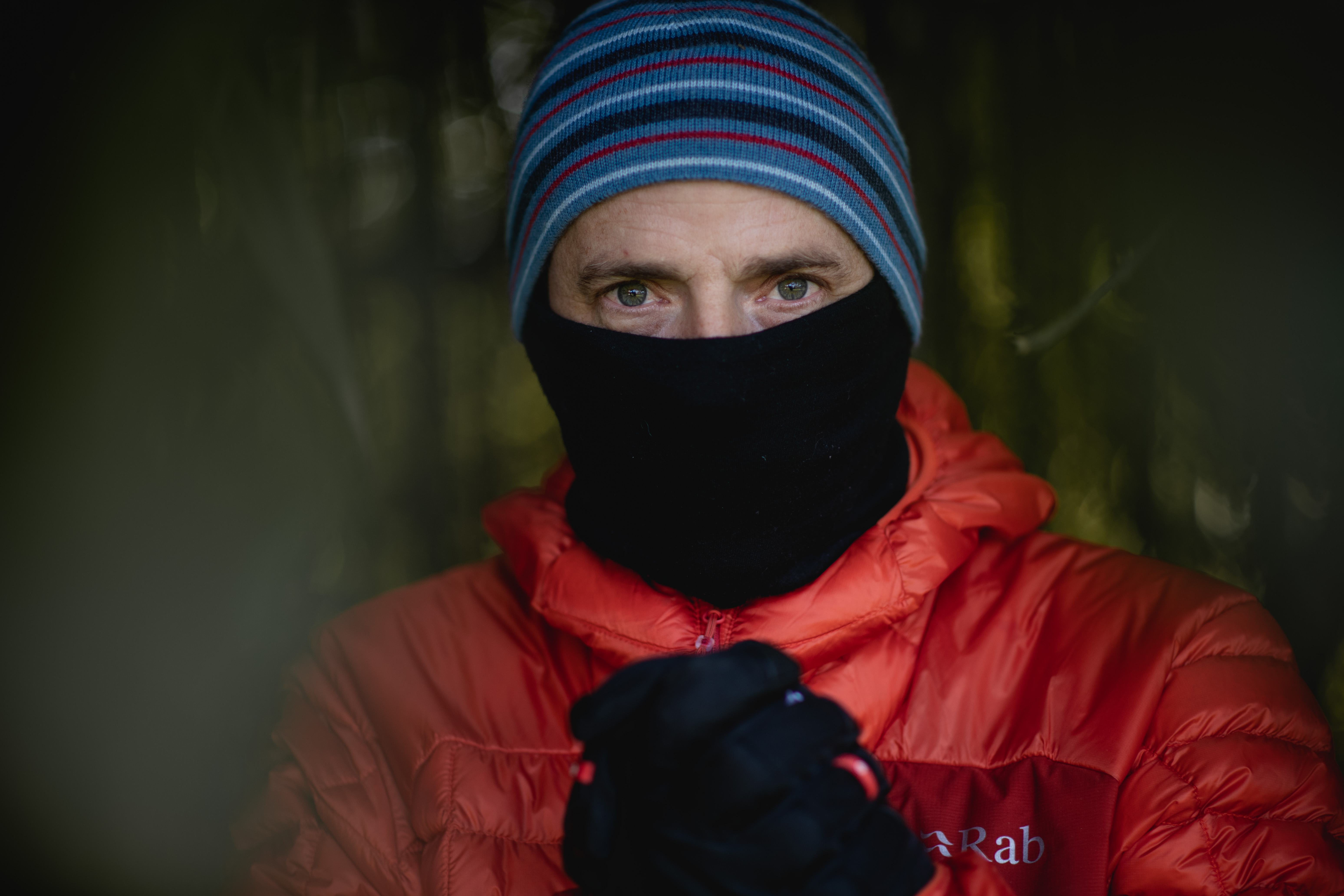
Three essential cold-weather pieces of gear that can help you moderate your temperature.
Early mornings can mean cold starts, quickly warming up as you get going. Instead of rapidly overheating and having to stop, I prefer multiple light layers that allow me to control my temperature while on the move. I can manage my system without having to stop, take off the pack, stuff a heavy jacket into it, put it back on and start again. So, what are the three layers I pretty much always have on me these days?
Beanies
A beanie is perhaps the best piece of kit for helping moderate your temperature. Because there is little fat around the skull, heat is readily radiated out of an uncovered head. During an increase in activity – like a final stomp up the hill – the easiest way to cool yourself down is to pull off your beanie. After a few minutes at the top, put it back on to stem the heat loss.
Neck gaiters
I’ve heard that a neck gaiter can help insulate to the equivalent of another layer of clothing – and I would agree. A lot of heat escapes from the neck because the carotid arteries pass close to the skin, cooling the blood.
A neck gaiter not only keeps this area warm but also helps prevent warm air from escaping from the insulation layers worn on the body.
Just like a beanie, it’s easy to remove a neck gaiter to regulate your temperature.
Gloves
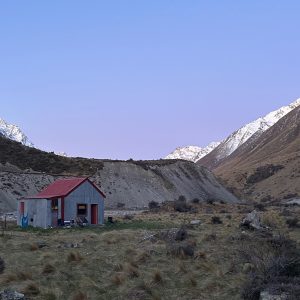
Ever stumbled into a hut to find a match sticking out of the matchbox next to a ready-to-go fire? It’s a thoughtful gesture to those that might arrive with cold, numb hands.
Wearing gloves is often a trade-off between warmth and a loss of manual dexterity. Still, I find having a pair to put on in the morning can make a world of difference to how I start the day.
How much heat loss?
The notion that you lose 80 per cent of your body heat through your head is a myth. It originates from military studies conducted in the 1950s where subjects were bundled up in frigid temperatures, leaving only their head exposed. Unsurprisingly, that is where most heat escaped from.
Further studies in 2006 determined that the head actually accounted for around seven per cent of heat loss.