

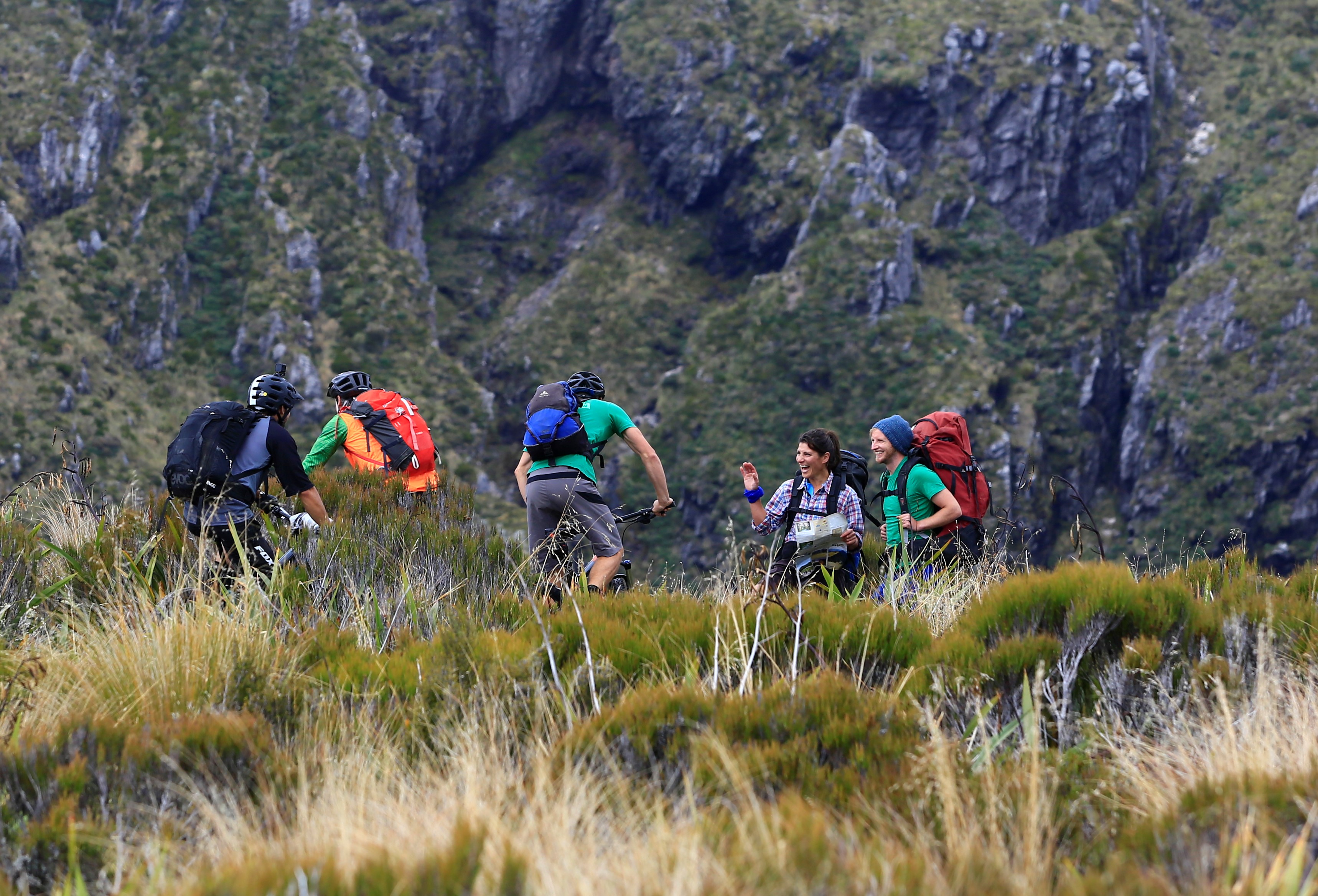
For starters, there are different heli-shuttle rules. They are permitted on the Old Ghost Road, though Mokihinui-Lyell Backcountry Trust chair Phil Rossiter says their use is incredibly low. “It is a single percentage figure of all users, probably mostly bikers but also some are walking groups. Some are day use, flying in and riding out.”
On the Heaphy Track Great Walk, DOC Buller area manager Bob Dickson says the Kahurangi National Park Management Plan precludes helicopter pick-up and drop-offs at huts “in order to assist with the preservation of natural quiet in the park”. Yet in Paparoa National Park, heli-shuttles are planned for the Paparoa Track, subject to legal review.
Mark Davies says the new Paparoa National Park Management Plan allows for helicopter concessions at designated track sites. “However, that is only allowed to be enacted with an amendment to the West Coast Tai Poutini Conservation Management Strategy and that is now on pause because it has been legally challenged.” (Last May, DOC decided to halt the amendment process and work with iwi, conservation and recreation groups to ensure the legal process is robust.)
Geoff Gabites says he would be disappointed to see a lot of helicopter movement on the Paparoa Track. “I know people use heli-shuttles on the Old Ghost Road but that’s a longer ride whereas Paparoa is only a two-day trip. You’d question why people would want to do only half of it, particularly when the Pike29 Memorial Track opens and there are options for day loops. I really don’t think heli-bike rides are something we should be promoting in that country.”
Track fee structures also vary. On the Great Walks, users pay per hut or campsite used. Paparoa hut fees are higher than the Heaphy, a reflection of their flash modernity perhaps, though the facilities at the three newest Heaphy huts are far from shabby.
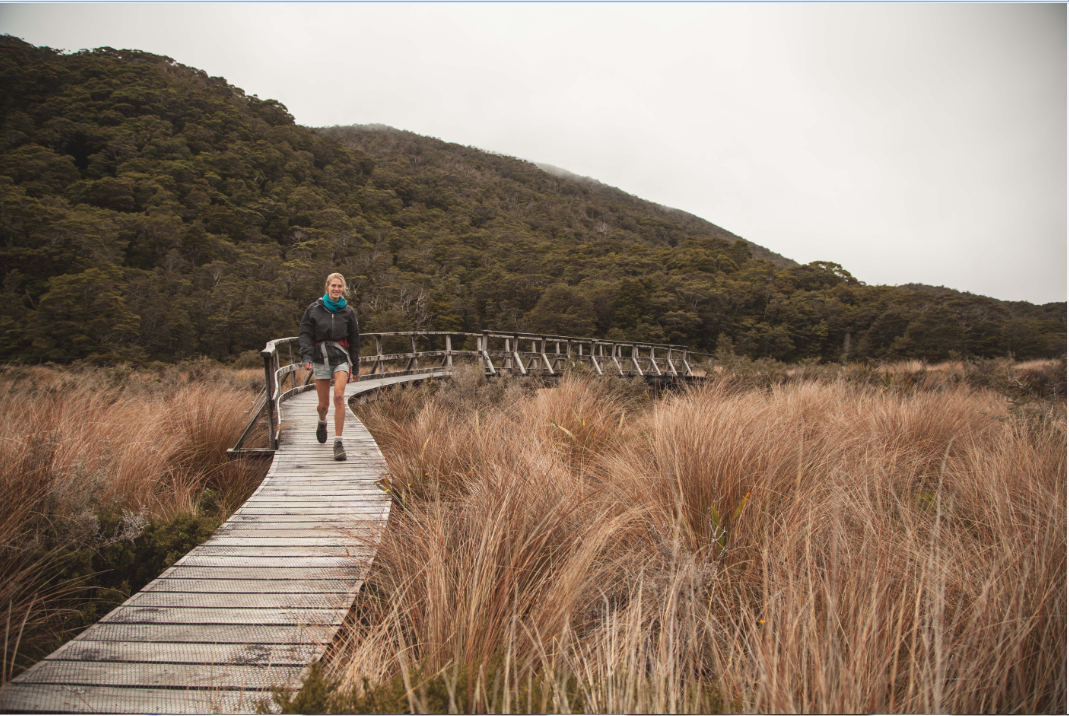
Then there’s the track construction. Paparoa’s new track is flash. It has been built to Grade Four mountain bike standard; similar to DOC’s Great Walk minimum standards but also crafted with a more gentle gradient. Recent Heaphy Track upgrades, including new bridges and harder surfaces, cater largely for bikes. All up that’s a lot of money spent on bikers, and some walkers, who generally pay more because they stay more nights, question the fairness.
That’s not an issue with the Old Ghost Road, though, says Phil Rossiter who spearheaded the trail’s development and then watched it nearly fail.
“We are a charitable trust, responsible for maintenance of the track and facilities and our original model, paying per night/per hut, was unsustainable. Nor was it fair to all users. So in 2017 we introduced the accommodation fee – $150 for everyone no matter how many nights they stay on the track.
“It was about sustainability and fairness, and we needed a system that recovered the true costs without simply ratcheting up the per night fee. That might have encouraged people to rush their trip so they wouldn’t get the same enjoyment, plus it raised safety issues.”
He says the new fee has been an unqualified success. “We’re still here, that’s the difference. We’re one of the few tracks standing on its own two feet and that’s a great sense of pride for us. Every dollar goes back into the trail.
“Also, the length of visits has grown – there’s now more than double the duration on the trail by bikers. They’re not now rushing through to save a night’s accommodation.”
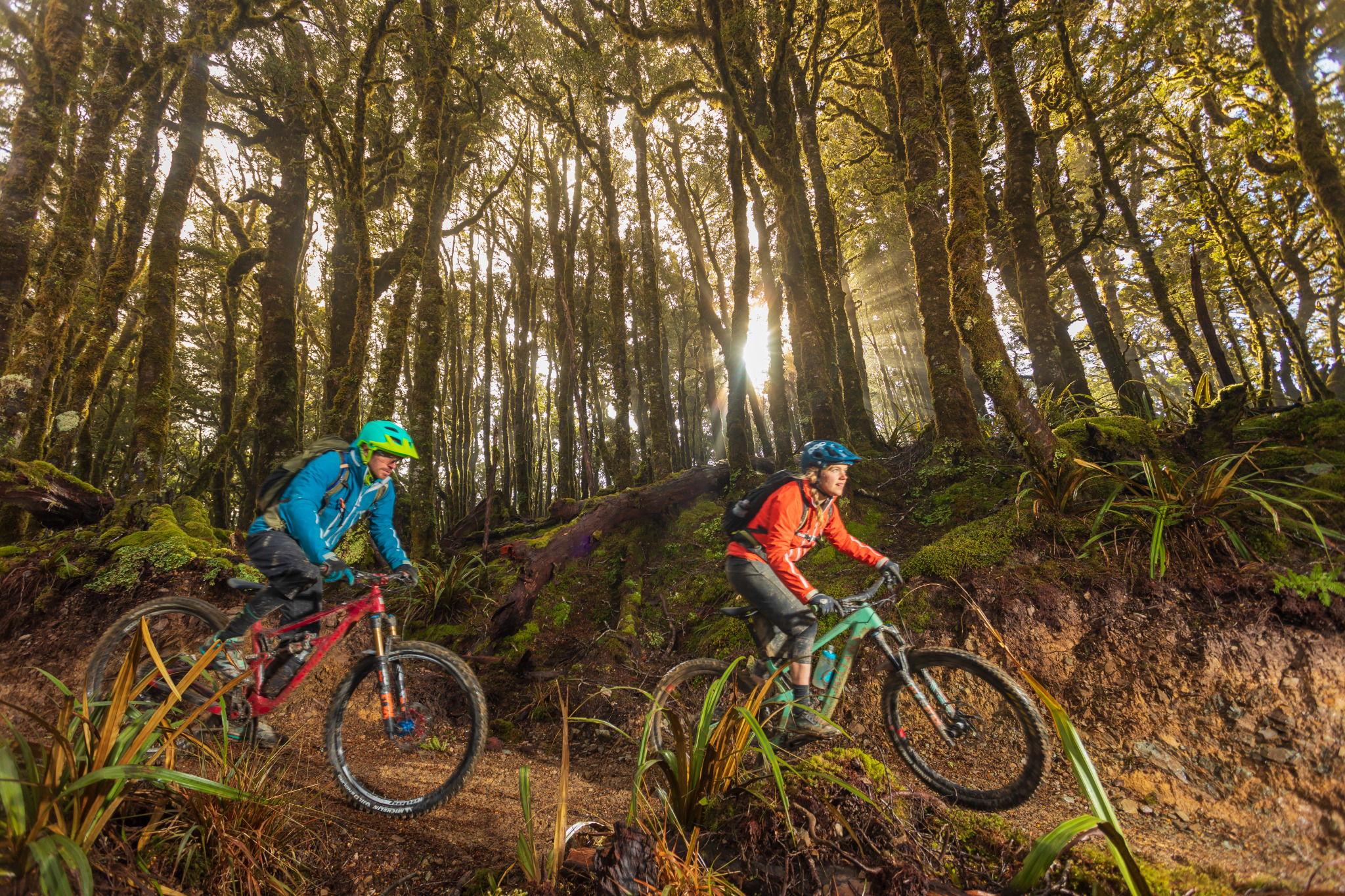
Roy Grose, DOC northern South Island regional operations director, is not aware of any immediate move towards fees consistency across all these tracks. “They are seen as three different entities covered in two different national park management plans, one of which (Kahurangi) is due for review. Even though mountain bikers stay a shorter period they do contribute and are legitimate recreational users of national parks. Their economic contribution also benefits private services outside of the parks,” he says.
The Kahurangi management plan review will address the park’s Mokihinui addition, which encompasses much of the Old Ghost Road and will likely receive input from the mountain biking community. A DOC spokesperson says a timeframe has not yet been set for the review.
Fees aside, walkers and bikers appear to be happily cohabitating on these, and other, dual-use trails.
Rossiter says there is more complimentary and surprised feedback from walkers on the OGR. “They say they were anxious about bikes before they started and were pleasantly surprised. Also, there is more than enough space for everyone. If every bed in every hut and camping space is full, that means there is one person per kilometre on the track, mostly heading in the same direction.”
The OGR was also a blank canvas, he adds. “While other tracks have changed from traditional walking use to dual-use here, there was no entrenched use by one group, so we set the tone.”
That’s a stark contrast to the Heaphy, where bikes, banned completely when Kahurangi National Park was formed in 1996, have only gradually been allowed back and remain off-limits for most of the summer. This despite other national park tracks offering year-round dual-use. Why the difference?
In 2016, a partial review of the park’s management plan, along with Nelson Marlborough Conservation Board recommendations, made it clear that the mountain bike season would run from May to November, says Bob Dickson. “The intention was to allow bikers some access outside of winter, but to leave most of summer, through to April, free for trampers to enjoy the track and facilities. That period also coincides with the main tramper use.”
So, a nod to entrenched trampers here even though, as Gabites notes, recent DOC research revealed just seven per cent of negative responses from Heaphy Track walkers was about sharing with bikers.
“People also walk the WCWT, sharing it with bikers and I don’t see any conflict,” he says. “I think there’s been a shift away from trampers complaining about the dangers posed by bikers.”
And that’s despite rocketing rider numbers. Total users on the OGR rose from just under 3000 in 2013 to 12,400 last year, two-thirds of them bikers. Hut and camping spaces are often full. On the Heaphy Track, despite their five month ban, mountain bike numbers have risen from 874, in 2012/13, to 2285 last summer, with a 19 per cent increase in just the last 12 months. And the Paparoa Track, with its walker/biker mix, was all but fully booked months before the track opened. Bookings surpassed DOC expectations for year one, says Tom Hopkins, DOC’s Paparoa Track project director.
If bikers are so keen and bring such economic gain to the region, are more cycle trails needed?
Gabites advises caution. “The problem with cycle trails is raising capital expenditure versus operating expenditure. It’s possible to find funding for building trails; it’s not so easy to find ongoing maintenance funding.”
There’s still plenty of capacity on the Heaphy Track, says Bob Dickson. “This is especially so in winter, when the days are often clear and fine, and the track is underutilised.”
Rossiter helped drive the vision that became the Old Ghost Road. Given its popularity now, does he wish the huts were bigger?
“In our wildest dreams, we couldn’t have hoped for this success but no, we won’t be increasing capacity. I do wish we had more communal space and we are working on tweaking things to help with that, but I don’t lament not building bigger huts. We don’t need higher numbers. If we can sustain the usage we have now, we will have a sustainable track and we will keep the experience and vision intact.”
That vision is ‘to reconnect (and connect) people to this landscape and environment – to truly come to respect it, love it and enjoy it and to ensure it is here for future generations’.
And that, surely, is worth keeping intact.
The Trails
Old Ghost Road (85km, Grade 4, six huts and campsites)
Developed by volunteers in partnership with DOC, managed by the Mokihinui-Lyell Backcountry Trust. Year-round dual use. Accommodation fee is $150, regardless of hut/campsite nights stayed. Heli-shuttles and e-bikes permitted. Currently, 12,400 annual users (including day trips); two-thirds are bikers. Average nights on the track are 2.1 (bikers) and four (walkers). The trail is mostly in Kahurangi National Park; any potential management changes subject to a management plan review.
Heaphy Track Great Walk (78km, Grade 4, six huts and campsites)
In Kahurangi National Park, managed by DOC. Mountain bikers are permitted May to November. Hut fees $34 a night. No heli-shuttles or e-bikes. Currently 10,700 annual users (three-quarters are walkers). Average nights spent are two (bikers)
and three (walkers).
Paparoa Track Great Walk (55km, Grade 4, three huts)
In Paparoa National Park, the first purpose-built dual bike/walk Great Walk. Managed by DOC, opened December 1, the adjoining Pike 29 Memorial Track (10km) will open later. Hut fees, $45 a night. Average nights expected are one (bikers) and two (walkers). No e-bikes. Proposed heli-shuttles subject to a legal review.
West Coast Wilderness Trail (136km, Grade 2)
A New Zealand Cycle Trail development; bikes, e-bikes and walkers permitted. Traverses a mix of roads, farmland, reserves, old tramlines, water races and train lines. No track fees, local businesses provide accommodation, food, shuttle transport and guided packages. Average nights spent on the trail are 3.2. Currently around 10,000 annual users and growing (though difficult to be exact given the popularity of day rides).



