

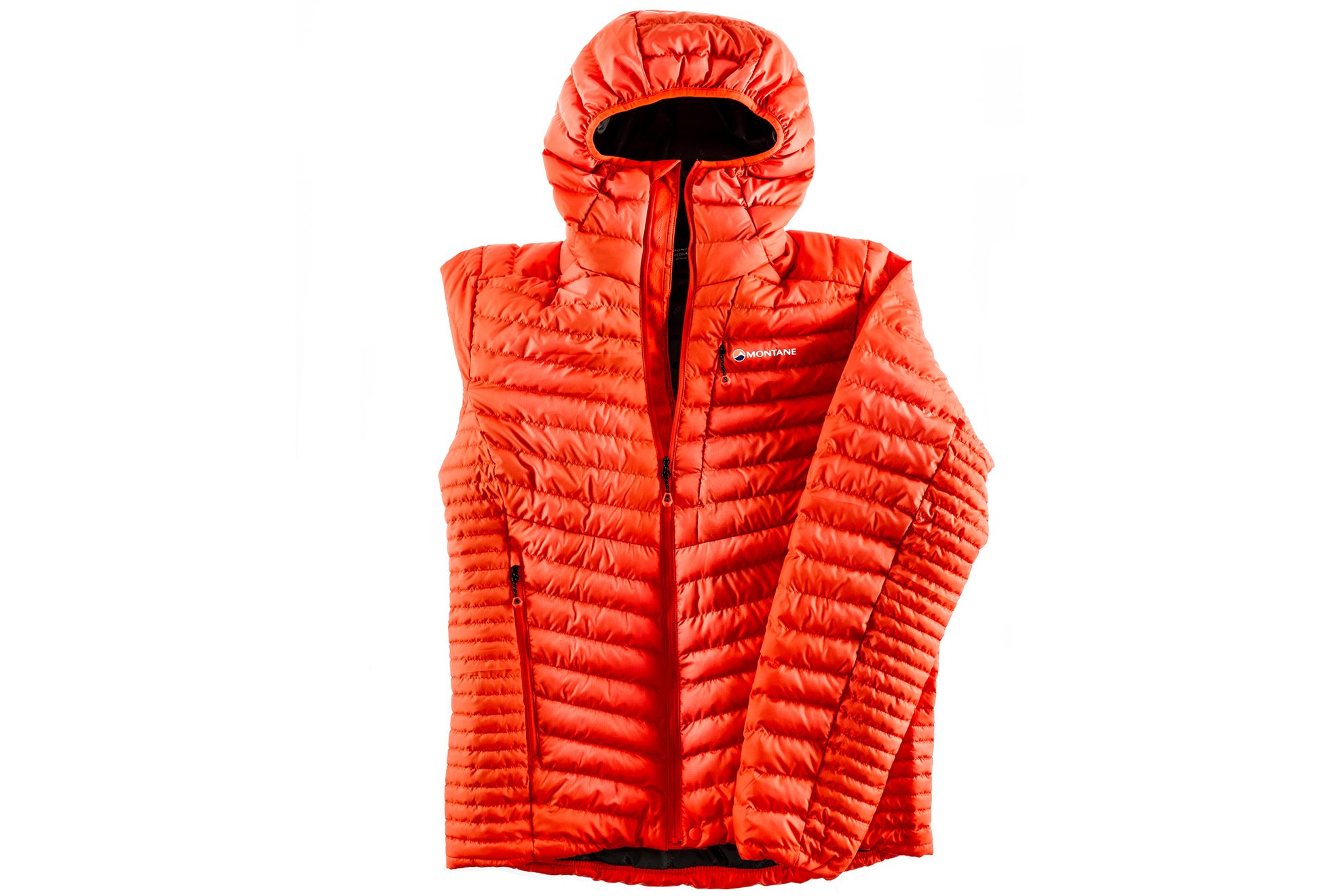
Montane Icarus Jacket $299
Down-mimicking PrimaLoft ThermoPlume synthetic insulation is equivalent to 550+ fill power down, quick drying, micro baffle construction for close body fit and freedom of movement, articulated arms prevent hem lift, insulated hood, zippered pack-friendly hand pockets, concealed chest pocket, stretch bound cuffs, elasticated hem. 581g. www.furtherfaster.co.nz
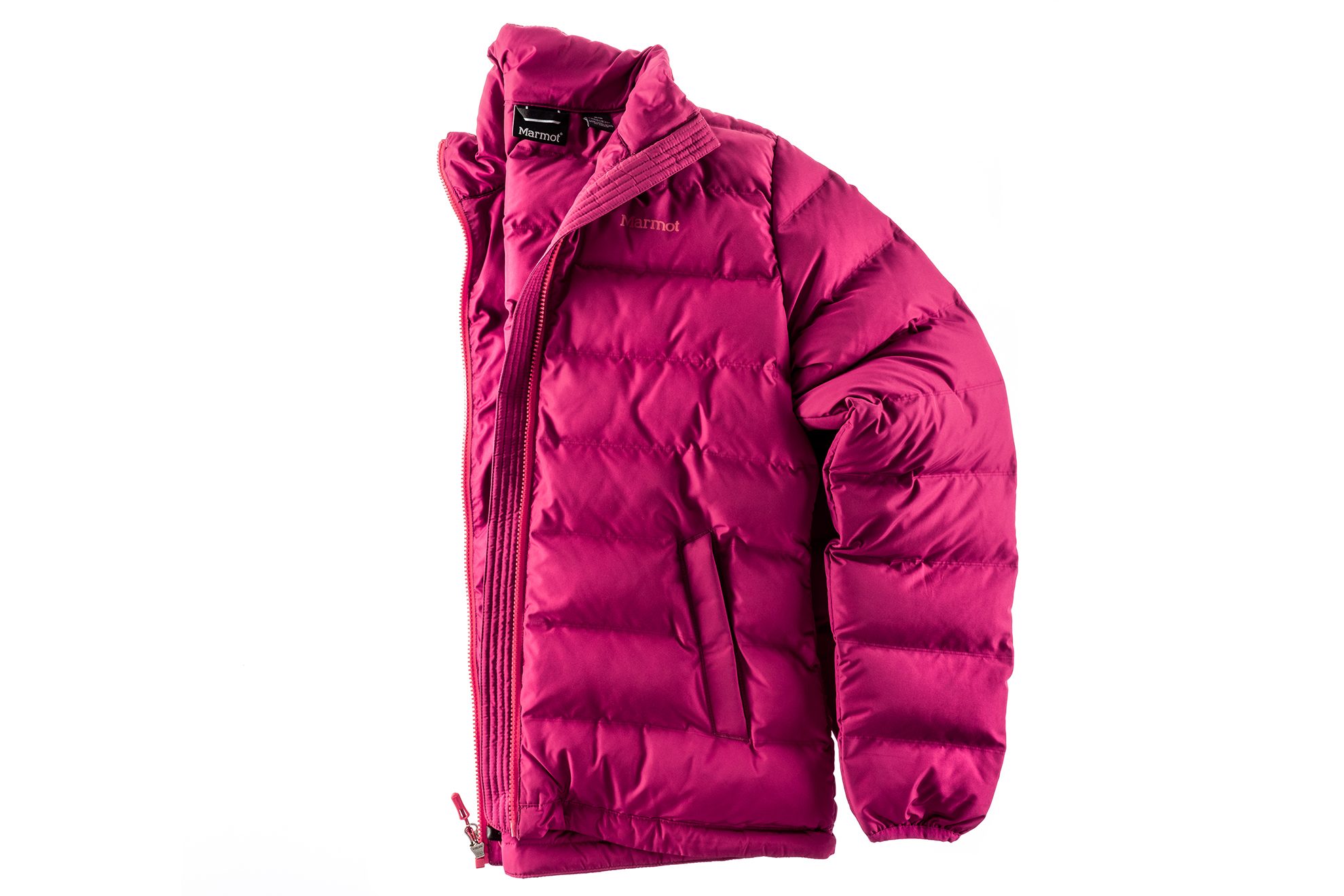
Marmot Alassian Featherless Jacket $399.95
A heavyweight cold weather jacket with 3M Thinsulate Featherless loose-fill synthetic insulation equivalent in warmth to 700-fill power down, woven baffles remove need for stitching, zippered hand-warmer pockets, elastic cuffs, drawcord hem. 706g (m); 604g (w). www.marmotnz.co.nz
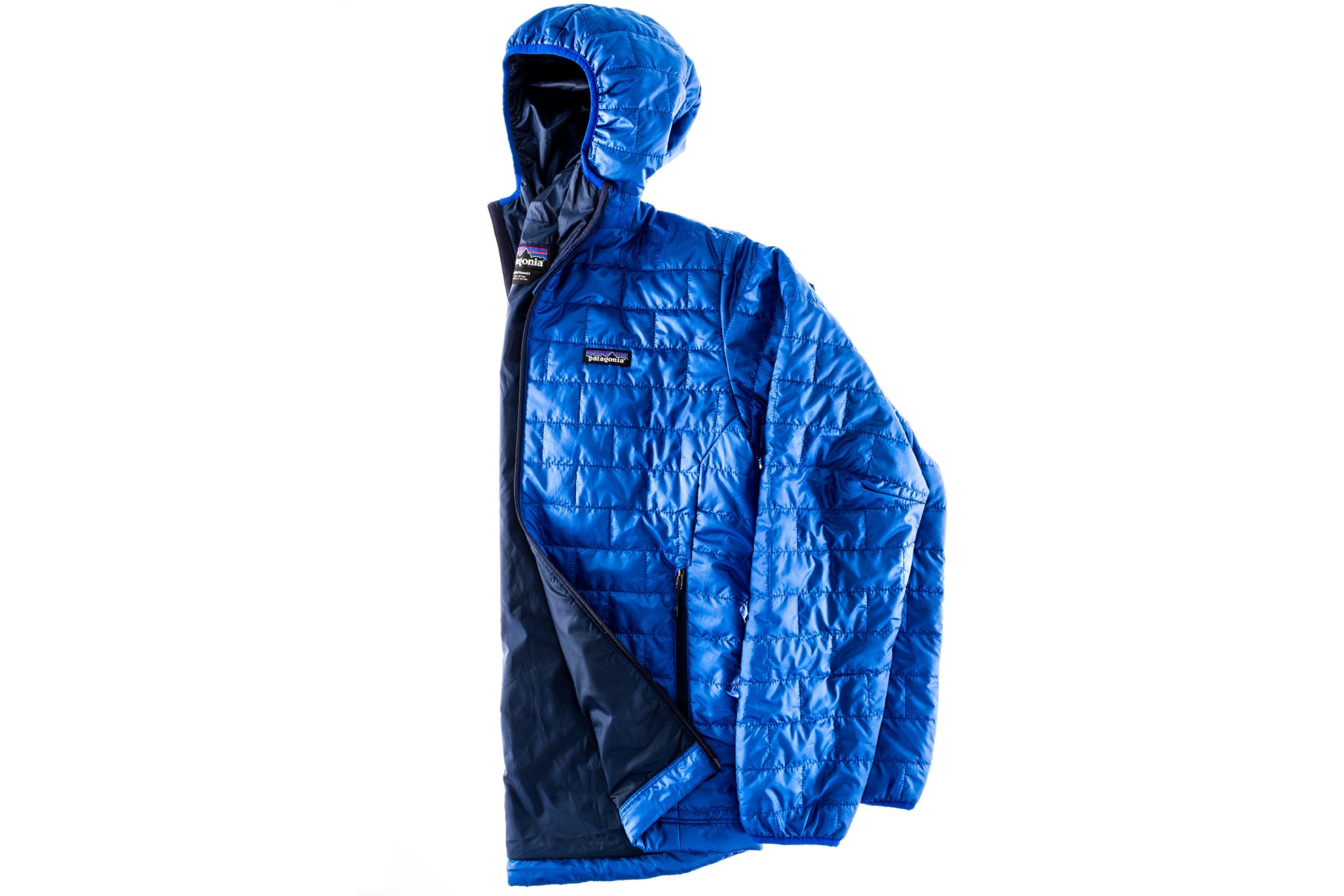
Patagonia Nano Puff Hoody $379.99
With 60g of hydrophobic PrimaLoft Gold Insulation Eco (55% recycled), windproof recycled ripstop shell with DWR coating, under-helmet elasticated hood, zippered hand-warmer pockets, zippered internal chest pocket doubles as a stuff sack with a reinforced carabiner clip-in loop, drawcord-adjustable drop-tail hem. 337g (m); 284g (w). www.patagonia.com.au
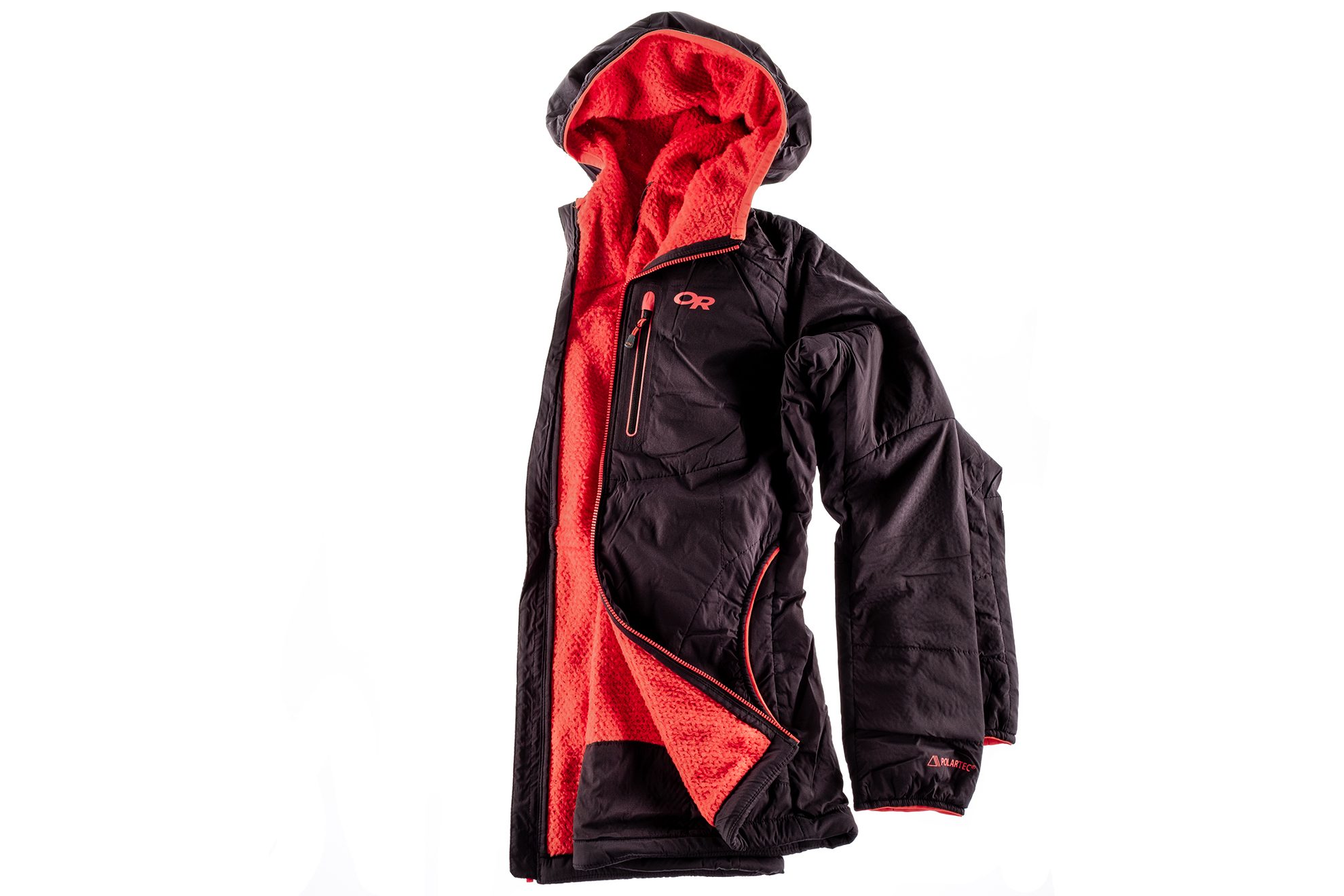
Outdoor Research Ascendant Hoody $349.99
Combining water- and wind-resistant Pertex Microlight stretch fabric with quick-drying Polartec Alpha insulation. Adjustable helmet-compatible hood, internal thumb loops, storm flap, drawcord hem, zippered chest pocket, hand-warmer pockets. 369g (m); 310g (w). www.bivouac.co.nz
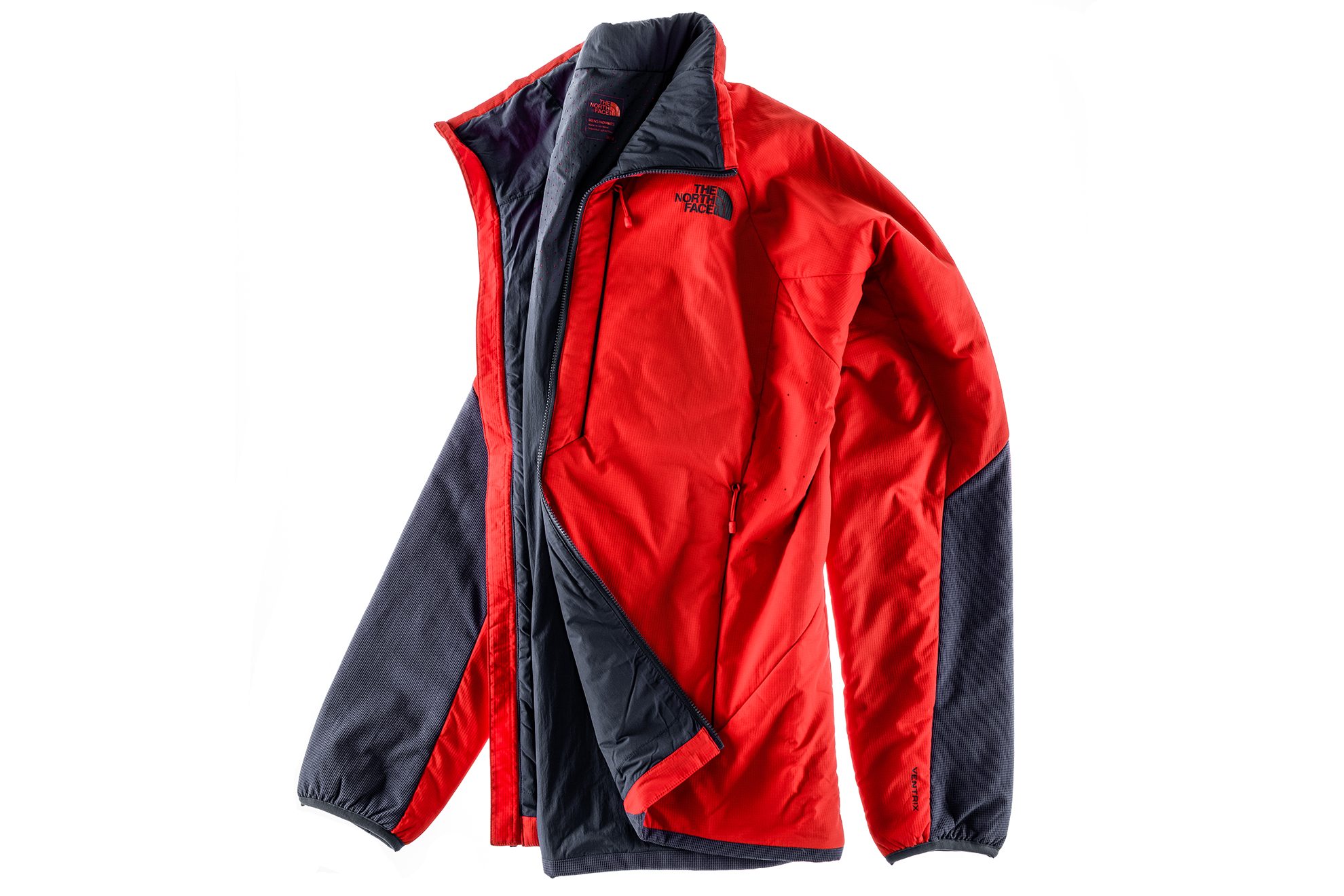
The North Face Ventrix Jacket $390
With 80g of Ventrix synthetic insulation and perforations in key areas that expand and dump heat or contract and retain heat as you move. Higher-denier fabric on forearms for durability, concealed chest and hand pockets, elastic-bound cuffs, hem cinch-cord. 420g (m); 400g (w). www.thenorthface.co.nz
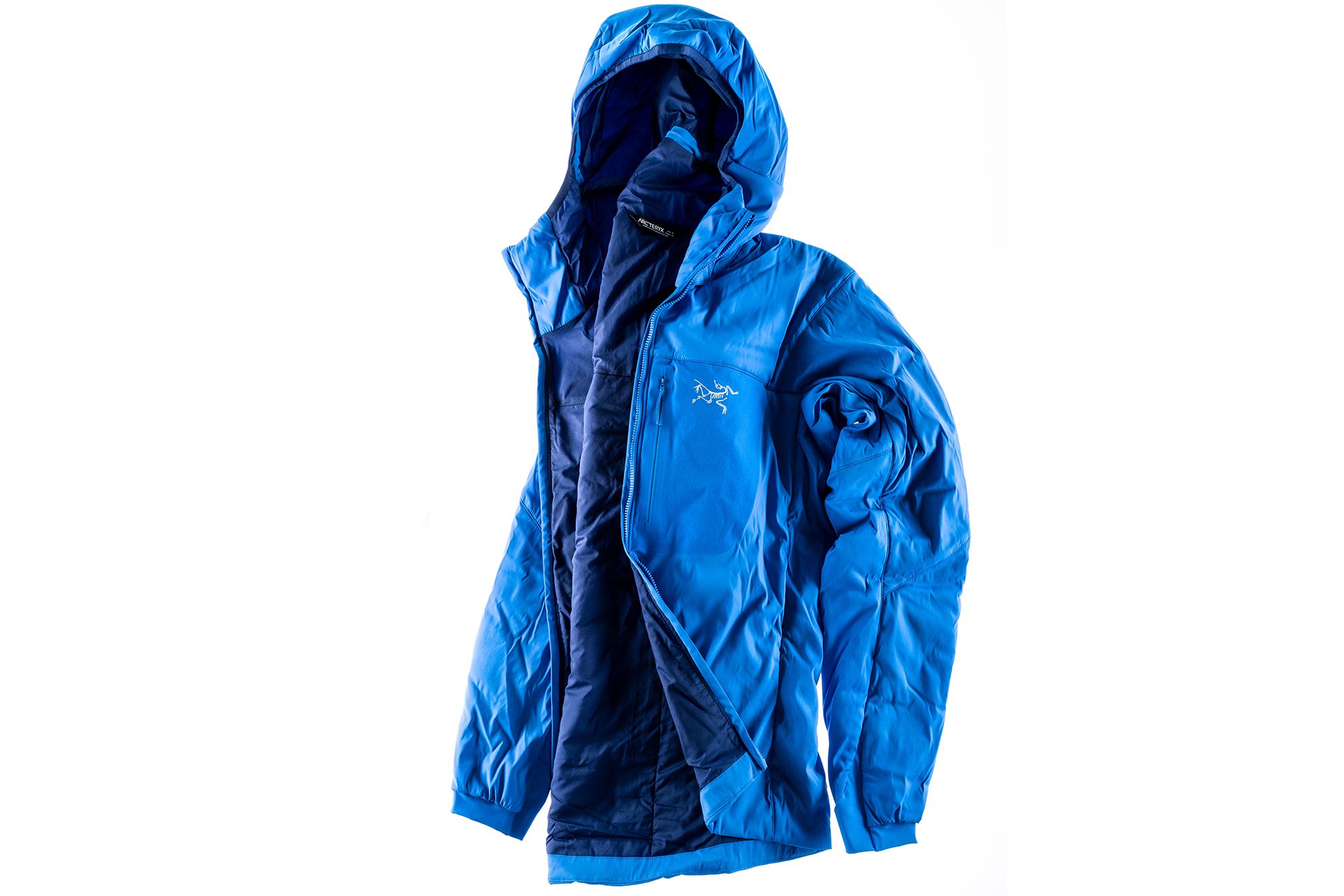
Arc’teryx Men’s Proton LT Hoody $499.99
Climbing jacket with Coreloft synthetic insulation. Wind- and water-resistant, breathable, abrasion resistant, articulated elbows and gusseted underarms, insulated helmet compatible hood with drawcords, stretch knit cuffs, drawcord hem, zippered chest pockets and insulated hand pockets. 420g. www.bivouac.co.nz
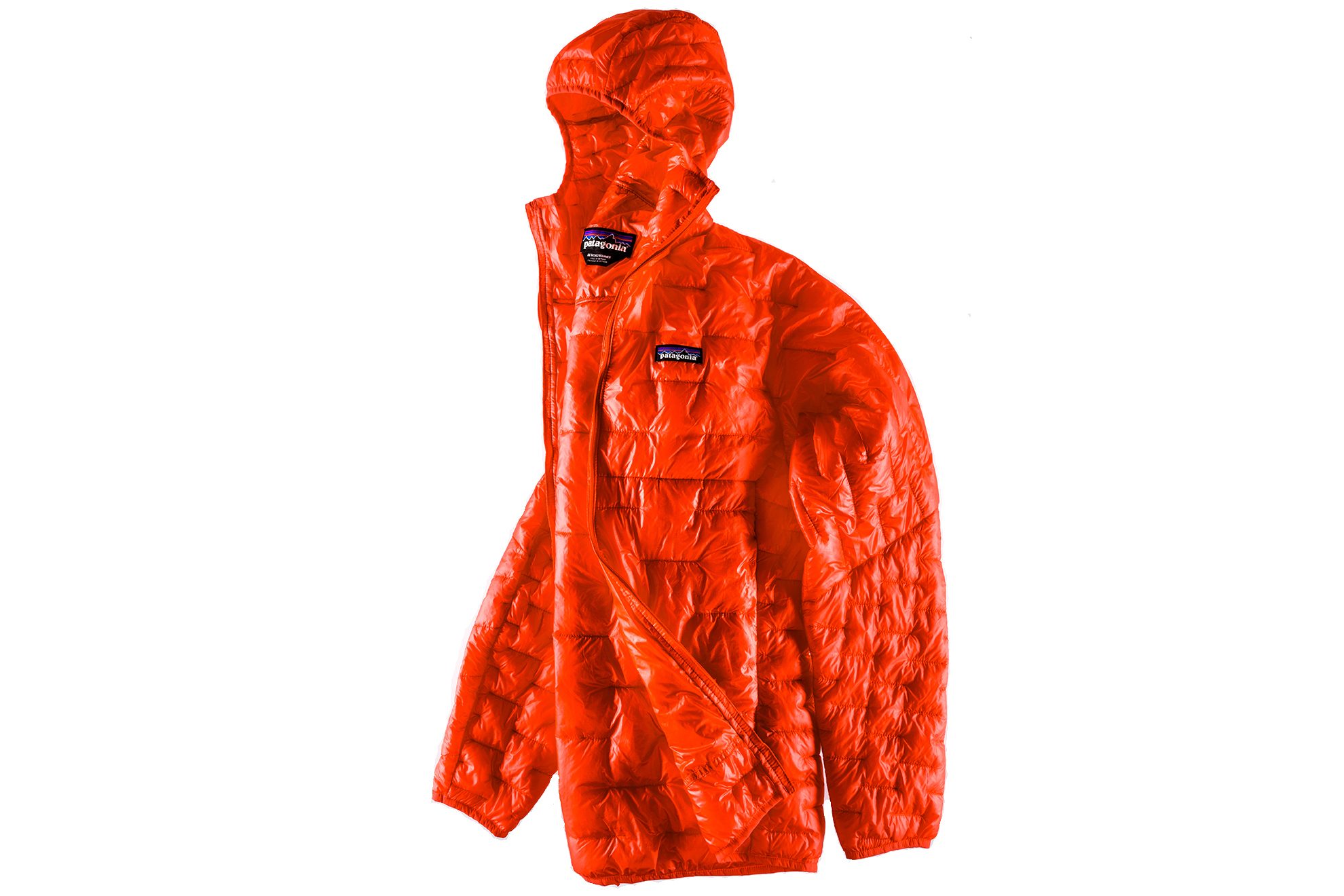
Patagonia Micro Puff Hoody $459.99
Patagonia’s best warmth to weight jacket features 65g of warm-when-wet PlumaFill insulation, ripstop Pertex Quantum shell with a DWR finish, zippered hand-warmer pockets, internal drop-in pockets, under-helmet hood, elasticated cuffs and hem, stuffs into pocket. 264g (m); 227g (w). www.patagonia.com.au
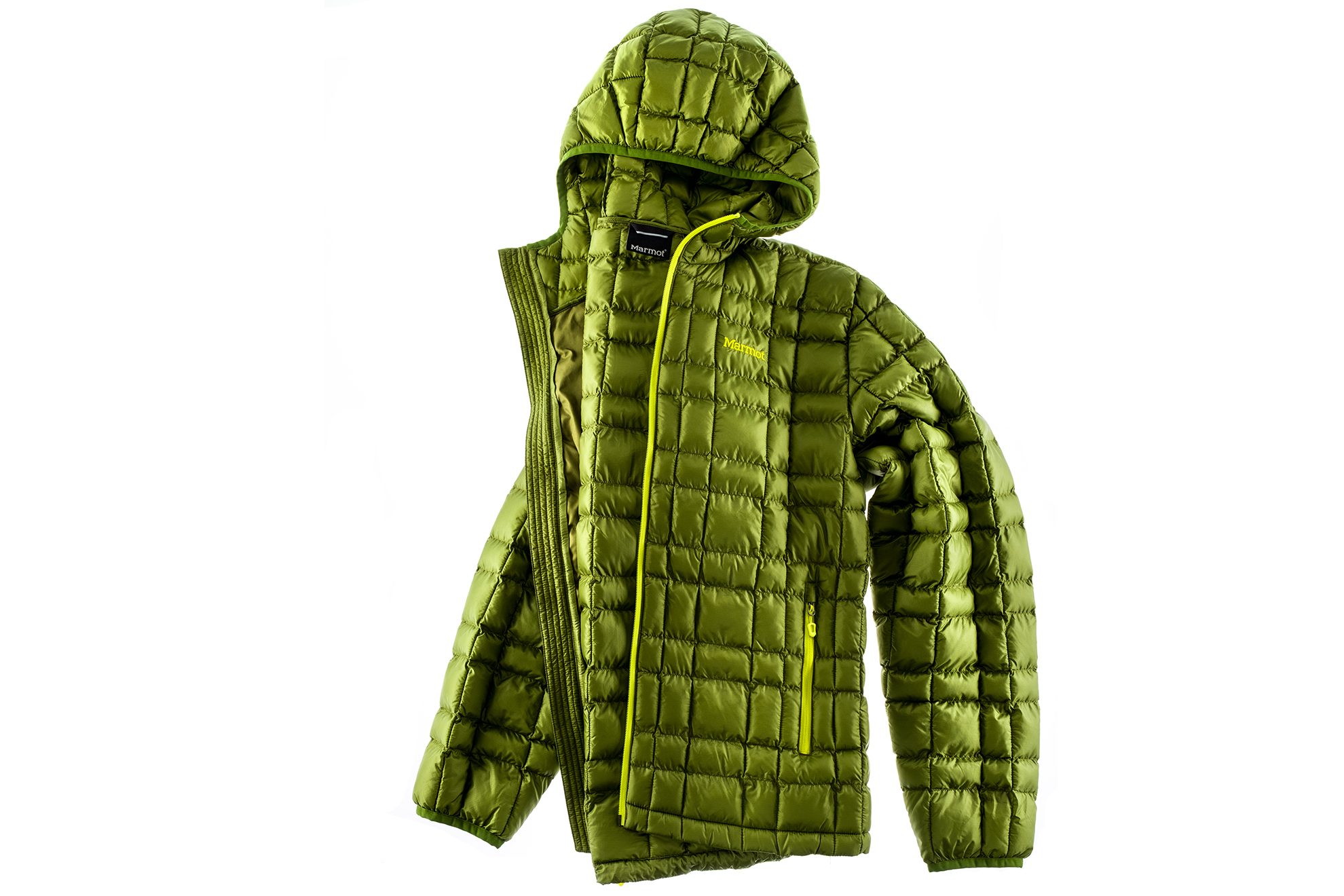
Marmot Featherless Hoody $399.95
Water-resistant loose-fill 3M Thinsulate Featherless synthetic insulation is equivalent in warmth to 700-fill power down, attached insulated hood with elastic binding, zippered hand pockets, elastic cuffs, inside zip stuff sack pocket, drawcord hem, Angel-Wing movement. 476g (m); 380g (w). www.marmotnz.co.nz
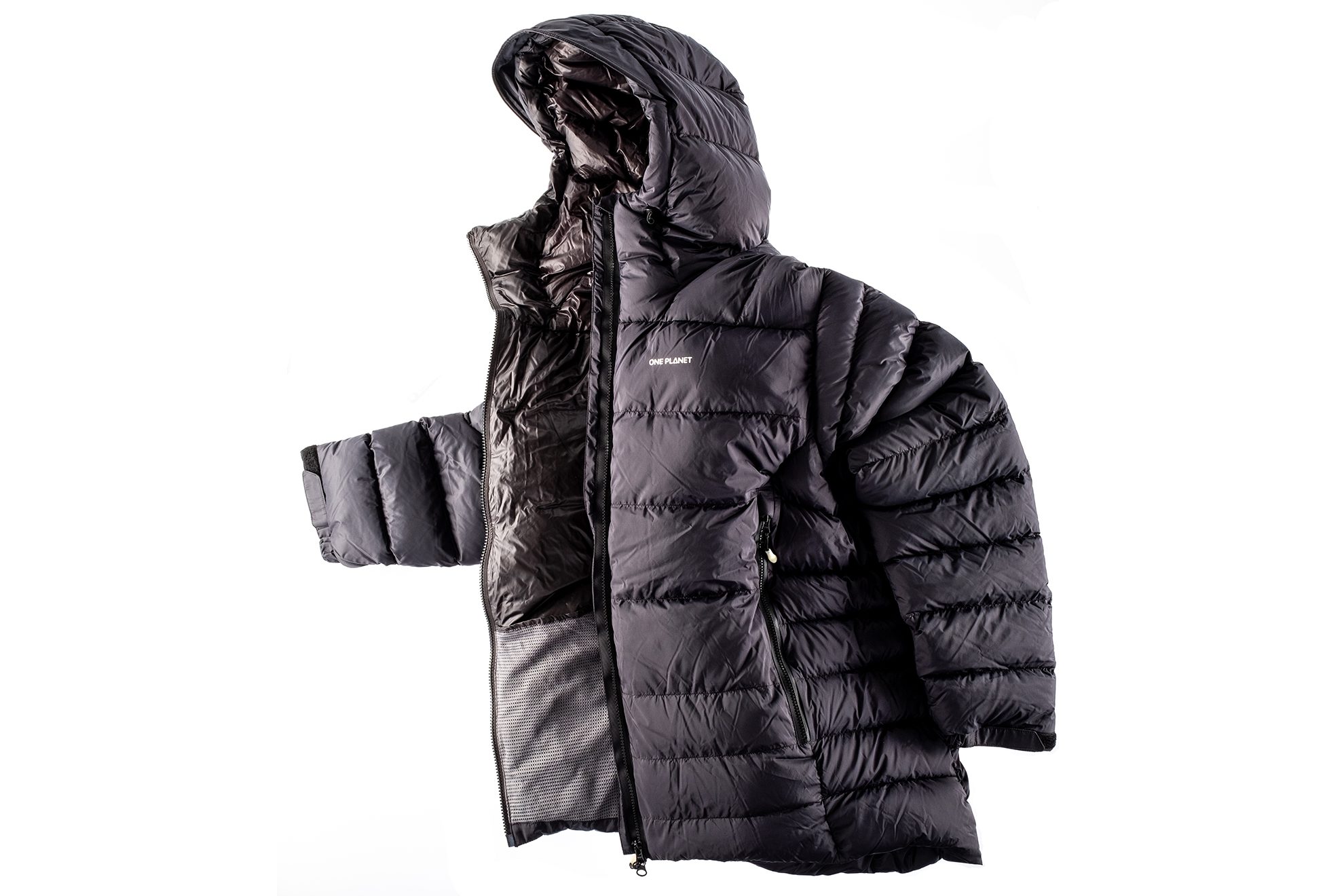
One Planet Inversion $579
Expedition jacket with 280g of 800-850 loft DWR-treated duck down enclosed in lightweight, water-resistant Pertex Endurance fabric. Box-wall baffles used on the body, down-filled helmet-compatible hood, zippered hand-warmer pockets, internal zippered pocket, mesh stash pockets, soft-touch chin guard, Velcro cuffs and a drawcord waist. 610g. www.oneplanet.com.au
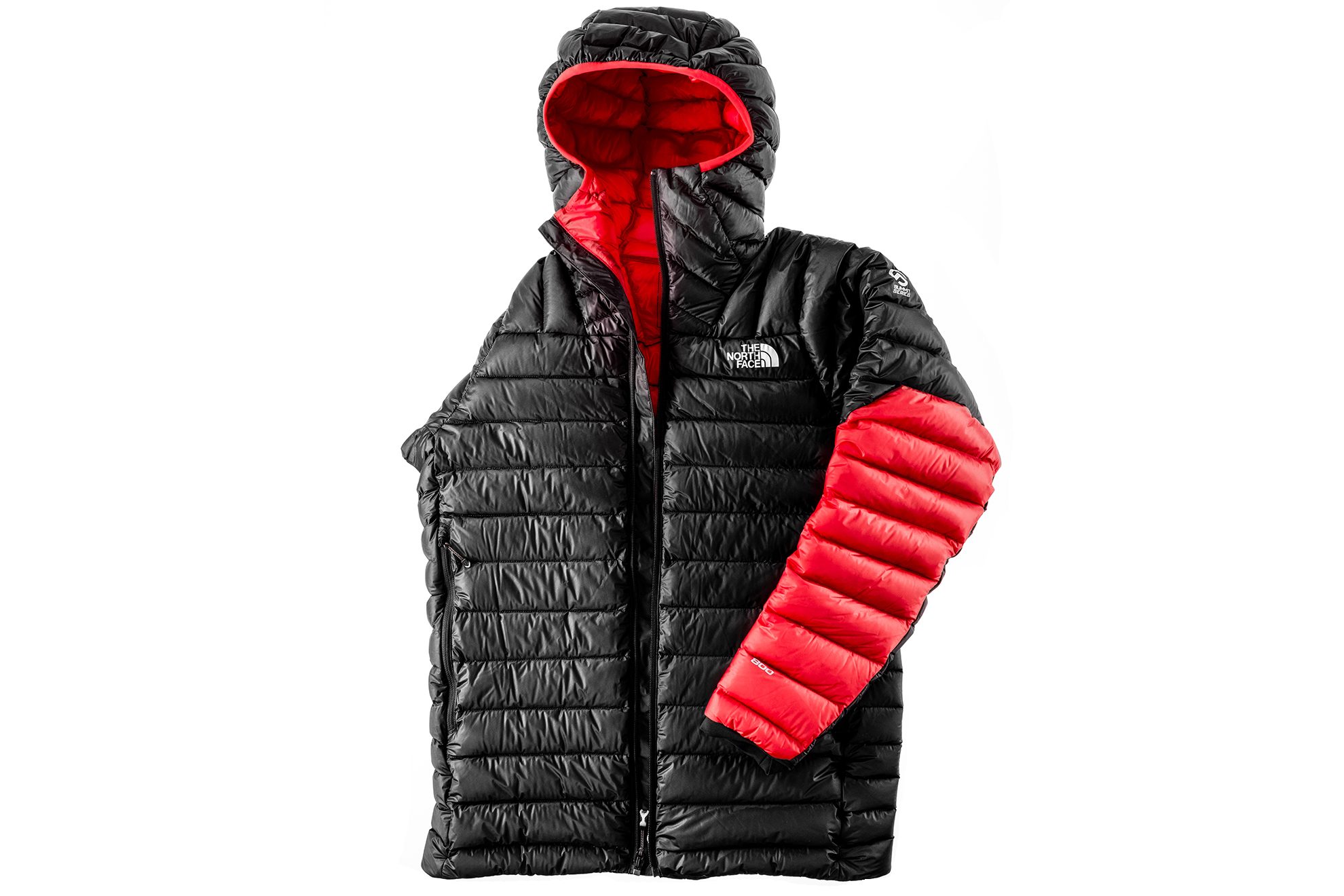
The North Face Summit L3 Down Hoodie $650
Alpine jacket with 800-fill down, pre-tensioned helmet-compatible hood with elastic binding and rear adjustment, exposed reverse-coil centre front zip, zippered hand pockets, stuffs into the pocket, stretch knit cuff with DWR finish, hidden hem drawcord adjusted through hand pockets. 380g (m); 320g (w). www.thenorthface.co.nz
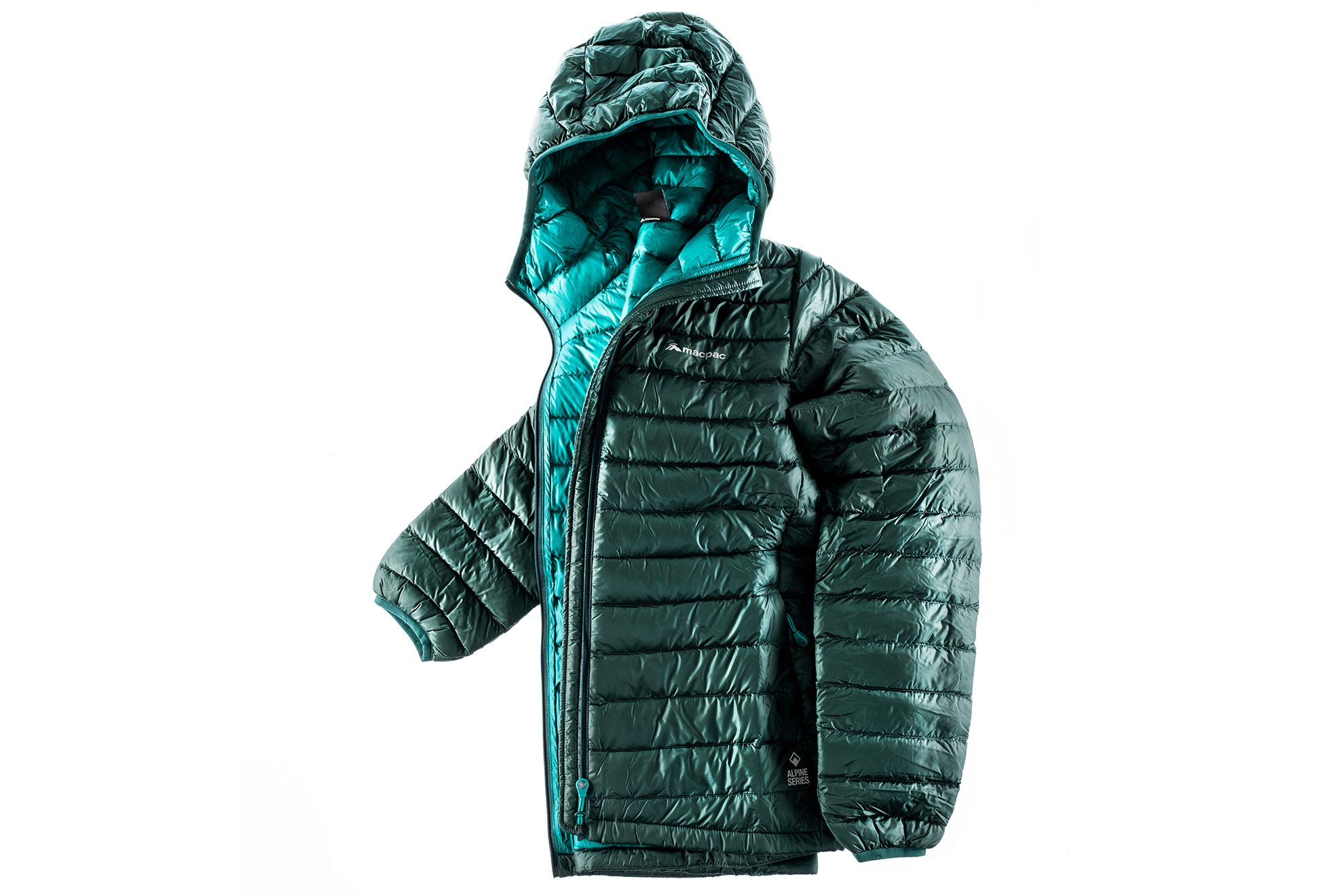
Macpac Supanova Hooded Down Jacket $499.99
Lightweight Pertex Quantum 15D nylon shell with DWR treatment for water resistance, 102g (96g – women’s) of 800-loft HyperDRY water-resistant goose down fill insulates in damp conditions, down-filled hood, zippered hand warmer pockets, elastic-bound cuffs, packs into own pocket. 280g (m); 260g (w). www.macpac.co.nz
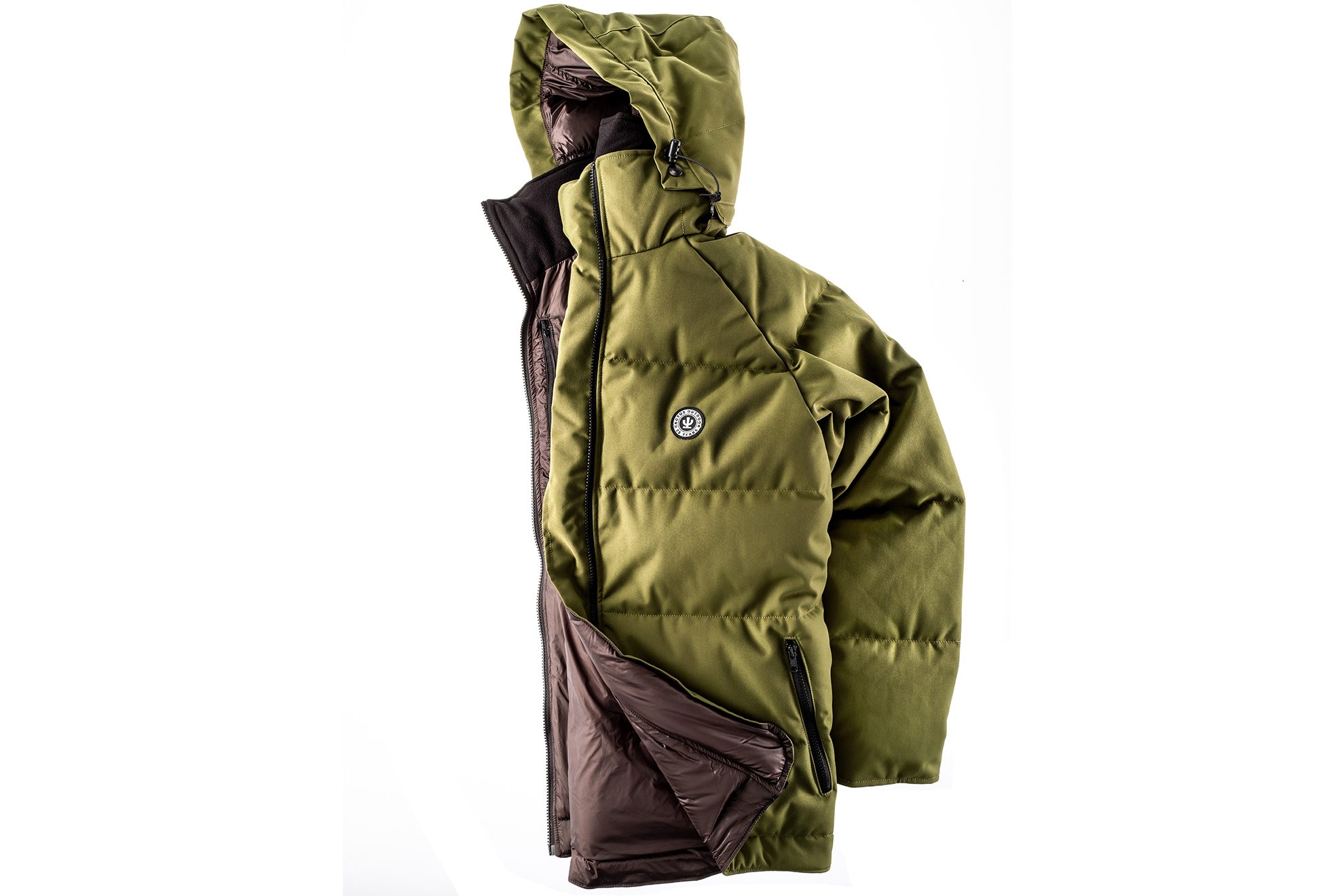
Cactus Outdoor Down Jacket $599
A tough 220D nylon shell protects 277g (men’s medium) of 750-loft white European goose down. Adjustable insulated and removable hood, nylon taffeta lining, two internal chest pockets, two external fleece-lined hand pockets, fleece lined cuffs. 1100g (m); 910g (w). www.cactusoutdoor.co.nz
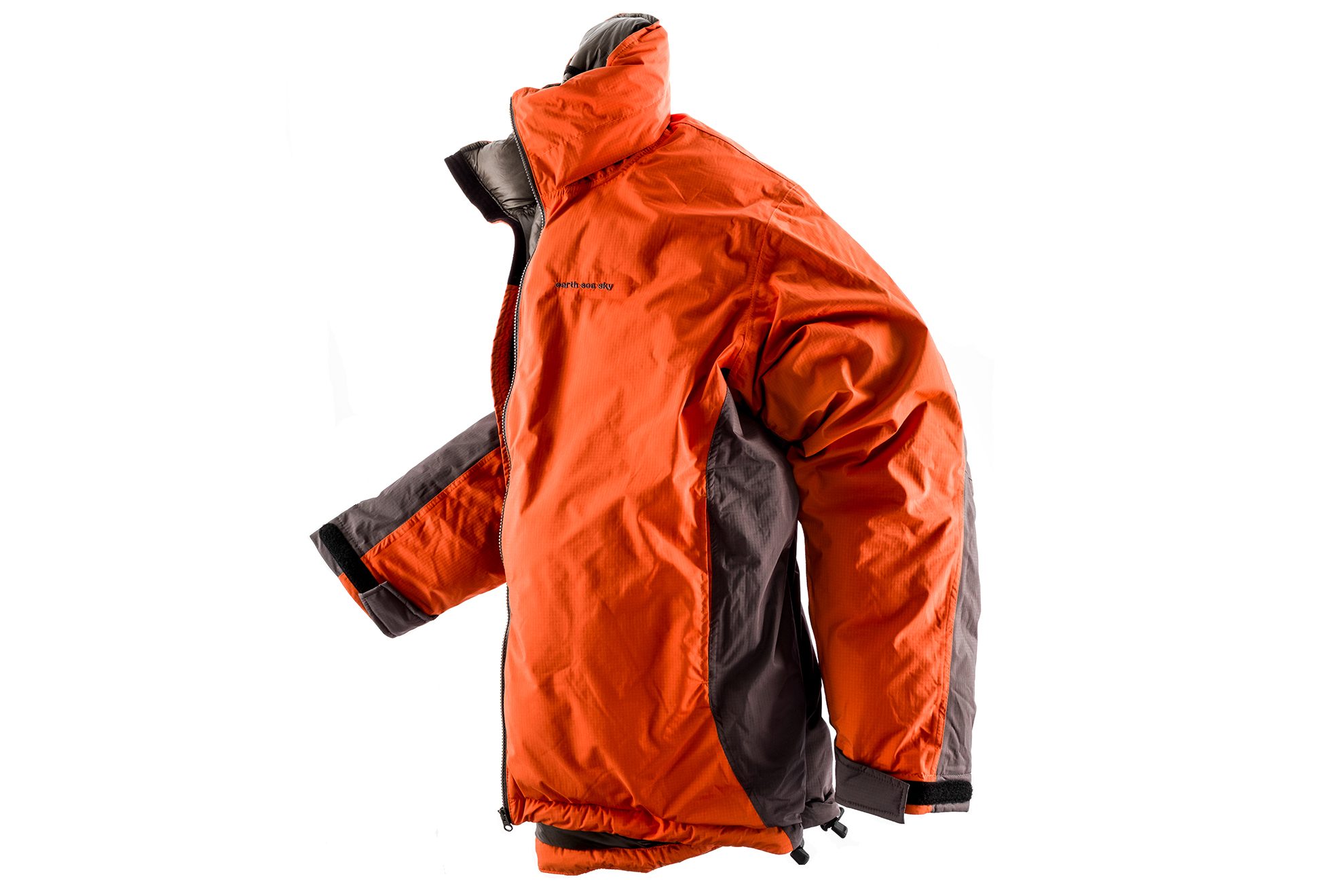
Earth Sea Sky Zero Jacket $899
Water-repellent down and a seam-sealed waterproof and breathable outer fabric provides warmth and protection in cold and damp conditions. 240g of 700-loft duck down, water-repellent YKK front zip, tuck-away hood, down-lined hand warmer pockets, two internal storage pockets. 730g (m); 640g (w). www.earthseasky.co.nz
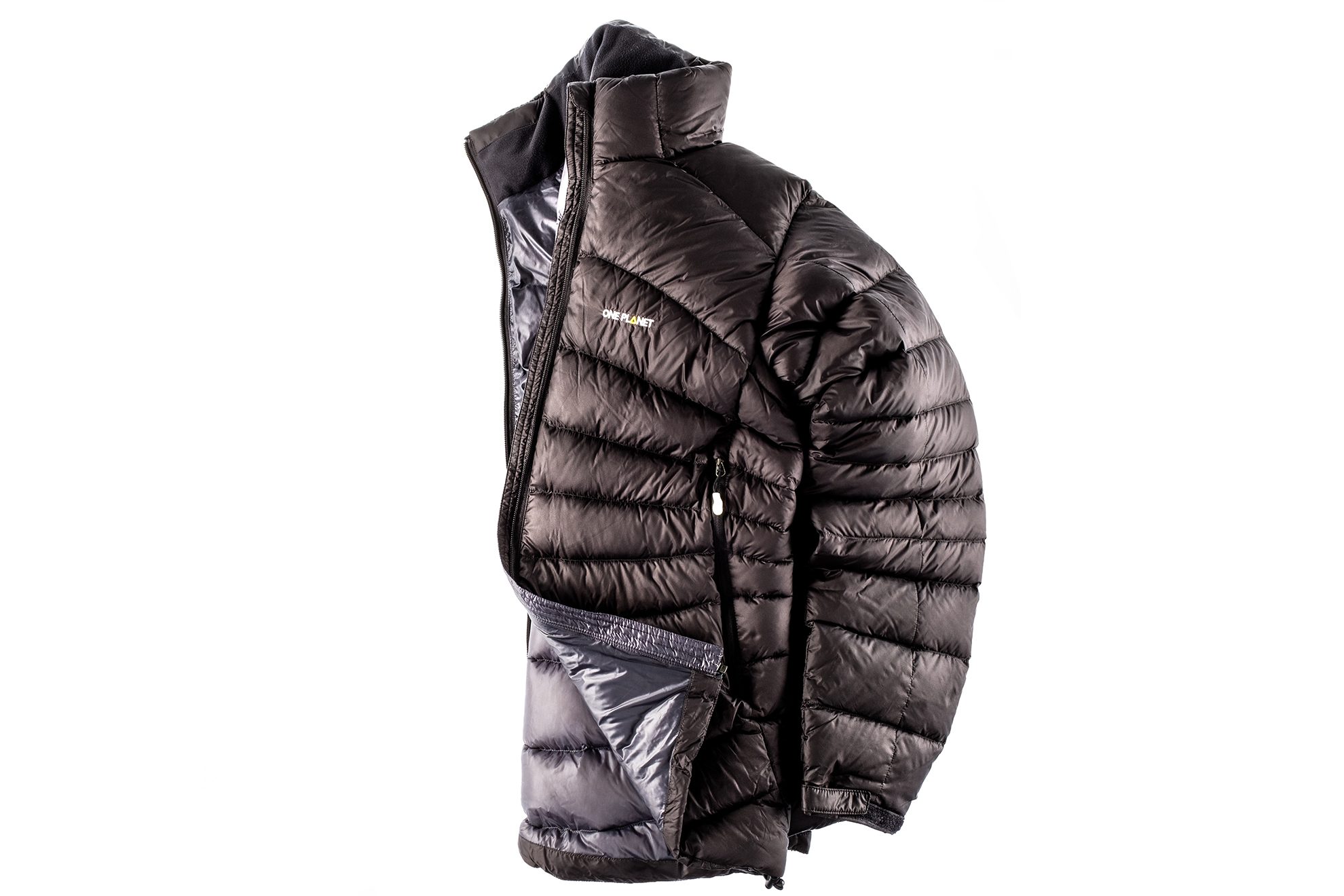
One Planet Dumper $309
Hard-wearing 20D down-proof and water-resistant Vapour Vent fabric holds 180g (170g – women’s) of 700-750 loft DWR-treated duck down. Tight weave fabric keeps down in but is breathable and allows water vapour to escape, high collar, hand-warmer pockets, internal zipped compartment, chin guard. 430g (m); 400g (w). www.oneplanet.com.au



