Walking improves balance and engages muscles we don’t even know we have.
Barring different abilities and injuries, walking is second nature to most of us, and evolution has optimised our bodies for getting around on two feet. But have you ever wondered which muscles you’re using when you walk, and how this changes depending on the walking situation you put yourself in?
Dr Kelly Sheerin, a biomechanist and physiotherapist at Auckland University of Technology, says we don’t burn much energy just strolling around going about our daily business. “But walking gives us the opportunity to increase those demands, whether we are on an unstable surface, like a trail, up and down hills, or increasing the pace. All of those factors will increase the demand on different muscles.”
Like most of the things your body does, teamwork is at play here. Your deep calf muscles do the grunt work. “The rest of the muscles of your lower limb work to put you in a position to utilise that deep calf muscle to push forward. Basically, you use your hip flexors, glutes and quads from a stability perspective to propel your leg through swing and then get it back in a position for your calf muscle to push off again. Gastrocnemius is the more superficial calf muscle, and is used more when running or walking really fast. In slow walking, you tend to use the deeper one: soleus.”
Sheerin advocates walking as an accessible activity because you can choose your own pace. As you start to feel more capable, you can push yourself a little more. “You will still be using your calf muscles, but you’ll start using your glutes more, and as you start walking faster you begin to use some of those bigger muscles as well.”
He describes this ramping up of the body’s engagement as “a cascading system of stability”.
“It starts just around your ankle, which you’re probably not overly aware of, right? If you walk across a paddock of long grass, you automatically engage your ankle stabilisers a whole lot to maintain your balance. If you extend beyond the capability of your ankles – if you feel that you’re going to fall over – then you tend to bring in your abdomen, and the final stage is your upper limbs and wider trunk.”
Our feet are themselves a complex system, and our NZ barefoot tradition turns out to be an advantage: “There are about 30 muscles associated with the feet. Roughly a third of those sit outside of the foot, in your calf and nearby, and feed into and attach to the feet. But about two-thirds of them are actually resident inside your feet, and they’re small muscles that, like any, respond to training. Getting around barefoot helps to train those muscles and gives your feet inherent strength and stability.”
Sheerin points out that, from a balance perspective and especially as you age, “much can be achieved by spending some regular time barefoot or in minimal footwear, and actually developing your feet and not allowing them to go to sleep. It develops responses as well, because in a controlled environment, like a class, it’s fairly predictable, whereas if you’re out in the environment you cannot always predict what’s going to happen. And if you develop those responses, then you potentially get more benefit without even trying.”
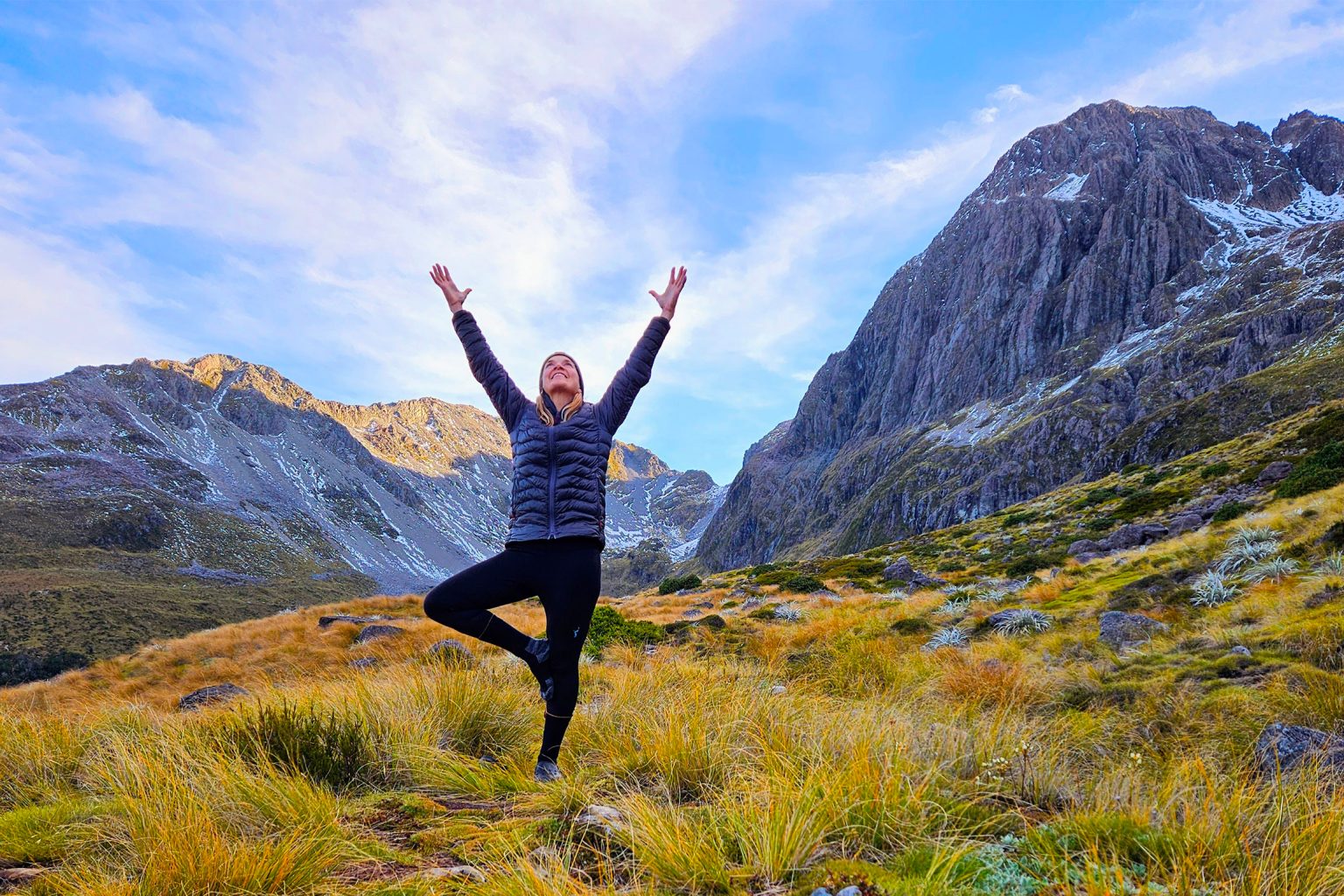
Behaving more like we did as children might help our bodies stay young: “If you walk along the beach with a kid, they see a log and they go and balance on it and jump off the end. At a certain point in our life we stop doing those things, and then go, hang on … Actually, balance is really important.”
Walking is just like everything else in life in the end: “The more challenging the walk you choose, the more muscles you’re going to engage. Just don’t do everything all at once. Let your body adapt to it over time.”