A wrap of the biggest stories and best writing about the outdoors from New Zealand and around the world.
A decade ago, e-bikes were few and far between. Now they are everywhere. Is e-hiking equipment next?
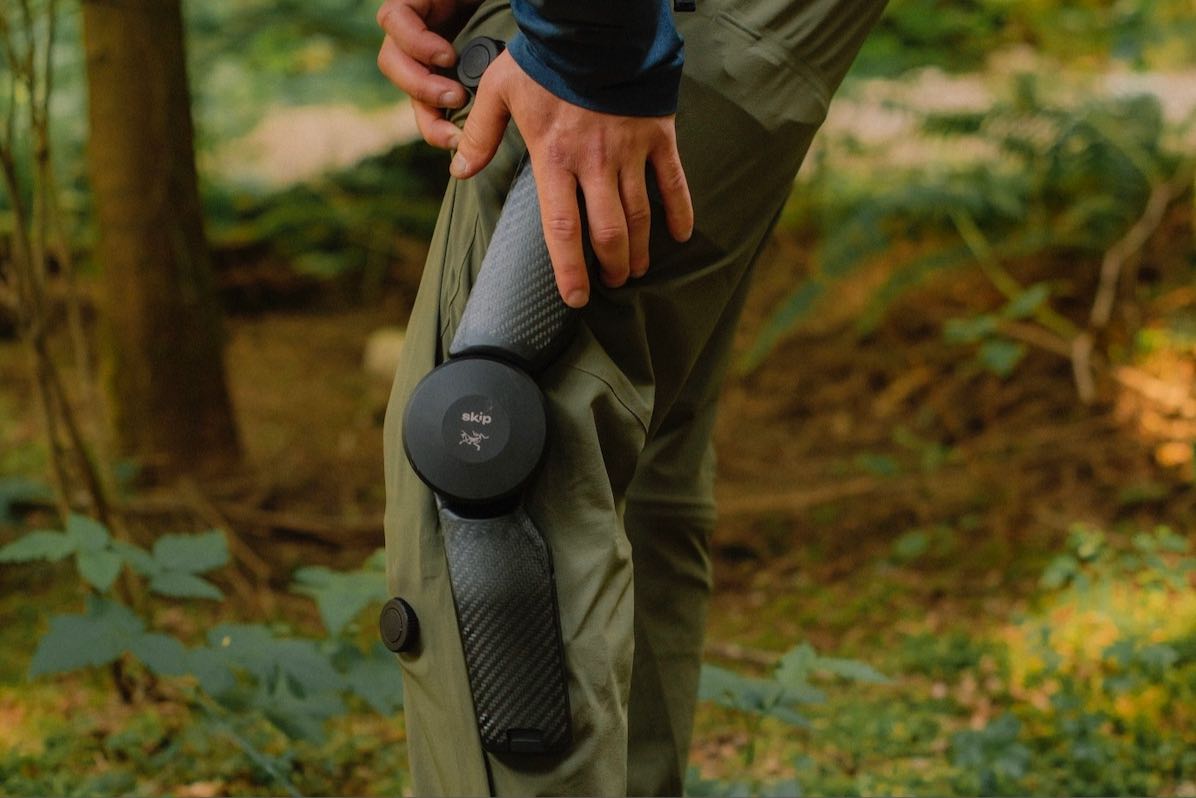
Arc’teryx and wearable robotics startup Skip have teamed up to design and bring to market what the brands hail as the world’s first pair of fully functioning electronic hiking pants. MO/GO — short for “Mountain Goat” — uses an exoskeleton, attaching to the wearer’s legs via a special pair of Arc’teryx Gamma pants.
The brands designed this device specifically for anyone who loves hiking but suffers from mobility challenges due to ageing, fatigue, or injury. The tech could help people access the outdoors who otherwise wouldn’t be able to.
“You’re always in control, but [MO/GO’s] e-assist is there to give you a boost when you need it — making whatever you’re doing more effortless, comfortable, and fun,” Arc’teryx told GearJunkie. “Think of it like an e-bike for walking.”
Like most e-bikes, MO/GO also comes with a hefty price tag. These pants will cost you $5,000 USD ($8,400 NZD).
Missing in the wild, praying for survival
In this incredible rescue story from the BBC, stranded on a Scottish mountain, 61-year-old walker John Pike loses hope that he will be found alive. With a fractured hip and no phone signal, he crawls two miles uphill to try to call 999.
Rescue helicopters twice missed him – and had it not been for a Facebook post seen by his 22-year-old nephew, John’s story could have had a very different ending. His survival underlines how dangerous venturing alone into unfamiliar terrain can be.
John, a keen walker, set off on a 24km hike for what he thought would be an eight-hour round trip.
As John walked over wet rocks, he slipped “in the flick of an eyelid” and his hip hammered against the ground. “I was in a lot of pain immediately,” he said. “I thought this doesn’t feel at all good, but I thought, ‘It’s midday, I’m going to have some lunch and then I’ll let it settle down’.” After trying and failing to stand up, John diagnosed himself with a hip fracture. Read the full rescue story.
Two Kiwis on a mission to invent lightweight powdered alcohol
Two Kiwis have set off on a mission to “revolutionise NZ’s alcohol industry” by making liquid-free cocktails. Brayden and Conor, locals from Queenstown, call themselves ‘The Unnamed Alcohol Project’. They’re keen to make powdered alcohol for Kiwis to take on backcountry trips.
After a load of experimentation and a few broken blenders, they found a winning concoction using a high percentage of alcohol and tapioca maltodextrin.
With a rough prototype sorted, they hope to make their ‘what if’ project a reality. They’re looking into the legal process of getting their product on the shelves, and are even getting food scientists involved. The goal is to make a 50-gram pack, which is about 85% less weight than a standard beverage can.
Their 10,000 followers on social media have requested Pinacolada as the first flavour. Read the full story and watch a video from The Edge.
What a catastrophic Milford Sound tsunami could look like
Like something out of a disaster horror movie, The Post has outlined what a Milford Sound tsunami might look like. With a potential death toll of 3500, an earthquake-triggered Milford Sound tsunami has the makings of an unprecedented tourism disaster.
An earthquake-triggered landslide could send a 17m bow wave barrelling onto the flat visitor area. New modelling shows evacuation attempts would be largely futile, especially in the peak summer tourist season.
A natural hazards assessment undertaken for the tourism transformation scheme Milford Opportunities Project (MOP) estimated that the last major Alpine Fault rupture happened in 1717. Thought to happen roughly every 300 years, they calculated a 75% probability of another one within the next 50 years, which has a 44% likelihood of causing a landslide in Milford Sound.
In the worst-case scenario, no one would survive. Best-case scenario, on a peak summer day with 3693 tourists, 170 might make it to safety.
The MOP assessment concluded the impacts of a tsunami “are likely to be severe if not catastrophic” and “there is a need to ascertain what is an acceptable level of risk”.
One of world’s rarest plants grows in Christchurch
A rare pygmy button daisy, one of rarest plants in New Zealand – and therefore the world, is clinging to life in Christchurch’s Port Hills. From a distance, it looks like moss.
In the wild, it grows in three places we know of. One of them is on Mt Pleasant in suburban Christchurch. The others are near Porirua and in Marlborough. An effort to establish a fourth population in the hills above Redcliffs this year had mixed results.
“It doesn’t look good,” said DOC biodiversity supervisor Craig Alexander. “There are a few plants that are surviving, but it’s early days.” The native daisy, known scientifically as Leptinella nana, was classified by the Department of Conservation as “nationally critical”, the worst conservation status short of extinction.
It needed disturbed soil, protection from grazing animals, shelter and just the right amount of dampness, said Alexander. Read the full story from The Press.
NZ firefighters battle Canadian wildfires
21 New Zealanders are headed to Canada to join firefighters battling more than 800 wildfires.
The contingent is made of four, five-person arduous firefighting crews, including five staff from the Department of Conservation and a liaison. They will head to Alberta, where 134 fires are burning in the province.
Fire and Emergency’s National Commander, Russell Wood, said it would be difficult work. “They’ll be firefighting in tough conditions, working hard to keep the communities of Alberta safe,” Wood said. “These deployments are extremely valuable for our firefighters and firefighting specialists. It gives them experience in different environments that they can bring back home.”
Wildfire season is in full swing in North America. This time-lapse video shows a fire moving across a Californian field in just 90 minutes. And another video shows a Canadian hiker who narrowly escaped a fire closing in.
Two Hawke’s Bay sites re-open to public
DOC has reopened Hawke’s Bay’s Opouahi Scenic Reserve and White Pine Bush sites to the public as of Tuesday, 30 July 2024.
The two popular sites had been closed since Cyclone Gabrielle swept across the country in February last year. Senior Community Ranger Lindsay Tallman says the cyclone caused significant damage to the area.
“There were major slips inside Opouahi Kiwi Creche, the lake track became inaccessible, and more than 200 sheep made their way into the creche through two separate openings in the fence,” says Lindsay.
Opouahi Kiwi Créche is a safe place where kiwi chicks can live and grow until they reach adult body weight and protect themselves from predators in their natural environment.
“We mounted a rescue mission into the creche and managed to recover nine kiwi chicks. Fence repairs were prioritized for the safety of the kiwi; these were completed in March 2023 thanks to hard work from the Environment, Conservation and Outdoor Education Trust (ECOED).
“This re-opening enables us all to further protect these species, and allows the public to enjoy the Reserve once more.” Read the full release from DOC.